


Get Started
Graphite's supplier management tool helps you onboard faster, cut time on risk reviews and streamline supplier validations. Save time and money.
Vendor Offboarding: Checklist, Challenges, Risks, and Benefits
What happens when you run a report, and you see your company hasn’t used a particular vendor in a few years? It’s time to deactivate the account. In other words, it’s time for your vendor offboarding process to kick in.
But vendor termination isn’t the easiest thing to do, especially with the ones who have been involved with your company or project for a long time. In such scenarios, there will be a lot of loose ends to take care of.
This is exactly when having a standard vendor offboarding process checklist comes in so handy. Your vendor offboarding checklist is designed to keep track of all the project sections, responsibilities, and documentation as well as ensure information security and an amenable break.
We’ve created this guide to help you create a vendor offboarding checklist that will support your vendor termination process in a clean and comprehensive manner.
What Is Vendor Offboarding and Why Is It Important?
Vendor offboarding is the process of formally ending a vendor relationship and transitioning to a new vendor or terminating the use of vendor services altogether. It is important because it ensures a smooth transition, protects sensitive data, and allows for proper closure of contracts and obligations.
Removing a vendor’s access to your internal systems, data, and corporate infrastructure when terminating a contract, helps to ensure your company maintains security and reduces risk of data breach.
Most companies today don’t properly offboard vendors with whom they no longer engage. This opens the organization to potential risks by leaving vendors with direct access to sensitive information, intellectual property, and IT systems that can result in data breaches, compliance violations, and more.
Creating a well-defined supplier offboarding process that you can uniformly apply across your business is a best practice to ensure the vendors you no longer work with are properly terminated. A vendor offboarding checklist across the entire business is best maintained by the procurement, sourcing or purchasing team in addition to IT and HR stakeholders. Just as your procurement team helps manage supplier onboarding, centralizing the offboarding within procurement helps ensure all bases are covered and vendors are not allowed access to systems or paid past their time of termination.
Your vendor offboarding process checklist will be a document that will help you track all the areas where your company and your vendor’s company overlap. This includes everything from access to physical premises and project-related responsibilities to monetary and compliance concerns.
Further, the offboarding checklist will also ensure information security and internal database hygiene for your organization. Let’s see which areas you need to focus on to create a reliable, standardized vendor offboarding checklist.
Now that the purpose of vendor offboarding is clear, it’s worth naming the specific risks a strong exit process eliminates. Seeing them up front makes the value and urgency unmistakable.
Risks Proper Vendor Offboarding Prevents
- Security & data exposure: Lingering SSO accounts, shared mailboxes, API keys, vendor-managed integrations, and service accounts can leave backdoors open. Clean deprovisioning and key rotation close your attack surface.
- Compliance & legal risk: Missed data return/erasure obligations, absent audit evidence, or untracked subprocessors can trigger findings, fines, or contractual remedies.
- Financial leakage: Active vendor masters, stray POs, auto-renewals, and unclosed retainers cause unnecessary payments after termination.
- Operational disruption: Unreturned assets, undocumented handoffs, or missing runbooks slow replacements and create avoidable downtime.
- Reputational harm: Breaches, payment disputes, or service gaps tied to poor offboarding erode stakeholder trust.
If those are the risks a good vendor onboarding process prevents, what gets in the way? Most breakdowns aren’t technical; they’re about ownership, visibility, and consistency.
Common Challenges in Vendor Offboarding
- Scattered ownership: Unclear RACI across Procurement, IT, Legal, Privacy, Finance, and business owners leads to delays and gaps.
- Siloed records: Contracts, access logs, invoices, and vendor data live in different tools; reconciling them under time pressure is error-prone.
- Hidden access & shadow assets: Shared credentials, test tenants, vendor-managed integrations, and service accounts get missed without a system-driven inventory.
- Checklist drift: One-off exceptions multiply, evidence isn’t captured centrally, and audits turn into treasure hunts.
- Time pressure: Renewals, incident response, or M&A timelines compress offboarding windows and increase error risk.
The Complete Vendor Offboarding Checklist
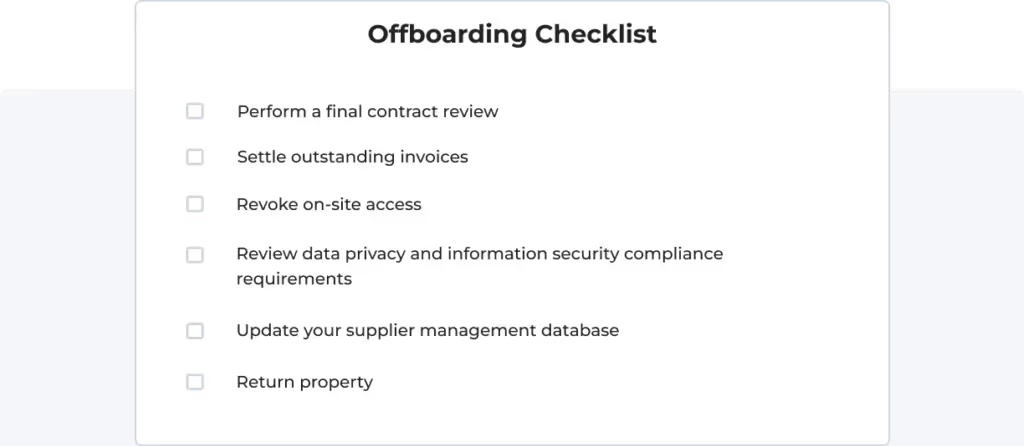
- Confirm scope & notice: Identify services in scope, last day of service, dependencies, and required notice per contract. Notify stakeholders and assign a single owner (RACI).
- Final contract review: Validate deliverables and obligations; confirm audit rights, breach notice windows, subcontractor controls, data return/erasure, IP ownership, non-solicit/non-compete, and termination remedies.
- Close commercials & vendor master: Reconcile POs, settle invoices/credits, stop auto-pay, and deactivate the vendor in AP/ERP to prevent new spend or accidental payments.
- Access deprovisioning (human & non-human): Revoke SSO/VPN, email, shared mailboxes, and distribution lists. Disable app access, rotate/disable API keys, remove IP allowlists, shut down test tenants, and disconnect integrations/service accounts.
- Data return/deletion & evidence: Enforce contractual data return/erasure; confirm backup/archive disposition. Capture time-stamped attestations and store evidence centrally.
- Asset & property return: Retrieve laptops, badges, tokens, prototypes, test devices, and storage media. Reclaim IP, code, and documentation; record chain of custody.
- Compliance & privacy checks: Map obligations to GDPR/CCPA/sectoral regs; archive certificates/COIs; remove the vendor from expiry trackers and compliance calendars.
- Knowledge transfer & handoffs: Collect runbooks, configurations, and contact maps. Document open risks, CAPAs, and workarounds for the successor vendor or internal team.
- Update systems of record: Deactivate the vendor in supplier management, identity/IAM, ticketing, CMDB, contract repository, and the vendor risk register. Link all artifacts to the vendor profile.
- Post-exit review: Validate no residual access (IAM reports, network rules, app logs). Confirm no live contracts, invoices, shipments, or support tickets remain. Close with an auditable summary.
How Does a Vendor Offboarding Checklist Make the Vendor Termination Process Smoother?
Clear communication is key to ensure a smooth vendor termination process. Provide your vendor with a detailed offboarding plan, including timelines and expectations. Conduct regular check-ins to address any concerns or issues. Document all vendor offboarding activities to maintain transparency and accountability.
Also be sure to communicate with your stakeholders to mitigate risk. Everyone should be on the same page and sharing full documentation of the different conversations taking place so there are no legal repercussions, especially when contractual obligations are in place. Monitor everything with a well-defined vendor offboarding checklist that you’ve created with the aforementioned process. Then, if you need to, create a plan for transitioning to a new vendor.Graphite Connect makes vendor offboarding and management simple. We can help you create a streamlined step-by-step workflow to effectively manage your suppliers throughout the entire lifecycle.ent simple. We can help you create a streamlined step-by-step workflow to effectively manage your suppliers throughout the entire lifecycle.