

Get Started
Graphite's supplier management tool helps you onboard faster, cut time on risk reviews and streamline supplier validations. Save time and money.
How to Get Stakeholder Buy-In for Supplier System Changes
Why Great Tools Fail Without Alignment
Even the most powerful supplier management systems can underperform, or fail entirely, without stakeholder buy-in. Procurement leaders often invest heavily in technology only to find adoption stalls, workflows get disrupted, and frustration spreads. The reason isn’t always the tool itself, it’s that the people who need to use it aren’t aligned on why the change matters.
Think of it this way: if your new system is a sleek, high-powered engine, stakeholder resistance is the sand in the gears. Without support from the people whose workflows are affected, even the most advanced system will struggle to deliver results.
What’s Behind the Resistance?
Resistance to supplier system changes doesn’t usually come from apathy, it comes from concern. Stakeholders may fear disruption to established routines, feel fatigued from constant change, or simply doubt that the benefits justify the effort. In some cases, people resist because they weren’t consulted in the decision-making process or don’t trust the data being migrated into the new platform.
Common reasons include:
- Fear of disruption to current workflows or job responsibilities
- Unclear personal benefits or a lack of relevance to team goals
- Change fatigue due to too many back-to-back initiatives
- Data skepticism, especially if past tools had reliability issues
- Exclusion from the process, which erodes trust and ownership
Understanding these objections is the first step toward addressing them.
Know Who to Engage, And What Matters to Them
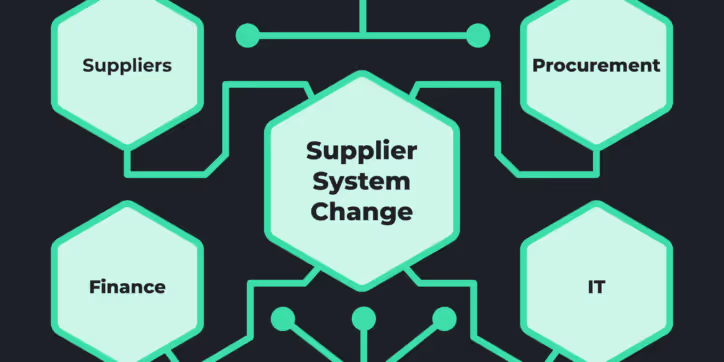
To build real momentum, you need to connect with the right people, and speak their language. Every stakeholder group brings a different perspective and set of priorities to the table. Procurement leaders tend to focus on efficiency, risk reduction, and ensuring compliance, while finance teams are usually most concerned with cost controls, auditability, and clear visibility into spending patterns.
IT teams will evaluate the system through the lens of security, data integrity, and how well it integrates into existing infrastructure. Suppliers themselves want the process to be easier—faster onboarding, fewer duplicate requests, and clearer communication. And finally, internal business users like category managers simply want tools that make their lives easier—ones that save time rather than add more steps.
When each group sees how the new system supports their individual goals, adoption becomes a shared objective instead of a top-down mandate.
How to Build Buy-In That Lasts
The most successful supplier system rollouts are treated not just as tech implementations, but as change management journeys. And like any good journey, they start with early alignment.
- Engage stakeholders early. Bring them into the conversation during needs assessments, not just at launch.
- Tailor your messaging. Speak directly to each group’s pain points and show them how the change helps.
- Demonstrate quick wins. Use pilots or demos to build confidence and highlight immediate improvements.
- Support adoption. Offer hands-on training, onboarding guides, and in-tool prompts to reduce friction.
- Listen and iterate. Create feedback loops to refine the experience and show users their input matters.
- Celebrate success. Acknowledge contributors and highlight early results that reinforce the value.
Buy-in isn’t a one-time event; it’s something you build, nurture, and reinforce throughout the transition.
Final Thought: Technology Can’t Succeed Without People
Modern procurement platforms have the potential to transform how organizations manage supplier data, risk, and relationships, but only if people use them. That’s why change management isn’t an afterthought; it’s a core part of the transformation itself.
When you align your tech strategy with stakeholder priorities, you don’t just implement a system—you set your organization up for lasting success.