

Strong supplier relationships start on day one.
Graphite’s best-in-breed supplier relationship management software drives seamless collaboration from the very first interaction through the entire supplier lifecycle.
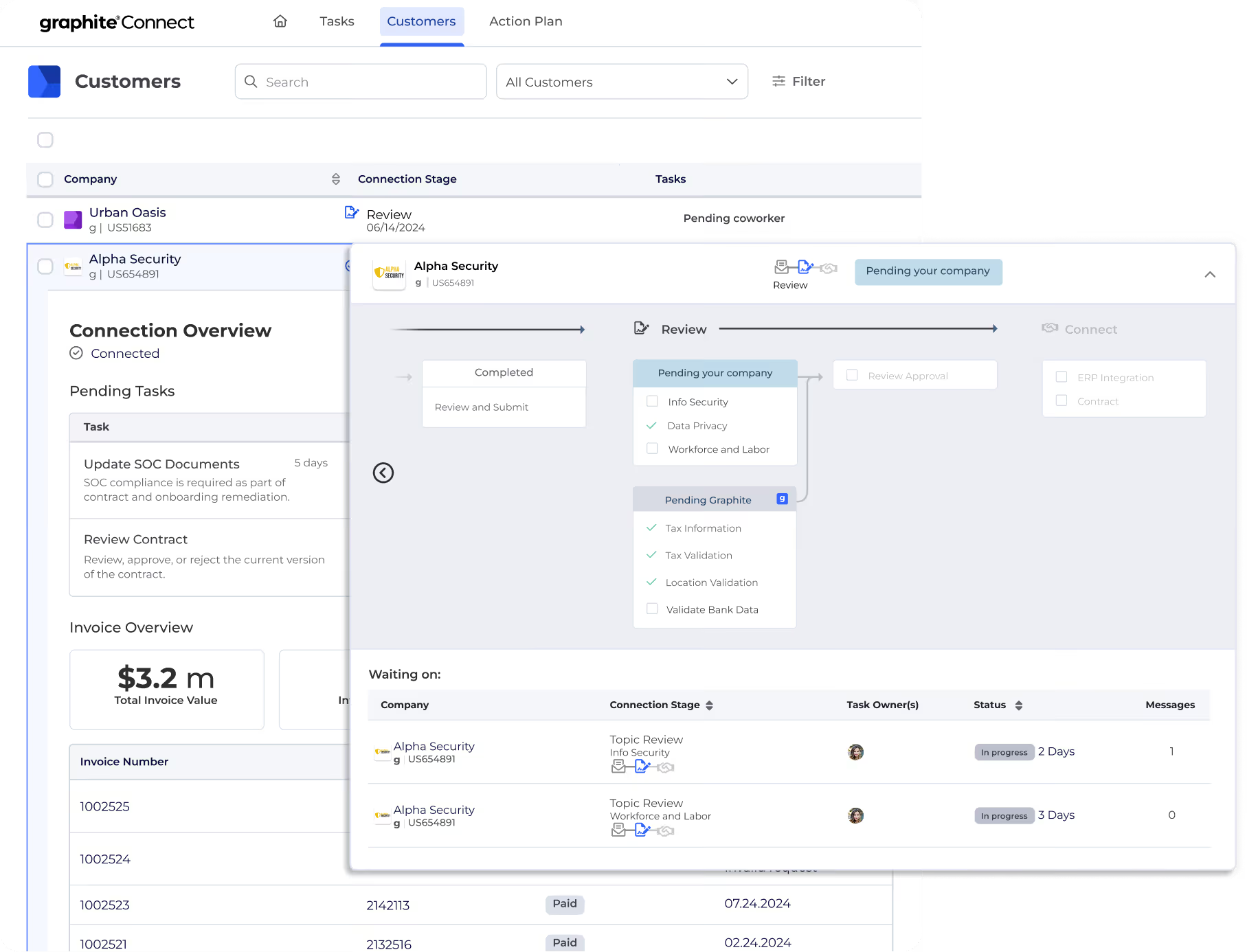





Stop chasing non-responsive suppliers.
Monitor supplier movement through your onboarding, risk, and performance review processes. With Graphite’s supplier relationship management software, get full transparency into which suppliers have gone quiet and with just a few clicks get them re-engaged.

“Before Graphite, a significant portion of my day
was consumed by constant fire-fighting and handling inquiries about vendor setups and delays.”

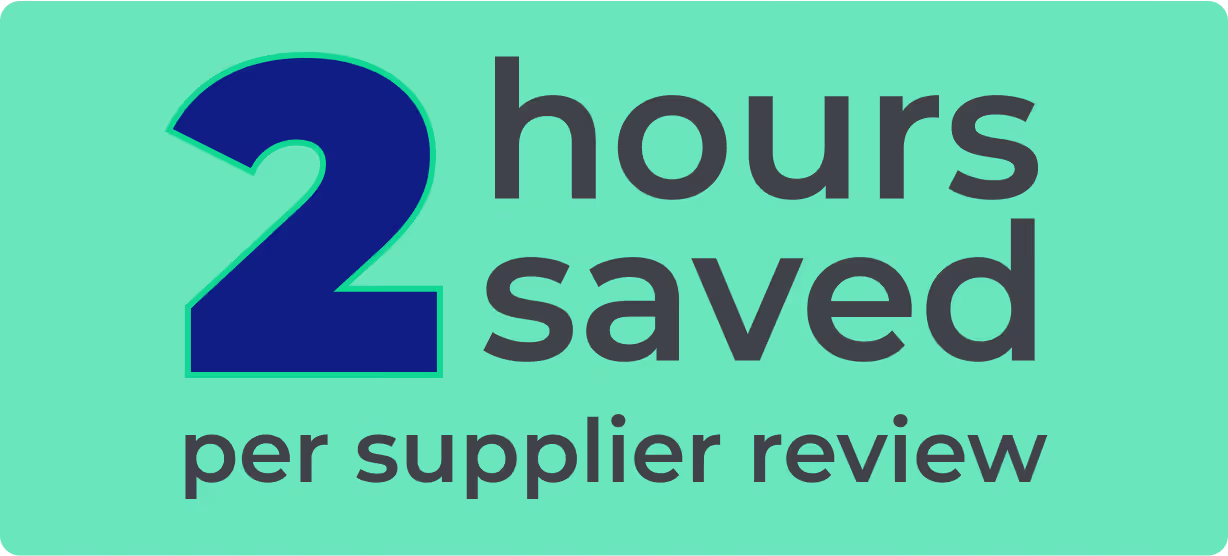
Automated Risk Reviews
Identify problem suppliers & take swift action. Ongoing data validations within our supplier relationship management system pinpoint and surface suppliers with missing or out-of-date information, streamlining your risk reviews to keep business moving forward.
Evaluate suppliers consistently with customizable scorecards.
Send scorecards to business owners & request supplier feedback.
Collect, aggregate, sort & review responses.
Create an action plan for suppliers & business owners and track completion.


Take a quick tour of the Graphite supplier relationship management software & stop chasing suppliers

Turn performance and risk reviews into action plans.
With our supplier relationship management tool, you can interface with suppliers, internal teams and compliance stakeholders to maintain the highest standards of supplier performance throughout the full lifecycle.
For Example
 Assign a credit request to the business stakeholder if a supplier hasn’t met their uptime SLA.
 Request additional documentation to support a new ESG requirement a legacy supplier hadn’t previously completed.
 Kick off a sourcing request if a supplier has failed to meet minimum requirements and you need to find a replacement.


Fragmented Communication Across Stakeholders
Procurement leaders often struggle to maintain consistent communication across teams, departments, and regions. Key supplier updates get buried in emails or lost in disconnected systems, making it difficult to keep everyone aligned. This lack of visibility slows down decision-making and leads to duplicate outreach or missed follow-ups that damage supplier trust.

Lack of Real-Time Supplier Insights
Without live access to supplier performance data, teams are forced to make decisions based on outdated reports or anecdotal feedback. It becomes difficult to spot early signs of disruption or to reward high-performing partners. This lack of transparency limits the ability to proactively manage relationships or course-correct when needed.

Inefficient Manual Relationship Tracking
Tracking supplier performance, engagement history, and contract details manually eats up valuable time. Spreadsheets and static documents quickly become outdated, and there’s no easy way to see how a relationship is evolving. As a result, procurement teams spend more time chasing information than building strategic partnerships.

No Standardized Approach to Managing Supplier Expectations
When expectations aren’t documented and shared across the organization, each team ends up managing suppliers differently. This creates confusion for suppliers and inconsistency in service quality, timelines, and accountability. Without a unified framework, it’s nearly impossible to enforce standards or measure performance fairly.
Difficulty Scaling SRM as Supplier Base Grows
What works for managing 10 suppliers falls apart when you’re managing 200. Without scalable tools and automated workflows, SRM becomes reactive, fragmented, and unsustainable. Procurement leaders are left firefighting issues instead of building resilient, long-term supplier partnerships.
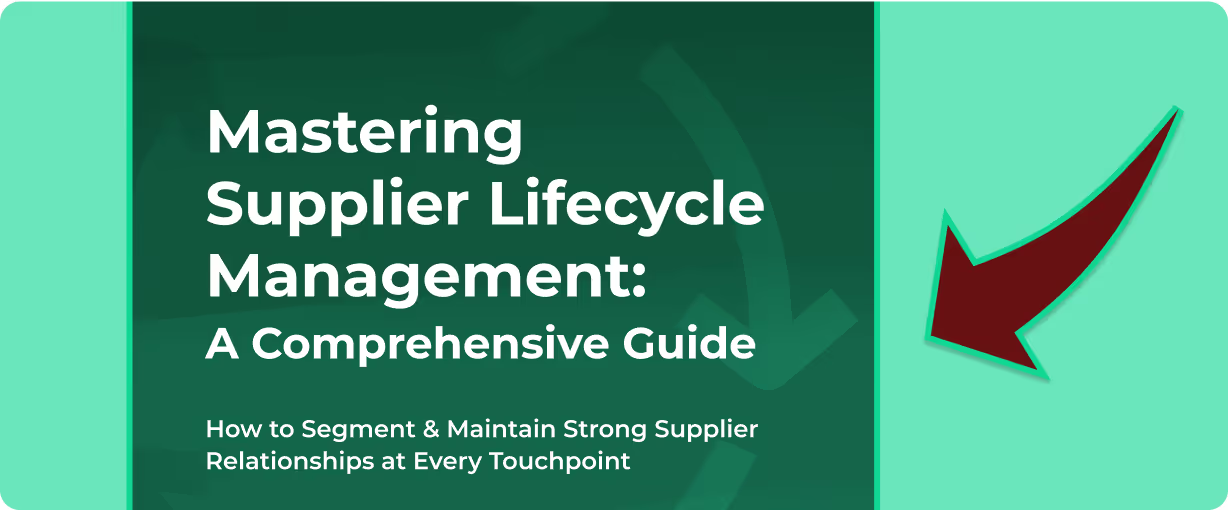
Stop These Common Supplier Relationship Failures
Learn more about supplier relationship management best practices and how to become a relationship master in this free 14-page ebook.
One Platform, Multiple Capabilities
Even the best AI solutions fall short without the right data, context, and workflows in place. Here’s what procurement teams and leaders often run into when implementing AI—and why strategy matters as much as technology.

Supplier Onboarding
Graphite automates supplier onboarding by centralizing data collection, compliance checks, and documentation in a shared profile supplier control. This reduces delays, ensures consistency, and gives procurement teams a clear view of every new relationship from day one. As part of the larger Graphite network, it allows suppliers to onboard once and connect with multiple buyers instantly.

Third-Party Risk Management
Graphite’s built-in risk tools continuously monitor supplier data, flagging issues related to financial health, regulatory compliance, and cybersecurity. Procurement teams get up-to-date risk insights without having to manually collect or verify information. These risk profiles are embedded across the supplier lifecycle, giving teams a more proactive approach to relationship management.

Guided Procurement Intake
With guided intake, internal requesters are routed through a structured intake process that captures all the key details needed for supplier evaluation. This ensures procurement has the context to support strategic sourcing decisions and improves collaboration with stakeholders. It also reduces back-and-forth by connecting intake directly to onboarding, risk, and approval workflows.

AI-Driven Procurement
Graphite uses AI to accelerate routine tasks like supplier validation, duplicate detection, and document review. This reduces administrative overhead and helps procurement teams move faster without sacrificing accuracy. By surfacing relevant insights and patterns, AI becomes a strategic layer that supports smarter supplier engagement across the platform.

Graphite Question Library
The Graphite Question Library standardizes the supplier data collection process by offering curated, industry-specific questions mapped to compliance, ESG, and operational topics. It helps buyers collect the right information without starting from scratch every time. Responses feed directly into supplier profiles, making it easier to assess, compare, and manage relationships.
Integrations That Fit Your Workflow
Graphite connects seamlessly with leading ERP, P2P, and third-party tools, allowing supplier data to flow cleanly across your systems.This ensures procurement teams always have accurate, up-to-date information wherever they work. These integrations make Graphite a central resource while fitting neatly into your existing processes.
Frequently Asked Questions About Supplier Relationship Management
What Is Supplier Relationship Management?
Supplier Relationship Management (SRM) is a strategic approach to building and sustaining mutually beneficial partnerships with key suppliers. It involves segmenting suppliers, tracking performance, managing risks, and driving continuous improvement and innovation together. SRM goes beyond transactional buying – it positions suppliers as collaborators who help deliver long-term value and competitive advantage
Why Is SRM Important For Businesses?
SRM is essential because it improves supply chain resilience, delivers cost savings, improves quality, and unlocks innovation through deeper collaboration. By treating suppliers as partners rather than vendors, companies gain preferential access during shortages, reduce disruptions, and elevate performance.
What Are The Key Components Of An Effective SRM Program?
Effective SRM includes supplier segmentation, structured onboarding, performance scorecards, risk management, and collaborative improvement activities. It relies on consistent communication, contract governance, and data-driven decision-making. Combined, these elements enable organizations to nurture their supplier relationships, manage risk proactively, and capture new sources of value over time.
How Does Supplier Segmentation Work In SRM?
Supplier segmentation categorizes suppliers based on their impact and risk. Strategic, high-impact suppliers warrant deeper collaboration, while low-impact suppliers are managed more transactionally. This targeted approach ensures that procurement resources are allocated effectively and supplier interactions are tailored for maximum value.
How Do You Measure Supplier Performance In SRM?
Supplier performance is typically tracked via scorecards that combine quantitative metrics (e.g., on-time delivery, quality levels, cost) with qualitative insights (e.g., responsiveness, innovation). Feedback is also important, as it creates a more balanced and open dialogue that helps improve how both sides work together.
Ready to Strengthen Supplier Relationships?
Disconnected tools and manual processes make it hard to manage supplier relationships the way they should be. Graphite Connect brings everything into one place so you can onboard faster, reduce risk, and build long-term value with every supplier. From intake to renewal, we help you streamline the entire relationship lifecycle.
Ready to see how it works in action? Schedule a demo today and take the first step toward smarter supplier management.