

Get Started
Graphite's supplier management tool helps you onboard faster, cut time on risk reviews and streamline supplier validations. Save time and money.
How to Create a Vendor Risk Playbook Without Slowing Down Sourcing
Why early supplier vetting is the key to faster deals and lower risk.
Why Risk and Speed Don’t Have to Be Enemies
For many procurement teams, managing vendor risk feels like a necessary slowdown. The more diligence you apply, the longer the process drags out. On the flip side, moving too quickly often means assuming more risk than your organization can afford.
But the tradeoff between speed and compliance isn’t inevitable.
The key is not to choose one over the other, but to implement a vendor risk playbook that provides clarity and repeatability. When teams understand the exact steps to take, who’s responsible for each one, and when they need to act, you enable both velocity and governance—without compromise.
What a Vendor Risk Playbook Should Actually Do
Many organizations think of a playbook as just another static policy document. In practice, it should function as a living, strategic tool.
A well-designed risk playbook clarifies roles across procurement, legal, compliance, and IT. It prevents teams from reinventing the wheel every time a new supplier enters the pipeline. It enables segmentation, ensuring not every vendor is subjected to the same exhaustive review. Most importantly, it sets expectations early—both internally and externally—so the process can move without confusion or friction.
When used effectively, the playbook becomes a speed enabler, surfacing potential risk before it turns into real delays.
How to Build a Risk Playbook That Doesn’t Block Progress
One of the biggest reasons vendor risk programs bog down sourcing is over-application—treating every supplier like a critical one. Instead, a high-performing playbook is intentionally built to flex based on vendor risk level.
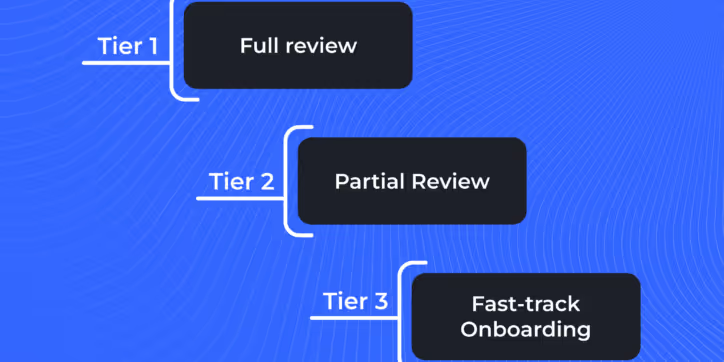
It starts with risk tiering. Not every supplier presents the same level of risk. Segmenting them based on criteria like data access, criticality, and spend allows for differentiated paths. For example:
- Tier 1 vendors might include those with access to sensitive data or core systems and require full IT and legal review.
- Tier 2 vendors may be strategic but less risky—requiring a lighter touch.
- Tier 3 suppliers are low-impact and should be fast-tracked with minimal oversight.
Next, build predefined workflows for each tier. When your team isn’t reinventing the process for each new vendor, onboarding becomes faster and more consistent. Automate repeatable steps where possible.
But automation alone isn’t enough—you need cross-functional alignment. Get early buy-in from compliance, legal, and IT. Define handoffs clearly and establish expected timeframes for reviews so procurement isn’t left in limbo.
Finally, make the playbook centralized and accessible. Teams should be trained to use it early in the sourcing cycle—not just when risk issues arise.
Key Components of a Streamlined Risk Playbook
Here are the foundational building blocks every vendor risk playbook should include:
- Risk Tiering Criteria – Clear guidelines on how vendors are classified based on business impact, access to sensitive data, geography, or spend.
- Roles and Responsibilities Matrix – A mapping of who owns which steps (procurement, legal, IT, compliance) and when they’re triggered.
- Workflow Templates – Predefined sequences of tasks for each vendor type that avoid reinvention.
- Decision Trees – Quick-reference guides that help teams determine what level of review is necessary.
- Exception Protocols – Rules for when to escalate or fast-track vendors in special cases.
- Tool Integrations – Embedding the playbook into procurement or intake platforms to ensure adoption.
When Risk Is Clear, Speed Follows Naturally
Vendor risk doesn’t have to be the bottleneck in your procurement engine. The real friction comes from ambiguity. When risk processes are clear, right-sized, and embedded into your sourcing workflows, compliance becomes an accelerator—not a roadblock.
A well-crafted playbook eliminates the guesswork and reduces back-and-forth. It builds internal confidence while signaling to suppliers that your process is mature, fair, and efficient.
With the right approach, procurement teams don’t have to choose between risk and results—they can deliver both.