

Get Started
Graphite's supplier management tool helps you onboard faster, cut time on risk reviews and streamline supplier validations. Save time and money.
What is Vendor Information Management?
Did you know that inefficient vendor information management can lead to supply chain delays, compliance failures, and missed opportunities for business growth? Without accurate data, you can run into problems that include risk inefficiencies, compliance issues, and delays that could negatively impact your overall performance.
By organizing and centralizing all information related to your suppliers, Vendor Information Management (VIM) keeps your business running smoothly. In this article, we’ll explore what vendor information management entails, how it differs from vendor performance management (VPM) and why it is vital for businesses with complex supply chains. We’ll also discuss the key benefits of VIM and how
What is Supplier or Vendor Information Management?
Vendor Information Management refers to the systematic handling of all supplier data, including:
- Contact information
- Legal documents
- Compliance & risk scorescertifications
- Performance metrics, and more.
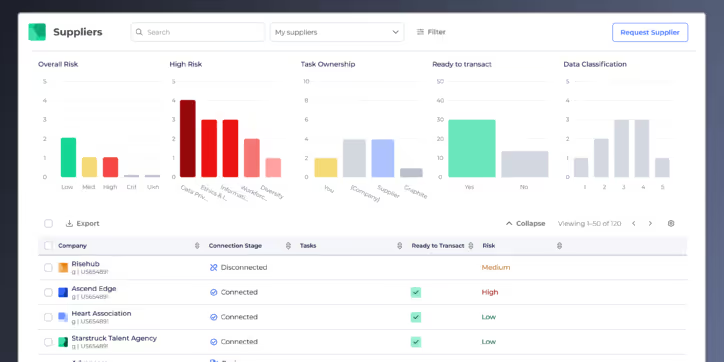
A vendor information management platform acts as a centralized hub, making sure you can easily access and manage supplier-related information. Rather than dealing with scattered spreadsheets, emails, and disconnected vendor information databases, vendor information management platforms offers a unified system that provides a single source for all supplier data.
Managing supplier information can be difficult, especially for larger organizations with hundreds or even thousands of suppliers operating globally. Every vendor has a different set of certifications, contracts, and compliance reports, making the vendor information management process complicated. VIM platforms eliminate these challenges by creating a detailed database where businesses can track, update, and retrieve supplier information in real time. This not only supports transparency but also reduces the likelihood of mistakes and allows for quicker decision-making.
For instance, imagine a company that sources materials from multiple international suppliers. Each of these suppliers must comply with various local regulations and certifications. Without a VIM system, tracking compliance would be extremely time-consuming. A VIM platform stores all this information in one place, enabling procurement teams to easily verify that each supplier is meeting the required standards.
In short, VIM enables a more organized and efficient supplier data management system while making sure that the right people have access to the right information at the right time.
What is the difference between vendor information management and vendor performance management?
Although both vendor information management (VIM) and vendor performance management (VPM) are essential to supplier management, they serve distinct purposes.
- VIM focuses on collecting, organizing, and maintaining supplier data so that businesses can easily access the information they need to manage supplier relationships and comply with regulations.
- SPM, on the other hand, evaluates and monitors supplier performance over time, ensuring that suppliers meet quality and delivery expectations.
While VIM lays the foundation for better data management, VPM leverages that data to measure supplier success. For example, a vendor information management software may track whether a supplier has all the necessary certifications and compliance documents in place. In contrast, SPM will assess how well that supplier performs by tracking key metrics like on-time deliveries, defect rates, and overall cost efficiency. Both systems work hand-in-hand to create a complete supplier management strategy, but their focus is different: VIM organizes the data, while VPM evaluates performance based on that data.
To illustrate, think of VIM as the supplier information database that stores all of a supplier’s legal and compliance documents. VPM, on the other hand, would track how often that supplier meets delivery deadlines or whether their products meet your quality standards. Both VIM and VPM are important but each has its own role in the broader process of managing supplier relationships and supporting a smooth, efficient supply chain.
Whose responsibility is vendor information management?
Responsibility for vendor information management typically lies with procurement or supply chain teams, but it often involves collaboration across departments, including compliance, legal, risk, IT/InfoSec and finance. Procurement teams generally lead the vendor information management process, as they are responsible for sourcing suppliers, negotiating contracts, and managing ongoing relationships. However, other departments play a key role in keeping supplier data accurate and up-to-date.
For instance, while the procurement team may gather essential supplier information during onboarding, the compliance team confirms that suppliers meet regulatory requirements, and the legal team reviews contracts to verify that all terms are met. The finance department, on the other hand, may evaluate the financial stability of suppliers to mitigate risks such as supply disruptions due to bankruptcy. Effective VIM requires seamless collaboration across these departments to ensure that everyone works from the same set of accurate, up-to-date data.
A dedicated vendor information management system also fosters better communication between departments, reducing the risk of miscommunication and data discrepancies. For example, if the legal team updates a supplier contract, the change should immediately be reflected in the vendor information management system, giving all teams access to the updated information. This kind of collaboration confirms that supplier data management is consistent across the organization, improving efficiency and minimizing the risks associated with outdated or inaccurate data.
Why is vendor information management important?
There are many benefits to prioritizing the implementation of a Vendor Information Management system within your business. These include the ability to:
A centralized supplier information database
One of the most important benefits of VIM is that it centralizes all vendor information in a single, easy-to-access system. By eliminating scattered spreadsheets and emails, VIM allows businesses to store all relevant supplier data in one place. This not only improves transparency but also ensures that every team member has access to the same information.
When all supplier data management is centralized, you can reduce the risk of errors caused by outdated or incomplete information. Teams can also respond faster to supplier issues, as they don’t need to dig through multiple sources to find the necessary information.
Reduce administrative costs arising from unnecessary vendor database management
Without vendor information management software, your procurement and supply chain teams can spend hours on unnecessary supplier database management tasks such as manually collecting, verifying, and updating supplier data. A strong vendor information management system automates these processes, reducing administrative burdens. When data collection, updates, and reporting are automated, you can spend less time on manual tasks and more time on strategic activities that drive value. For instance, rather than spending hours verifying supplier certifications, your teams can focus on negotiating better contracts or identifying cost-saving opportunities.
Additionally, reducing manual processes lowers the likelihood of human error. Errors in vendor information can lead to expensive mistakes, such as non-compliance fines or business disruption/delays in production. By automating these tasks, you can not only save time but also improve accuracy, leading to lower administrative costs and fewer risks.
Improve compliance and reduce risk
VIM plays a crucial role in ensuring that businesses comply with industry regulations and internal policies. By centralizing supplier information, vendor information management makes it easier for you to track and verify compliance in your organization. This includes confirming that all supplier certifications, contracts, and legal documents are up to date. By having a clear overview of supplier compliance, you can minimize the risk of non-compliance and avoid potential fines or legal disputes.
For example, in industries with strict environmental or safety regulations, failing to verify a supplier’s compliance could result in significant penalties. A vendor information management system allows businesses to easily check whether suppliers meet the necessary standards and take corrective action if needed. Moreover, having accurate supplier information also helps you assess and mitigate supply risks, such as financial instability or poor supplier performance, before they lead to costly disruptions.
Streamline vendor onboarding
Onboarding new suppliers can be time-consuming, especially when done manually. Gathering, verifying, and entering all the required supplier information can take weeks, delaying important business operations. A vendor information management system simplifies and speeds up the onboarding process by automating data collection and verification. This ensures that all required information is gathered accurately from the start and that suppliers can begin working with your business sooner.
An efficient onboarding process also helps establish strong supplier relationships from day one. By streamlining onboarding, you can minimize the administrative burden on both parties and allow suppliers to start contributing value more quickly. A faster onboarding process also keeps your business agile and can quickly adapt to changes in the market by adding new suppliers when needed.
Key Components of Vendor Information Management Systems
A successful vendor information management (VIM) system is made up of several critical components, each serving its purpose in efficient supplier data management. Below are the key components every effective vendor information management software should have.
Systemic vendor data collection
Data collection is the foundation of any vendor information management system. It involves gathering all necessary information about suppliers, including contact details, financial health, certifications, contracts, and compliance documentation. Having access to this data not only helps businesses make informed decisions but also supports compliance with regulations.
However, manual supplier data collection is time-consuming and error-prone, which is why automation is a key element of a modern VIM system. With automated data collection processes, businesses can make sure that information is gathered quickly, accurately, and in real time. This eliminates the need for manual input, significantly reducing the risk of human error.
For example, if your procurement team is onboarding a new supplier, the vendor information management software can automatically request necessary documentation such as tax forms, insurance certificates, and relevant certifications, so that nothing is missed during onboarding.
A secure but centralized vendor information database
Once data is collected, it must be stored in a way that is both secure and easily accessible to all relevant stakeholders. An effective VIM system centralizes all supplier data in a secure, cloud-based platform that can be accessed by multiple departments, including procurement, legal, compliance, and finance teams. This centralized approach not only provides access to the most up-to-date supplier information database but also reduces the chances of errors or inconsistencies across departments.
Data organization is just as important as storage. A well-organized vendor information management system categorizes data based on supplier characteristics such as region, industry, risk level, or performance metrics. For instance, if your business works with suppliers from multiple countries, a strong VIM system will allow you to organize supplier data based on location, enabling quick access to country-specific regulations or compliance information. This kind of organization is essential for ensuring that your team can find the right data at the right time.
Vendor information accuracy and compliance tracking
A reliable vendor information management system continuously monitors and tracks the compliance status of each supplier, so that all necessary certifications, licenses, and legal documents are up to date. The system can automatically alert the relevant teams when certifications are about to expire, giving businesses the time to follow up with suppliers and confirm that documents are renewed before they lapse.
For example, in industries like food manufacturing or pharmaceuticals, suppliers need to maintain certain safety certifications. Vendor information management software tracks these certifications, so your company is not caught off guard with expired documents during a regulatory audit. Additionally, if a supplier fails to meet compliance requirements, the system can flag the issue, enabling your team to take corrective action before it escalates into a larger problem.
Vendor data analysis and reporting
Collecting and storing supplier data is valuable, but the true power of VIM lies in its ability to turn that data into actionable insights. Data analysis and reporting tools allow businesses to evaluate supplier performance, assess risks, and identify opportunities for improvement.
For example, procurement teams can use reporting tools to evaluate supplier performance metrics such as risk or ESG scorecards. such as on-time delivery rates, defect rates, or cost-saving contributions. If a supplier consistently falls below standards, presents a high risk to the business, or delivers late, the vendor information management software can generate reports that highlight this trend, prompting the procurement team to renegotiate terms or find alternative suppliers. These insights can also be shared across departments, making legal, compliance, and finance teams aware of any potential risks or performance issues.
What is Vendor Information Management Software?
Vendor information management software simplifies the entire process of collecting, organizing, and maintaining supplier data. It offers businesses a centralized platform where they can store and manage supplier information with ease. VIM software also automates time-consuming manual processes, such as data collection and compliance tracking, allowing teams to focus on more strategic activities.
Graphite Connect offers an intuitive SIM solution that can help your business centralize supplier data, streamline onboarding, and maintain compliance. With our platform, you can easily track supplier certifications, contracts, and performance metrics, ensuring that your supply chain is always running smoothly. By automating data collection and reporting, Graphite Connect empowers your teams to focus on strategic tasks rather than manual data entry.
Simplify Vendor Information Management today
Ready to take control of your supplier data more quickly and efficiently? With Graphite Connect’s vendor information management software, you can centralize your supplier data, improve compliance, and streamline onboarding, all from one easy-to-use platform. Don’t let outdated vendor information slow you down – schedule a demo today and see how our vendor information management solution can help you manage your supply chain more effectively.