

Get Started
Graphite's supplier management tool helps you onboard faster, cut time on risk reviews and streamline supplier validations. Save time and money.
What is Supplier Onboarding? Benefits, Challenges, and Tips for Success
Supplier onboarding sets the foundation for every supplier relationship. From collecting business and banking information to verifying compliance requirements and assessing risk, each step can affect data accuracy, operational efficiency, and supply chain security.
Yet onboarding processes often become slowed by manual work, fragmented systems, and inconsistent requirements across teams. A structured approach can help procurement teams bring suppliers into the business faster while maintaining the controls needed to manage risk.
This guide covers everything you need to know about supplier onboarding, including the process, required information, best practices, technology, risk assessment, industry-specific considerations, and practical resources to help you build a more efficient onboarding program.
What is supplier onboarding?
Supplier onboarding involves collecting and verifying information about new suppliers to confirm they meet your company's standards and requirements. Knowing what supplier onboarding is and executing it properly helps maintain a reliable supply chain, ensure compliance with regulations, and reduce risks associated with new suppliers
Benefits of effective supplier onboarding
When you onboard suppliers properly, you enjoy several benefits that include:
- Improved data accuracy: Standardized data collection and validation help maintain complete, reliable supplier records.
- Reduced risk: Early verification of supplier information, compliance requirements, and financial details helps identify potential risks before they become costly issues.
- Faster onboarding: Automated workflows and clear requirements reduce manual work, delays, and back-and-forth communication.
- Better compliance: Consistent documentation and verification make it easier to ensure suppliers meet regulatory and organizational requirements.
- Stronger supplier relationships: Clear expectations and communication create a smoother experience for both procurement teams and suppliers.
- Greater operational efficiency: Centralized supplier information gives stakeholders better visibility and reduces duplicate or fragmented processes.
A well-defined onboarding process brings these benefits together by giving teams a consistent framework for evaluating, approving, and activating new suppliers. The new vendor onboarding process breaks down how to structure that workflow from initial assessment through supplier integration and orientation.
What Does the Supplier Onboarding Process Include?
The supplier onboarding process typically covers everything from identifying business needs and sourcing potential vendors to collecting documentation, assessing capabilities, evaluating risk, negotiating contracts, and integrating approved supplier data into your systems. Clear requirements and defined responsibilities help teams move suppliers through each stage consistently while reducing delays and missed steps.
A structured new supplier onboarding process can help procurement teams establish a repeatable approach, from pre-onboarding planning through supplier activation and ongoing evaluation. A vendor onboarding checklist can also provide a practical framework for tracking key requirements across sourcing, documentation, risk analysis, contracting, ERP integration, and ongoing supplier management.
What Information Do You Need From a New Supplier?
Collecting the right supplier information from the start helps procurement teams build accurate records and avoid delays later in the supplier lifecycle. Typical requirements include business and contact details, tax and banking information, compliance documents, insurance certificates, product or service specifications, and relevant security requirements.
The information you need can vary based on the supplier, category, industry, and risk level. A well-structured onboarding form makes the collection process easier for both suppliers and internal teams.
How to Assess Supplier Risk During Onboarding
Supplier risk assessment helps procurement teams identify potential financial, compliance, operational, and reputational risks before a supplier becomes part of the supply chain. Start by collecting relevant supplier information, validating submitted data and documentation, and evaluating risk based on factors such as probability and potential impact. Establish clear risk thresholds and remediation steps for suppliers that require additional scrutiny.
Ongoing monitoring also helps teams identify changes in supplier risk after onboarding. A structured supplier onboarding risk assessment process can help procurement teams standardize these evaluations, apply consistent criteria, and address potential risks before they disrupt business operations.
Supplier Onboarding Best Practices
A consistent approach can make supplier onboarding faster, easier to manage, and more reliable. Key best practices include:
- Map the onboarding process: Define each stage, stakeholder responsibility, and expected timeline.
- Set clear requirements: Tell suppliers exactly what information and documentation they need to provide.
- Simplify questionnaires: Use conditional questions so suppliers only complete sections relevant to them.
- Automate data validation: Verify supplier information and documentation wherever possible.
- Centralize communication: Give suppliers and internal stakeholders a clear place to manage onboarding activities.
- Track onboarding KPIs: Monitor cycle time, data accuracy, completion rates, and supplier experience.
- Maintain two-way communication: Give suppliers opportunities to raise questions and provide feedback.
These practices can help procurement teams create a more consistent and supplier-friendly process while reducing unnecessary delays. Keeping in mind supplier onboarding best practices also help teams identify process gaps and establish a repeatable framework for continuous improvement.
How to Speed Up Supplier Onboarding
Speeding up supplier onboarding starts with removing unnecessary manual work while maintaining appropriate verification and controls. Supplier-managed profiles can allow vendors to submit and update their own information, while automated validation can verify tax, banking, and compliance data. Integrating onboarding software with your ERP can also reduce duplicate data entry and keep supplier records synchronized.
Risk-based workflows can route only higher-risk suppliers for additional review, helping teams avoid unnecessary delays. These approaches can significantly improve onboarding efficiency without compromising data quality.
Supplier Onboarding Software and Tools
Manual onboarding becomes harder to manage as supplier volumes increase. Supplier onboarding software can centralize information and automate repetitive steps while giving procurement teams greater visibility into the onboarding process. Common capabilities include:
- Automated onboarding workflows
- Supplier self-service
- Data validation
- Document management
- Compliance tracking
- Risk assessment
- ERP integration
- Centralized supplier data
Technology can also create a consistent process across departments and supplier types. Rather than relying on spreadsheets, email threads, and disconnected systems, teams can establish a shared source of supplier information and track progress through defined workflows. Explore vendor onboarding tools and features for a closer look at the capabilities procurement teams should consider.
Supplier Onboarding by Industry
Supplier onboarding requirements vary by industry. Factors such as regulatory requirements, supplier volume, product complexity, compliance obligations, and operational dependencies all influence what procurement teams need to collect, verify, and monitor. Here’s how supplier onboarding can support different industries.
Food & Beverage
Food and beverage companies need to manage supplier information alongside food safety and compliance requirements. A structured onboarding process can help teams automatically monitor food safety compliance while keeping supplier data current. It also makes it easier to respond quickly when demand fluctuations require new or existing suppliers to be activated.
Gas Stations & Convenience Stores
Gas stations and convenience stores manage suppliers across food products, fuel, and other categories, each with different data and compliance requirements. Supplier onboarding can help teams monitor food products safely and track fuel-specific supplier data requirements without relying on disconnected manual processes.
Higher Education
Higher education institutions often work with a broad supplier base while balancing compliance, sustainability, and administrative requirements. A structured onboarding process can help institutions onboard new suppliers quickly, meet compliance requirements, and make progress toward sustainability goals.
Manufacturing
Manufacturers depend on suppliers to keep production schedules, quality standards, and material availability on track. Supplier onboarding needs to account for production requirements, certifications, compliance documentation, capabilities, and supplier performance expectations. Integrating supplier information with existing ERP and procurement systems can also reduce manual data entry and keep critical records synchronized.
For manufacturers looking to reduce delays, supplier onboarding software for manufacturing can help streamline supplier data collection and verification. Faster onboarding can help procurement teams respond to changing production needs without weakening the controls required for supplier approval. A standardized process also gives stakeholders greater visibility into supplier information before a supplier becomes part of the production network.
Media & Entertainment
Media and entertainment companies often need to vet and onboard both vendors and talent quickly to keep productions moving. A streamlined supplier onboarding process can help teams quickly vet new vendors and talent, collect the required information, and reduce administrative delays that could affect production schedules.
Pharmaceuticals & Medical Devices
Pharmaceutical and medical device companies operate under stringent quality and compliance requirements. Supplier onboarding needs to support the collection and verification of documentation while helping vendors move through GxP compliance and quality checks efficiently. A structured process can help protect supply continuity without bypassing critical controls.
Retail
Retailers often manage large and changing supplier networks, making onboarding speed particularly important when demand shifts or new products need to reach customers quickly. Supplier onboarding processes need to handle high supplier volumes while maintaining accurate product, compliance, and business information.
With supplier onboarding platforms for retail, procurement teams can create more consistent workflows for collecting and validating supplier information. Faster onboarding also makes it easier to respond to seasonal demand fluctuations and bring new suppliers into the network without adding unnecessary administrative work. Centralized supplier data can give procurement and other stakeholders greater visibility into supplier status and requirements.
Consumer Goods
Consumer goods companies often manage complex supplier networks spanning raw materials, finished products, packaging, and other services. Supplier onboarding needs to capture product specifications, certifications, regulatory information, business details, and other data required to establish the relationship.
A standardized onboarding process and a dedicated consumer goods onboarding platform can help teams validate supplier information before activation and maintain more consistent supplier records. It can also reduce manual work when procurement teams need to onboard suppliers quickly in response to product launches, changing demand, or supply requirements. For organizations managing large supplier networks, centralized supplier data can improve visibility across procurement and other business stakeholders.
Tech
Technology companies may work with suppliers providing software, infrastructure, professional services, hardware, and other critical capabilities. Supplier onboarding can help centralize supplier data, reduce compliance bottlenecks, and improve stakeholder visibility while giving teams a consistent process for collecting and validating supplier information.
Transportation & Logistics
Transportation and logistics companies need supplier onboarding processes that support carrier vetting, compliance, and business continuity. Collecting and validating carrier information consistently can help teams establish supplier relationships while maintaining visibility into the requirements that affect ongoing operations.
Key challenges to efficient supplier onboarding (and how to overcome them)
Supplier onboarding is a complex process and the experience can vary greatly depending on your industry, relevant regulations as well as company commitments to initiatives like sustainability and diversity. However, there are plenty of ways to make it easier. A structured onboarding process incorporating digital onboarding surveys and a new vendor onboarding checklist is a great place to start.
Let’s take a look at some common supplier onboarding challenges, and how your business can overcome them and optimize its supplier management.
Manual data entry
Manual data entry is time-consuming and prone to errors, which can slow down onboarding. Automating data collection and validation using supplier onboarding tools can eliminate the need for manual entry, reducing errors and speeding up the process.
Inconsistent data quality
Inconsistent data quality can lead to compliance issues and operational inefficiencies. Ensuring data consistency through automated systems, on the other hand, helps maintain high-quality, accurate supplier information. Tools like Graphite Connect validate all commercial data, creating a ‘golden record’ of accurate supplier data.
Lack of visibility and communication
Poor visibility and communication can cause delays and misunderstandings during onboarding. Improving visibility and communication through integrated systems ensures that all stakeholders are informed and involved, facilitating smoother onboarding.
Compliance and risk management
Managing compliance and risk is critical for supplier onboarding. Non-compliance can lead to legal issues and financial losses. Implementing risk management strategies and ensuring all suppliers meet regulatory standards can mitigate these risks
Integration with existing systems
Integrating supplier onboarding tools with your existing ERP and procurement systems can be challenging. Ensuring seamless integration and maintaining a single source of truth for supplier data can streamline onboarding. Graphite Connect works with all major ERPs to ensure that data is kept up-to-date, actionable, and de-duplicated.
Take your supplier onboarding to the next level
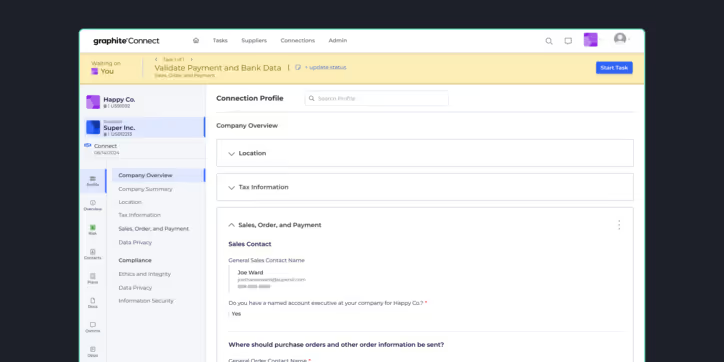
While understanding what supplier onboarding is is critical, efficient supplier onboarding really starts with the right tools. Graphite Connect is a comprehensive supplier onboarding and management platform that’s designed to make onboarding a smooth experience for buyers and vendors alike. With automated vendor validation, integrated risk assessments, and a central RFP repository, it’s never been easier to onboard new suppliers.
Don't let inefficient onboarding slow you down—experience the difference with Graphite Connect. Request a demo today and see how we can transform your supplier onboarding process and improve your supply chain management.