

Get Started
Graphite's supplier management tool helps you onboard faster, cut time on risk reviews and streamline supplier validations. Save time and money.
What Is Bank Account Verification? A Complete Guide for Procurement Leaders
Procurement teams can no longer treat supplier banking data like a simple admin task. Payment fraud, fake vendor requests, and account takeover attacks are forcing organizations to rethink how they validate supplier information before money moves. Bank account verification helps procurement and AP teams confirm that supplier banking details are legitimate, accurate, and safe to use before issuing payments.
What Is Bank Account Verification?
Bank account verification is the process of confirming that a bank account is valid, active, and owned by the individual or business claiming ownership of it. Procurement and finance teams use bank account verification to reduce payment fraud, prevent banking errors, and maintain accurate supplier records.
In procurement, bank account verification usually happens during supplier onboarding, vendor payment setup, or when a supplier updates banking information. A proper verification of bank account details typically confirms:
- The bank account exists
- The routing number is valid
- The account can receive ACH or wire payments
- The account owner matches the legal supplier entity
- The banking information has not been manipulated or falsified
Without these controls, organizations risk sending payments to fraudulent accounts, duplicate vendors, or compromised supplier profiles.
What Procurement Teams Verify
Vendor bank account verification goes beyond checking whether an account number is formatted correctly. Procurement leaders need to validate multiple layers of supplier data before approving payments. A modern business bank account verification process usually includes:
- Bank account number verification: Verification tools confirm that the account structure and routing details align with legitimate banking systems.
- Bank account ownership verification: Teams verify that the bank account belongs to the legal supplier entity or authorized payee.
- ACH compatibility checks: Organizations confirm whether the account can receive ACH payments or other payment types.
- Business identity validation: Supplier names, tax IDs, and business registrations are cross-checked against banking and third-party records.
- Fraud screening: Advanced systems look for suspicious behavior, duplicate accounts, high-risk changes, or unusual onboarding patterns.
Where Bank Account Verification Fits Into Procurement Workflows
Bank account verification appears throughout the supplier lifecycle, not just during onboarding. Procurement and AP teams commonly perform verification during:
- New supplier onboarding
- Vendor master creation
- Banking change requests
- ERP synchronization
- Payment approval workflows
- Supplier compliance reviews
Strong supplier verification processes reduce operational risk while improving payment accuracy and audit readiness.
Why Bank Account Verification Matters for Procurement Leaders
Procurement teams now sit directly in the path of financial fraud attempts. Attackers increasingly target supplier onboarding workflows because changing banking information is often easier than breaching payment systems directly. As organizations expand supplier networks and automate procurement operations, vendor bank account verification has become a core security control rather than a back-office task.
Vendor Fraud Is Increasing
Fraud schemes targeting procurement and AP teams have become more sophisticated over the past several years. Common threats now include:
- Business email compromise: Fraudsters impersonate suppliers or executives to request changes to bank details or urgent payments.
- Fake vendor onboarding: Attackers create shell companies or synthetic vendors designed to receive fraudulent payments.
- Payment diversion scams: Criminals intercept legitimate supplier communications and replace valid banking information with fraudulent accounts.
- AI-enabled impersonation attacks: Modern fraud campaigns increasingly use AI-generated emails, fake identities, and social engineering tactics to manipulate approval workflows.
Graphite’s fraud trends report explains how procurement fraud has evolved from traditional email compromise into more advanced identity-based attacks.
Manual Verification Processes Create Risk
Many organizations still rely on fragmented workflows to manage supplier verification. Common examples include:
- Email approvals
- Shared spreadsheets
- PDF forms
- Manual document reviews
- Decentralized supplier records
Those processes create blind spots that attackers exploit. An employee may approve a banking change without validating ownership. Another team may onboard a duplicate vendor because supplier data exists across disconnected systems. A fraudulent payment may move before anyone notices suspicious account changes.
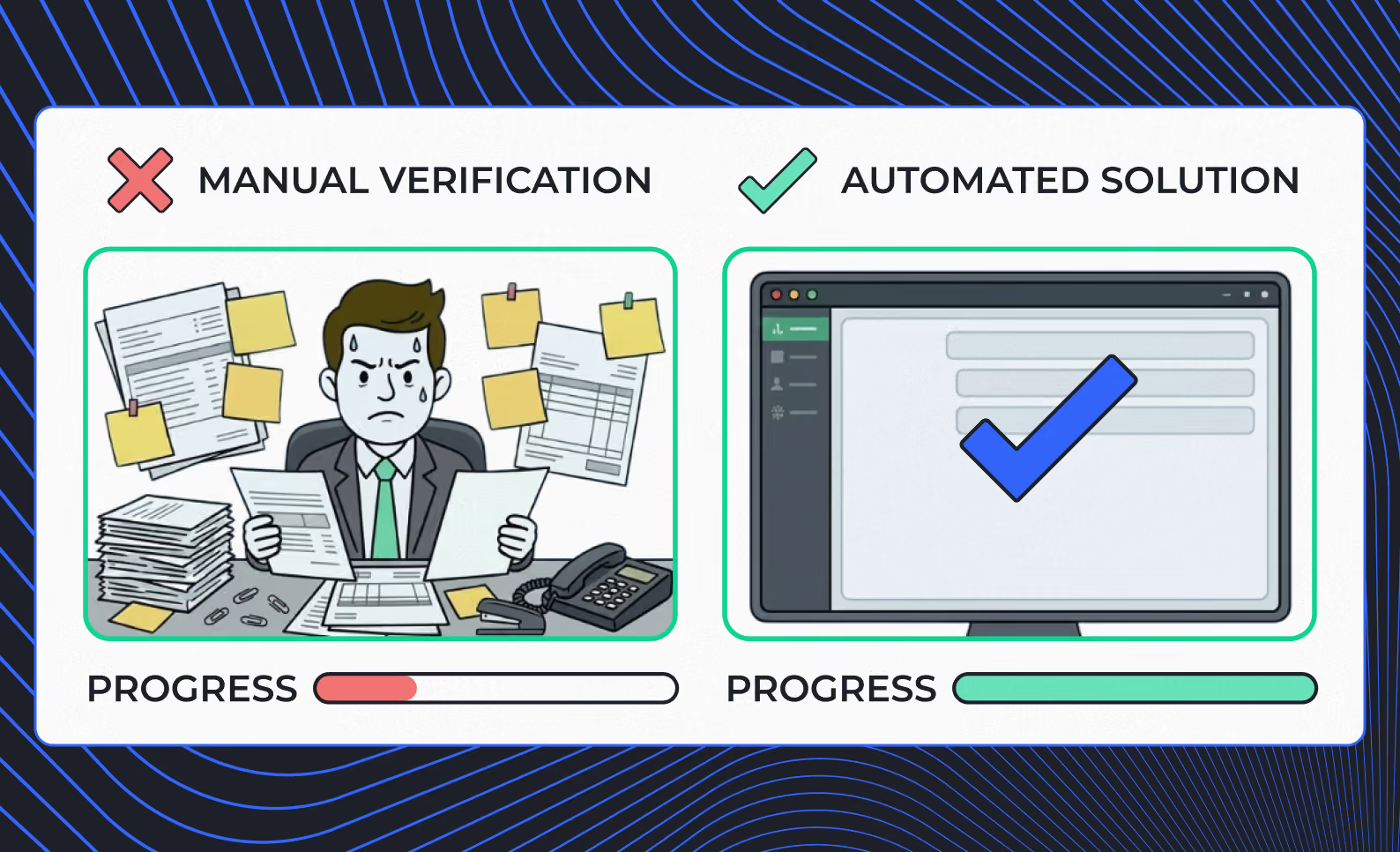
Manual vendor verification process gaps increase risk because there is often no centralized validation system, audit trail, or real-time fraud detection.
The Financial Impact of Unverified Banking Data
Weak bank account verification controls can create serious operational and financial consequences. Potential outcomes include:
- Fraudulent payments
- Failed ACH transfers
- Delayed supplier onboarding
- Duplicate vendor records
- Compliance violations
- Audit findings
- Supplier disputes
- Reputational damage
Recovering funds after a fraudulent transfer is often extremely difficult, especially once the funds have moved through multiple accounts or international banking rails.
Procurement Teams Now Own More Supplier Risk
Procurement leaders increasingly manage responsibilities that extend beyond sourcing and cost control. Modern procurement teams now oversee:
- Supplier onboarding controls
- Vendor master governance
- Third-party risk management
- Supplier compliance
- Payment data accuracy
- Cross-functional fraud prevention
That shift makes bank account verification systems essential for maintaining secure supplier operations.
How Bank Account Verification Works
The bank account verification process typically combines banking validation, business identity checks, fraud screening, and approval workflows. The exact process varies by organization and technology stack, though most workflows follow similar stages.
Step 1: Collect Supplier Banking Information
The bank account verification process begins when procurement or AP teams collect supplier payment details during onboarding or vendor setup. Organizations typically request bank account numbers, routing numbers, SWIFT or BIC codes, tax information, and legal business entity details.
Many companies still gather this information via PDFs, spreadsheets, or email attachments, though modern supplier onboarding systems enable vendors to submit and manage data through secure, self-service workflows. Collecting standardized and complete banking information upfront reduces onboarding delays and improves downstream validation accuracy.
Step 2: Verify the Bank Account Number
After collecting supplier banking data, organizations validate whether the bank account itself is legitimate and properly configured for payments. Bank account number verification checks may include routing number validation, ACH compatibility checks, account formatting validation, and confirmation that the bank is part of recognized financial networks.
Online bank account verification tools often perform these checks in real time using APIs and third-party banking databases. This step helps procurement teams catch invalid account information, formatting errors, closed accounts, and fraudulent payment details before payments are processed.
Step 3: Confirm Account Ownership
Validating account ownership is one of the most important parts of the verification process because a legitimate account number does not necessarily belong to the supplier requesting payment. Procurement teams must confirm that the legal business entity matches the bank account owner through identity verification, tax ID matching, third-party databases, or supporting documentation.
Some advanced bank account verification services also use biometric verification and identity-based validation methods to confirm that authorized supplier representatives control the account. Ownership validation helps prevent account takeover fraud, fake vendor schemes, and unauthorized banking changes.
Step 4: Approve and Store Verified Supplier Data
Once banking information has been validated and approved, supplier data is stored in procurement systems, ERP platforms, or vendor master databases. Organizations typically maintain approval histories, audit trails, validation timestamps, and supplier change logs to support compliance and internal controls.
Centralized supplier records reduce duplicate vendors and improve visibility across procurement, AP, and finance workflows. A properly integrated bank account verification system also helps maintain consistent supplier data across multiple business systems.
Step 5: Revalidate Banking Changes
Bank account verification should continue beyond the initial onboarding process because supplier banking details can change over time. Vendors may switch banks, update treasury operations, merge with other entities, or experience account closures. Fraudsters also frequently target banking change requests because those workflows are often less secure than initial onboarding.
Procurement teams should immediately reverify any payment detail updates and periodically review high-risk suppliers as part of ongoing vendor risk management. Continuous monitoring and reverification help organizations detect suspicious changes before fraudulent payments occur.
Common Types of Bank Account Verification
Organizations use several different methods to verify supplier banking information. Some rely heavily on manual reviews while others use automated validation systems. Each approach comes with tradeoffs involving speed, accuracy, fraud prevention, and supplier experience.
Manual Bank Account Verification
Many organizations still rely on manual verification processes to validate supplier banking information. Procurement and AP teams may collect bank letters, review PDF forms, confirm details through email, or contact suppliers directly by phone. While manual workflows can work in smaller environments, they become difficult to scale as supplier networks grow. Manual verification also increases the likelihood of human error, inconsistent approvals, onboarding delays, and fraud exposure. Email-based verification processes are especially vulnerable because attackers frequently spoof supplier communications to manipulate payment information.
ACH Micro-Deposit Verification
ACH bank account verification often uses micro-deposits to confirm account ownership. The process works by:
- Sending small deposits to the supplier’s account
- Asking the supplier to confirm deposit amounts
- Verifying account access
Micro-deposit verification helps confirm that the recipient controls the account. Benefits include:
- Relatively simple implementation
- Basic ownership validation
- Compatibility with ACH workflows
Limitations include:
- Slower onboarding
- Supplier friction
- Delayed approvals
- Limited fraud intelligence
Instant Online Bank Verification
Modern online bank account verification systems use APIs and financial data networks to instantly validate banking details. These tools can confirm account validity, routing information, payment compatibility, and ownership alignment in real time without requiring manual intervention.
Instant verification reduces onboarding friction while improving payment accuracy and fraud prevention. Procurement organizations increasingly adopt automated bank account verification software to accelerate supplier setup and minimize the operational burden on AP and procurement teams.
Business Identity and Ownership Verification
Advanced bank account verification services combine banking validation with business identity verification to strengthen supplier security controls. These systems cross-reference supplier names, tax IDs, business registrations, and ownership records against trusted third-party databases.
Identity-based verification is particularly important because fraudsters often use legitimate-looking bank accounts that do not belong to the actual supplier. By validating both the business entity and the banking relationship, procurement teams can reduce the risk of fake vendors, synthetic identities, and unauthorized payment requests.
Continuous Monitoring and Validation
Supplier verification cannot end after onboarding because banking and supplier risk conditions change over time. Continuous monitoring systems track supplier banking updates, suspicious account changes, duplicate vendor records, and emerging fraud indicators across the vendor lifecycle.
Some platforms also apply ongoing risk scoring and behavioral analysis to identify unusual supplier activity before payments are approved. Continuous validation gives procurement teams stronger visibility into supplier risk while reducing the likelihood of fraudulent or misdirected payments.
What Is a Bank Account Verification Letter?
A bank account verification letter is an official document issued by a bank confirming that an account exists and belongs to a specific individual or business. Procurement and AP teams often request these letters during supplier onboarding or payment updates.
What a Bank Account Verification Letter Includes
Most bank account verification letters contain:
- Account holder name
- Bank name
- Account number
- Routing number
- Confirmation of account activity
- Bank representative information
Some organizations also request supporting documents, such as voided checks or bank statements.
Why Procurement Teams Request Verification Letters
Verification letters provide additional documentation to support the supplier's banking legitimacy. Common use cases include:
- New supplier onboarding
- Banking change requests
- Audit documentation
- Compliance reviews
- High-risk supplier validation
A bank account verification form may also accompany onboarding packets, requiring suppliers to certify the accuracy of their payment information.
Why Verification Letters Alone Are No Longer Enough
Static documents create limitations in modern fraud environments. Problems include:
- Forged documents
- Outdated information
- Lack of live validation
- Limited fraud detection
- No behavioral analysis
Fraudsters increasingly create convincing fake banking documents, making document-only verification unreliable as a standalone control. Modern bank account verification services combine document collection with live validation and identity-based verification.
The Biggest Risks in Traditional Vendor Verification Processes
Many procurement organizations still operate with fragmented onboarding and verification workflows, exposing the business to unnecessary risk. Fraudsters specifically target weak vendor controls because supplier data often flows across multiple disconnected systems.
Email-Based Verification Is Easy to Exploit
Many supplier verification workflows still rely heavily on email communication, creating a major vulnerability for procurement and AP teams. Fraudsters frequently spoof supplier email addresses, impersonate executives, or hijack existing conversations to submit fake banking change requests.
Because these attacks often appear legitimate, employees may unknowingly approve fraudulent payment updates without completing proper ownership validation. A single compromised email thread can redirect large supplier payments before anyone detects suspicious activity.
Disconnected Systems Create Supplier Data Gaps
Supplier information often lives across multiple disconnected systems, including ERPs, AP platforms, spreadsheets, procurement tools, and email chains. Those fragmented workflows create inconsistent supplier records and make it difficult to maintain a reliable source of truth for vendor data.
Procurement teams may accidentally create duplicate vendors, overlook unauthorized banking changes, or approve outdated payment information because data is spread across separate systems. Poor visibility also weakens auditability and makes fraud investigations more difficult.
Global Supplier Verification Is More Complex
Managing international suppliers introduces additional verification challenges because banking formats, tax structures, and compliance requirements vary by country. Procurement teams may need to validate IBANs, SWIFT codes, VAT registrations, local tax documentation, and regional payment rails across multiple jurisdictions.
Manual verification processes become increasingly difficult to scale as organizations expand globally. Without localized validation capabilities, teams risk onboarding errors, failed payments, and compliance issues tied to inaccurate supplier data.
Fraudsters Target Weak Vendor Controls
Modern fraud schemes are designed to exploit weak supplier onboarding and verification processes. Graphite’s fraud trends report highlights growing risks involving account takeover attacks, synthetic vendors, fake subsidiaries, and payment diversion scams.
Fraudsters specifically look for organizations with manual approvals, poor audit trails, weak ownership verification, and limited banking validation controls. Once attackers gain access to vendor workflows, they can manipulate supplier records and redirect payments without triggering immediate alerts.
What to Look for in a Bank Account Verification Tool
Not all bank account verification software provides the same level of protection. Some tools only validate routing numbers. Others offer layered verification combining identity checks, fraud detection, ownership validation, and workflow controls. Procurement leaders should evaluate verification systems carefully before implementation.
Real-Time Bank Validation
Modern verification tools should validate banking information instantly. Capabilities should include:
- Account validation
- Routing verification
- Payment rail checks
- Real-time banking confirmation
- Fraud screening
Real-time validation reduces onboarding delays while preventing incorrect payments before money leaves the organization.
Identity and Ownership Verification
Strong bank account verification tools validate both the account and the entity behind it. Look for features such as:
- Business identity verification
- Account ownership matching
- Tax ID validation
- Authorized user verification
- Fraud risk analysis
Ownership verification is critical because fraudsters frequently use legitimate-looking accounts that do not belong to the actual supplier.
ERP and Procurement System Integration
Verification tools should integrate directly into procurement and finance workflows. Key integrations include:
- ERP synchronization
- Supplier onboarding platforms
- AP systems
- Workflow automation tools
- Vendor master databases
Integrated systems reduce duplicate entry and improve supplier data consistency.
Audit Trails and Internal Controls
Procurement teams need complete visibility into supplier changes and approvals. Important capabilities include:
- Approval logs
- Role-based permissions
- Change tracking
- Compliance reporting
- Policy enforcement
Strong auditability improves compliance readiness and reduces operational confusion.
Global Banking and Compliance Support
Organizations working with international suppliers need broader validation coverage. A strong bank account validation service should support:
- International banking formats
- Global payment rails
- Country-specific regulations
- Regional compliance workflows
Scalable global verification becomes increasingly important as supplier networks expand across regions.
Supplier Experience and Automation
Supplier onboarding friction slows procurement operations. Modern bank account verification systems improve supplier experience through:
- Self-service onboarding
- Automated validation
- Reduced manual forms
- Faster approvals
- Simplified workflows
Automation also improves internal efficiency by reducing repetitive administrative tasks.
Fraud Protection Guarantees Matter
Some verification providers now offer direct fraud protection commitments. Graphite Connect recently introduced a $250,000 anti-fraud payment guarantee backed by layered supplier verification controls and real-time validation workflows. The system validates 97% of global banks within seconds while applying identity verification, network intelligence, and fraud detection across supplier onboarding workflows.
Strong Verification Requires More Than “Golden Records”
Traditional vendor master management focused primarily on maintaining a single source of supplier data truth. Modern fraud prevention requires more than static records. Effective bank account verification software now combines:
- Real-time validation
- Identity verification
- Behavioral analysis
- Device intelligence
- Network-based fraud detection
- Continuous monitoring
That layered approach creates stronger defenses against modern supplier fraud threats.
Bank Account Verification Best Practices for Procurement Teams
{image}
Alt img text:
Procurement leaders need consistent, scalable verification processes that balance security with supplier experience. The following best practices help reduce fraud exposure while improving onboarding efficiency.
Standardize the Vendor Verification Process
Supplier onboarding should follow a documented and repeatable workflow. Graphite’s onboarding checklist emphasizes the importance of standardized vendor documentation, risk analysis, and supplier evaluation processes. Standardization improves:
- consistency
- audit readiness
- fraud prevention
- operational efficiency
Require Dual Approval for Banking Changes
No single employee should approve supplier banking updates independently. Dual authorization adds an important fraud prevention layer for high-risk payment changes.
Verify Supplier Bank Accounts Before the First Payment
Verification should happen before any payment is issued, not afterward. Early validation prevents payment failures and reduces fraud risk during onboarding.
Centralize Supplier Data in One System
Disconnected supplier records create unnecessary risk. Centralized supplier management improves:
- visibility
- validation consistency
- reporting
- governance
Revalidate Banking Changes Immediately
Any supplier banking update should trigger reverification workflows. Attackers frequently target change management processes because they are often less secure than initial onboarding controls.
Monitor High-Risk Vendors More Frequently
Strategic or high-volume suppliers may require additional oversight. Risk-based monitoring helps procurement teams prioritize validation resources more effectively.
Automate Validation Wherever Possible
Automation reduces:
- manual entry errors
- onboarding delays
- inconsistent approvals
- administrative burden
Modern procurement operations increasingly rely on automated bank account verification services to scale securely.
Maintain a Full Audit Trail
Every supplier change, approval, and validation event should be logged and accessible. Comprehensive audit trails improve:
- compliance
- internal controls
- forensic investigations
- reporting accuracy
Secure Supplier Payments With Greater Confidence
Manual vendor verification processes leave procurement teams exposed to fraud, payment errors, and onboarding delays. Graphite Connect helps organizations automate supplier onboarding, validate banking information in real time, and strengthen vendor verification workflows with layered fraud protection controls.
From bank account ownership verification to continuous supplier monitoring, Graphite gives procurement and AP teams the tools to reduce risk without slowing operations. With automated workflows, global bank validation, and a $250,000 anti-fraud payment guarantee, Graphite helps organizations move faster while protecting every supplier payment. Schedule a Demo to secure supplier payments with greater confidence.