

Get Started
Graphite's supplier management tool helps you onboard faster, cut time on risk reviews and streamline supplier validations. Save time and money.
Why Most Procurement Tech Implementations Fail (And How to Fix It)
Procurement leaders are currently operating in a blender of geopolitical instability, economic shifts, and a tsunami of new technology. In this week's Proc and Roll podcast, Conrad sits down with Canda Rozier to discuss how Chief Procurement Officers can navigate this chaos.
With a career spanning from early COBOL programming to 19 years as a CPO at First Data, and now acting as the founder of Collaborate Consulting, Canda brings a cross-industry perspective to the tactical versus strategic balancing act. Her insights provide a massive reality check for procurement teams drowning in software bloat and struggling to win over internal stakeholders.
Defining Your Procurement North Star
One of the most common reasons procurement transformations fail is that leaders never clearly define their goals. They rely on amorphous buzzwords, claiming they want a "world-class procurement function" based on something they read in a LinkedIn post or heard in a vendor presentation.
According to Canda, this guarantees failure. You cannot define "what good looks like" without first running a ruthless "as-is" assessment of your current state, your company culture, and your existing processes. Once you know exactly where you are, you can define a realistic, attainable future state rather than blindly copying an industry framework that does not fit your organization's maturity level.
Surviving "Shiny Object" Syndrome and the AI Rush
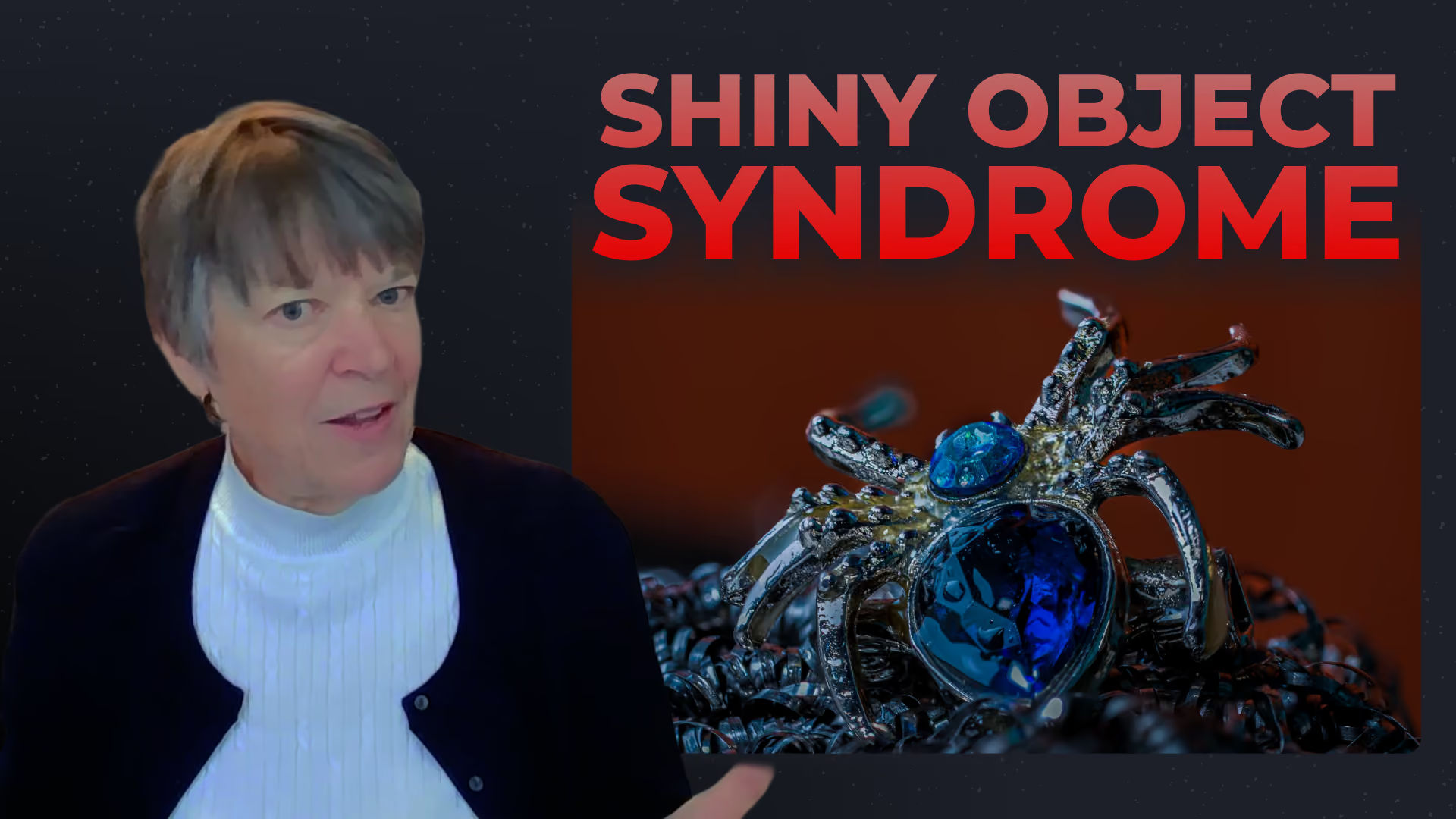
When procurement teams lack a defined North Star, they fall victim to "shiny object syndrome"—the belief that the next big software application will magically solve their process issues.
This leads directly to massive technology bloat. Canda shares a staggering example of a consulting client—a billion-dollar multinational company—that had purchased over 40 procurement-related applications. When they realized they were only actively using 13 of them, leadership panicked and asked to cancel the rest to recover costs. By blindly chasing shiny objects without aligning them to a strategic goal, the company had created millions of dollars in useless "shelfware".
Today, this same frantic dynamic is happening with Artificial Intelligence. Executives are pushing a "mad rush" to implement Agentic AI. Canda's advice for leaders facing the AI hype cycle is simple: pause, take a breath, and slow down. The AI agents will still be there tomorrow. Implementing AI just to tick an executive box, rather than using it to drive your specific definition of "good," is a recipe for high dissatisfaction and self-inflicted failure.
The Marketing Masterclass: Winning Over Reluctant Stakeholders
A strategic vision is useless if you cannot get your internal stakeholders on board. Procurement leaders often get stuck "in the trees" of tactical operations—enforcing rules, policies, and Purchase Orders—and lose sight of the "forest," which is building trusted business partnerships.
Canda shared a masterclass example of winning over a notoriously difficult stakeholder: the Marketing department. When she started a new CPO role, Marketing had "special dispensation" and explicitly refused to use the procurement team or follow PO processes. Instead of fighting a tactical turf war over PO compliance, Canda simply asked the marketing leader, "What keeps you up at night?"
They were in a massive bind regarding an upcoming kickoff event in the south of France. By dropping the rigid PO rules and assigning a French-speaking procurement buyer to help the marketing team source and negotiate a crucial hotel contract, Canda solved a major business problem. The result? The Chief Marketing Officer stood up on stage at the event and publicly credited procurement for their success.
Procurement exists to enable the business to be successful. By embracing change as an opportunity and focusing on actual business outcomes rather than rigid process enforcement, leaders can elevate their teams from tactical administrators to irreplaceable strategic partners.
Transcript: Proc-N-Roll | AI-Native vs. AI-Washed: Don't Get Fooled by Fake Tech
Conrad: Welcome back to Proc and Roll. Today I have the privilege to meet up with Canda Rozier, founder and principal consultant at Collaborate Consulting. Because you aren't just a CPO anymore, but someone consulting across many organizations, how has the current environment altered the kind of work procurement teams are focused on?
Canda: Ideally, everyone is focused on moving the evolution of procurement from tactical to strategic, but practically, that shift has swung back. Because of broad economic, industry, and geopolitical uncertainty, companies are saying we need to get back to basics. I'm seeing this across clients globally in 8 or 9 countries; it's no longer an anomaly, it's a trend.
Conrad: I remember my time at Adobe at the end of the 2008 financial crisis, and then later dealing with COVID, tariffs, and now the AI wave. Everyone is reacting to chaos and just trying to adapt and survive. How do you advise customers to even approach being strategic right now?
Canda: You aren't abandoning the strategic, you're just realigning your focus. As a leader, you have to keep the big picture and your strategic goals in mind, even though you have to deal with the tactical details of today. You have to align some of your tactical focus with the strategic goals you'll need one to three years down the road.
Conrad: Turning back the clock, how did you get into procurement? I think most people I meet end up here for semi-accidental reasons.
Canda: I definitely didn't plan it. I have liberal arts degrees in English, French, and antiquities. I started out writing technical manuals, quickly realized it was boring, and taught myself COBOL and Algol programming. I was building healthcare information systems for hospitals. Eventually, I moved to a subsidiary of American Express that became First Data. An attorney told me my technical and critical thinking skills could help develop their purchasing power, and I ended up staying there for almost 20 years before spending 9 years at NTT, and finally moving to the "dark side" of consulting.
Conrad: Bringing a product programming foundation into your consulting must be huge. I think a lot of people are tempted to just buy the latest orchestration tool and think it will solve all their problems without doing the people and process work.
Canda: Exactly. Installation is not implementation success. When consulting, what I see companies get wrong first is that they don't identify their goal. They want a "world-class" function based on a LinkedIn post, but they don't define what "good" actually looks like. It's like wanting to run a three-and-a-half-hour marathon right away instead of properly assessing your current state and setting a realistic goal to break five hours. They condition themselves to failure.
Conrad: I started my career at Intel, which is a massive process company that relies on "copy exactly" models. When I left there to work at a startup, I tried to cut and paste those world-class best practices, and it didn't translate at all. I realized that what "good" looks like for a startup is just staying out of the way and cleaning up the mess.
Canda: Yes, and when people don't define "good," they get caught up in shiny object syndrome. I was brought into a billion-dollar multinational company that had over 40 procurement applications because of this. They realized they were only using 13 of them and wanted me to cancel the rest. I had to pause them and ask if they were even using those 13. We eventually whittled it down to 18 total, but blindly chasing these tools is fiscally irresponsible and creates expensive shelfware.
Conrad: How do leaders elevate their vision to see the strategic forest, while still chopping the tactical trees with their team?
Canda: It requires a proactive focus on building trusted partnerships with stakeholders. Marketing is notoriously tough. At one company, Marketing told me they had special dispensation and wouldn't use procurement. Instead of picking a battle over enforcing Purchase Orders, I just asked what was keeping them up at night. They were in a bind for a kickoff event in the South of France. I offered the help of a French-speaking buyer on my team. We helped them secure vendors, read French contracts, and talk to the hotel in Provence. The Chief Marketing Officer stood up on stage and publicly said the event wouldn't have happened without procurement's help.
Conrad: That perfectly proves that procurement's real purpose is to enable the business to be successful. The alternative is showing up as a traffic cop and causing friction. Looking ahead, we have this tsunami of Agentic AI upon us. What is your advice for leaders dealing with this AI wave?
Canda: I frequently hear about this mad rush to implement agentic AI. I try to caution people to slow down, take a breath, and pause. The agents will be there tomorrow. You shouldn't implement agents just for the sake of ticking a box; it needs to be part of a bigger vision of what good looks like.
Conrad: Buying and implementing this stuff without understanding it is a bad idea. Leaders need to build their "AIQ"—their intelligence around AI—before they try to transform their operating models.
Canda: Recent studies show AI implementation dissatisfaction rates are staggering, sometimes between 60 to 80 percent. It's self-inflicted failure because people apply agents to their "as-is" processes without asking if those are actually the processes they need for the future. Good might be changing the process to a future state, and then automating it.
Conrad: As a "girl dad," I want to say thank you for being a successful woman leader in procurement and raising the bar. Any final leadership nuggets to share from your long career?
Canda: I wish I would have known earlier to embrace change because it is inevitable. If you start to see change as an opportunity as opposed to a challenge, that is key. Finally, never forget that your reputation both precedes and follows you, and treat everything you do in work and in life with that in mind.
This transcript has been edited for clarity while maintaining all substantive content