

Get Started
Graphite's supplier management tool helps you onboard faster, cut time on risk reviews and streamline supplier validations. Save time and money.
What Is Vendor Theft? A Guide for Procurement and Finance Teams
Vendor theft has become one of the most significant financial risks facing procurement and finance teams. As organizations manage larger supplier networks and increasingly digital payment processes, fraudsters continue to find new ways to exploit gaps in supplier onboarding and payment controls. Understanding how vendor theft works, recognizing common schemes, and implementing strong verification practices can help organizations prevent fraudulent payments before they happen.
What Is Vendor Theft?
Vendor theft is the intentional theft of money or assets through fraudulent activities involving suppliers or vendor records. Criminals may create fake businesses, impersonate legitimate suppliers, manipulate payment information, or work with internal employees to divert company funds.
Unlike an accounting error or processing mistake, vendor theft involves deliberate deception. Fraudsters exploit weaknesses in procurement, supplier onboarding, or accounts payable processes to convince organizations that fraudulent payments are legitimate.
Vendor theft can involve entirely fictitious businesses, known as phantom vendors, or legitimate suppliers whose accounts have been compromised. In both situations, the objective is to redirect payments or obtain financial benefits without authorization.
Because procurement teams often work with hundreds or even thousands of suppliers, identifying fraudulent activity becomes increasingly difficult without standardized controls and reliable supplier data.
Vendor Theft vs. Vendor Fraud
The terms vendor theft and vendor fraud are frequently used interchangeably because both describe fraudulent activities involving suppliers. Vendor theft generally focuses on the financial loss to the organization, while vendor fraud refers to the deceptive actions used to cause that loss.
Supplier fraud is another commonly used term that carries the same general meaning. Regardless of the terminology, the underlying issue remains the same. Someone manipulates supplier information, invoices, contracts, or payment details to steal company funds.
Understanding the terminology creates a strong foundation for identifying fraud. The next step is determining where these threats originate.
Is Vendor Theft Internal or External Shrink?
Vendor theft is not limited to outside criminals. Some of the most damaging incidents involve trusted employees working alongside external fraudsters. Understanding both sources of risk helps organizations build stronger controls.
Internal Vendor Theft
Internal vendor theft occurs when someone within the organization abuses their position to facilitate fraud. Employees may create fake vendor records, approve invoices for services that were never delivered, alter supplier banking information, or intentionally bypass procurement policies. Some schemes also involve kickbacks, in which an employee receives personal compensation in exchange for steering contracts to a particular supplier.
Since insiders often have authorized access to procurement and payment systems, they can sometimes avoid detection for extended periods if proper approval workflows and audits are not in place.
External Vendor Theft
External vendor theft involves individuals or organizations outside the business attempting to steal payments through deception.
Common examples include fraudulent suppliers submitting fake invoices, criminals impersonating legitimate vendors, or cybercriminals compromising supplier email accounts to request banking changes. Business email compromise attacks have become particularly effective because fraudulent requests often appear to come from trusted supplier contacts.
Many organizations experience both internal and external threats simultaneously. Strong controls must address both possibilities rather than focusing on only one source of risk. Knowing where vendor theft originates also makes it easier to recognize the different forms procurement-related theft can take.
What Are the Different Types of Theft That Affect Procurement?
Procurement teams manage much more than supplier relationships. They are responsible for protecting purchasing activities from numerous forms of financial misconduct, each requiring different prevention strategies.
Procurement-Related Theft
Procurement theft extends beyond vendor fraud. Inventory theft involves the unauthorized removal of products or materials from warehouses or distribution centers. Purchase order fraud occurs when purchase requests or approvals are manipulated for personal gain. Contract fraud includes altering contract terms or misrepresenting services to increase payments.
Payment fraud focuses on redirecting legitimate payments to unauthorized bank accounts. Each type of theft exploits weaknesses within procurement processes and internal controls.
Vendor-Specific Theft
Vendor theft represents a specialized category of procurement fraud that specifically targets supplier relationships.
Fraudsters may establish shell companies, create duplicate supplier profiles, impersonate legitimate vendors, or manipulate vendor master records to receive unauthorized payments. Because these schemes often resemble normal business transactions, they can remain unnoticed unless procurement teams actively monitor supplier information.
Understanding these broader categories provides useful context, but procurement professionals also need to recognize the specific vendor fraud schemes they are most likely to encounter.
Common Types of Vendor Fraud and Vendor Fraud Schemes
Vendor fraud continues to evolve as organizations digitize supplier onboarding and payment workflows. Familiarity with common fraud schemes helps procurement teams detect suspicious activity earlier and respond more effectively.
Fake Vendor Creation
Fake vendor creation remains one of the most common vendor fraud schemes. Fraudsters establish shell companies or phantom vendors that appear to be legitimate businesses. Once these suppliers are added to the vendor master, they begin submitting invoices for products or services that were never provided.
Duplicate vendor records create another opportunity for fraud. Criminals may register nearly identical supplier names with slight spelling differences, allowing fraudulent payments to blend into routine purchasing activity.
Invoice Fraud
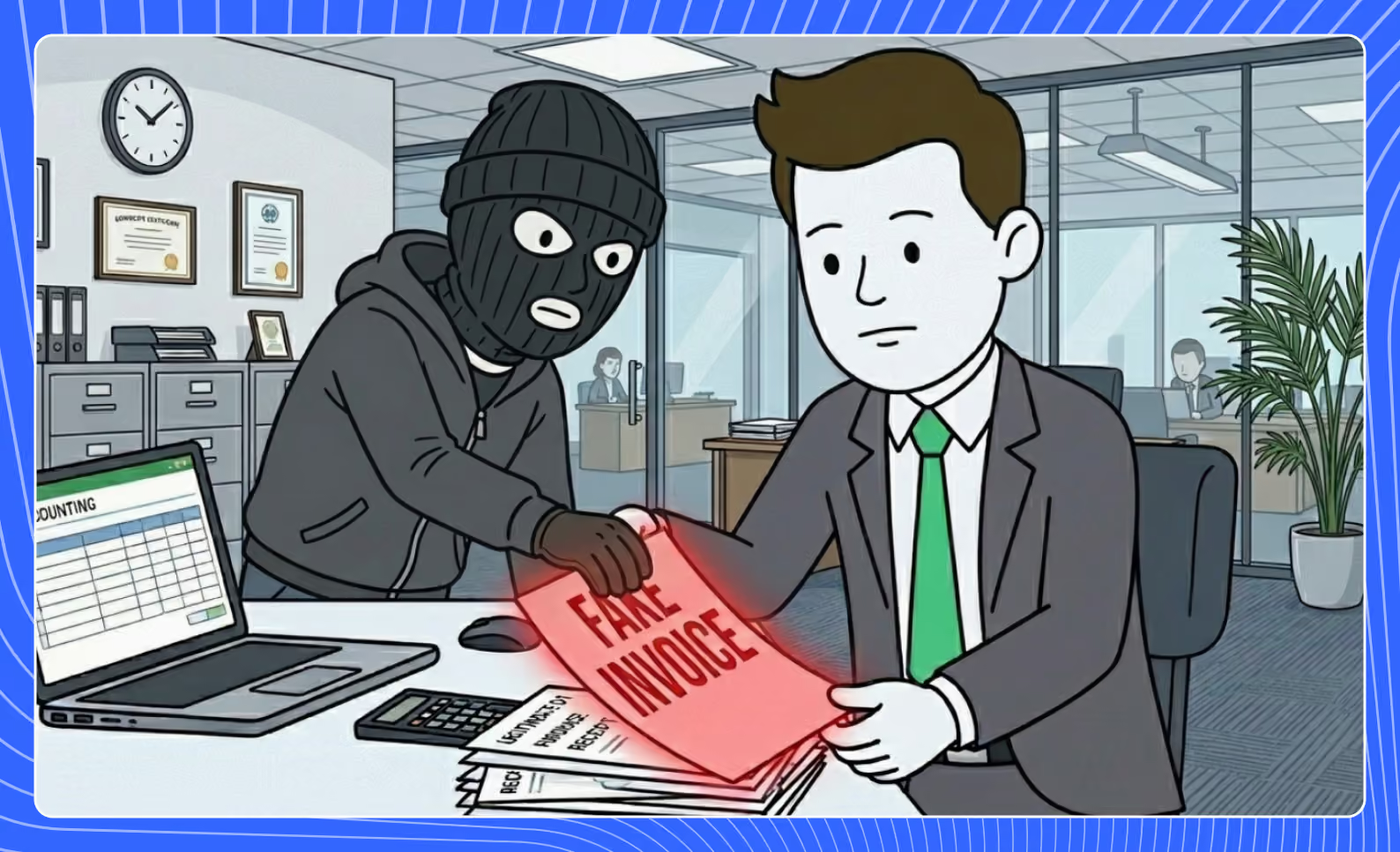
Invoice fraud targets one of the busiest processes within accounts payable. Fraudsters may submit duplicate invoices, inflate invoice amounts, bill for undelivered products, or request payment for services that were never performed. High invoice volumes can make these schemes difficult to identify solely through manual review.
Smaller invoices often receive less scrutiny, allowing fraudsters to avoid triggering additional approval requirements.
Payment Diversion Fraud
Payment diversion fraud focuses on diverting legitimate payments rather than creating fraudulent invoices.
Criminals commonly impersonate suppliers and request urgent bank account updates before an upcoming payment. If procurement or finance teams fail to independently verify the request, future payments may be transferred directly into fraudulent accounts.
Cybercriminals frequently use compromised supplier email accounts to make these requests appear authentic.
Employee and Supplier Collusion
Some vendor fraud schemes involve cooperation between internal employees and outside suppliers.
Employees may approve inflated invoices, manipulate competitive bidding, overlook policy violations, or receive kickbacks in exchange for awarding contracts. Collusion is particularly difficult to detect because each participant helps conceal the other's actions.
Although fraud schemes differ in execution, they often produce similar warning signs that procurement teams should never ignore.
Warning Signs of Vendor Theft
Vendor theft often leaves warning signs before financial losses become significant. Procurement and finance teams that monitor supplier activity closely can identify suspicious behavior early and investigate potential fraud before payments are approved. Some of the most common red flags include:
- Frequent requests to change supplier banking information, especially before scheduled payments
- Duplicate vendor records with similar names, addresses, or tax identification numbers
- Missing or incomplete supplier documentation during onboarding
- Inconsistent business information, such as mismatched addresses, contact details, or tax records
- Repeated invoice corrections, duplicate invoices, or unexplained increases in invoice volume
- Urgent requests to bypass standard procurement or payment approval procedures
- New suppliers receiving unusually large or frequent payments shortly after onboarding
- Suppliers requesting payments through unfamiliar or unofficial communication channels
- Dormant vendor accounts are suddenly becoming active without a clear business reason
How the Vendor Verification Process Helps Prevent Vendor Theft
Supplier verification creates one of the strongest defenses against vendor fraud by confirming that every supplier is legitimate before entering the payment cycle.
Vendor Verification Process
A comprehensive vendor verification process validates critical supplier information before onboarding is complete.
Procurement teams should verify business registration details, tax identification numbers, banking information, legal business names, ownership records, and authorized representatives. Independent verification helps confirm that the supplier exists and that the payment information belongs to the correct business.
Validating banking information through trusted third-party services also reduces the likelihood of payment diversion fraud.
Supplier Verification Throughout the Relationship
Supplier verification should continue long after onboarding. Businesses change ownership, banking details evolve, and regulatory requirements shift over time. Periodic reviews help ensure supplier records remain accurate and reduce the risk of dormant or compromised vendor accounts being used for fraud.
Ongoing verification supports cleaner supplier data while strengthening payment security across the organization. Strong verification creates a trusted supplier foundation, but effective fraud prevention also depends on consistent internal controls.
Vendor Fraud Prevention Best Practices
Preventing vendor fraud requires a combination of standardized processes, technology, and employee accountability. Organizations that rely solely on manual reviews often struggle to keep pace with increasingly sophisticated fraud schemes.
Standardize Supplier Onboarding
Every supplier should complete the same onboarding and verification process regardless of contract size. Standardization reduces opportunities for fraudsters to bypass required documentation or approvals.
Verify Banking Information
Always validate banking details independently before issuing payments or approving bank account changes. Verification through trusted sources helps prevent payment diversion scams.
Separate Financial Responsibilities
Segregating duties limits the ability of one individual to create suppliers, approve invoices, and authorize payments. Multiple approval layers increase accountability and reduce opportunities for internal fraud.
Continuously Monitor Supplier Data
Regular supplier audits help identify duplicate vendors, outdated records, unusual payment activity, and unauthorized banking changes. Automated monitoring tools further strengthen fraud detection by identifying suspicious patterns that manual reviews may overlook.
Organizations that combine standardized onboarding, continuous verification, independent banking validation, and ongoing monitoring are far better equipped to prevent vendor theft before financial losses occur.
Stop Vendor Fraud Before It Reaches Your ERP
Graphite Connect helps procurement teams verify supplier identities, validate banking information, and maintain a trusted supplier master before payments are processed. Automated supplier onboarding, continuous verification, and secure approval workflows reduce vendor fraud risk while improving operational efficiency. Schedule a call to see how Graphite Connect can help protect every supplier relationship.