

Get Started
Graphite's supplier management tool helps you onboard faster, cut time on risk reviews and streamline supplier validations. Save time and money.
Payment Fraud Explained: A Complete Guide for Procurement Leaders
Payment fraud has become one of the most significant financial risks facing procurement and accounts payable teams. Fraudsters increasingly target supplier onboarding, vendor master data, invoice processing, and payment workflows to redirect funds and exploit weak controls.
As organizations work with larger supplier networks and adopt more digital processes, opportunities for fraud continue to grow. Understanding what payment fraud is, how it occurs, and how to prevent it is essential for protecting supplier payments, maintaining financial controls, and reducing organizational risk.
Payment Fraud Defined for Procurement Leaders
Payment fraud refers to the unauthorized manipulation, theft, or diversion of funds during the payment process. In procurement environments, payment fraud typically occurs when a fraudster gains access to supplier information, payment workflows, approval processes, or banking details and uses that access to redirect payments to unauthorized accounts.
Unlike consumer payment fraud, procurement payment fraud often involves larger transaction amounts and more sophisticated tactics. Fraudsters may impersonate suppliers, executives, or internal employees. They may also exploit weaknesses in supplier onboarding, vendor master management, and payment approval processes.
Defining Payment Fraud in Business Transactions
At its core, payment fraud occurs when someone intentionally manipulates payment processes to receive funds they are not entitled to receive. Examples include:
- Redirecting supplier payments to fraudulent bank accounts
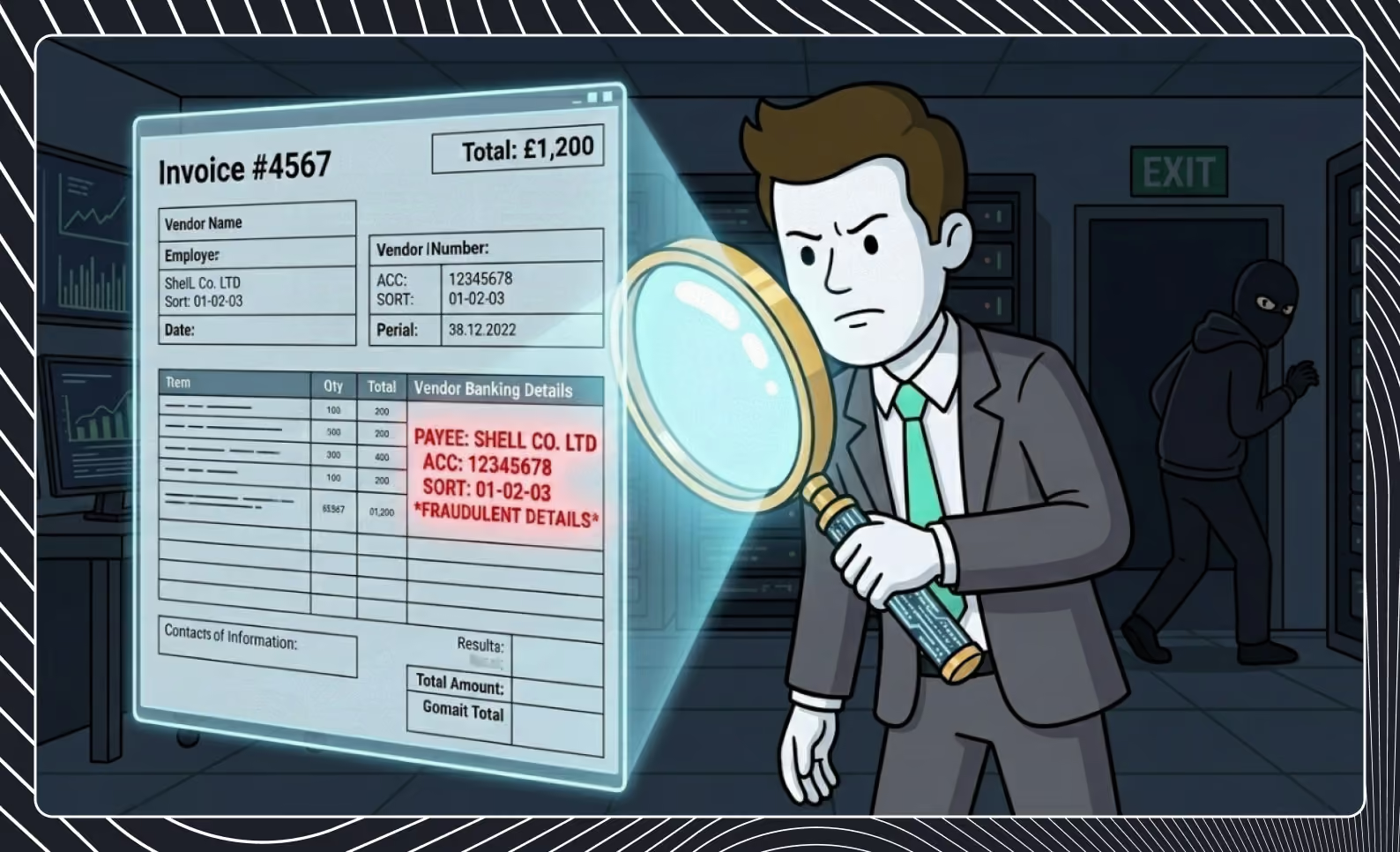
- Submitting fake invoices
- Creating fictitious vendors
- Impersonating executives to authorize payments
- Taking over supplier accounts
A successful attack can result in direct financial losses, operational disruptions, regulatory issues, and damaged supplier relationships.
Why Procurement Teams Are Frequent Targets
Procurement teams sit at a critical point in the supplier lifecycle. They collect supplier information, onboard vendors, manage documentation, and maintain vendor records. Accounts payable teams process payments based on the information procurement provides.
Fraudsters understand this relationship. If they can alter supplier data or manipulate approval processes, they can often redirect payments without immediately raising suspicion.
Large organizations may process thousands of supplier payments every month, creating numerous opportunities for bad actors to hide fraudulent transactions among legitimate ones.
Payment Fraud vs Vendor Fraud
The terms vendor fraud and payment fraud are often used interchangeably, but they are not identical. Vendor fraud focuses on the supplier itself. Examples include phantom vendors, supplier impersonation, or falsified business information.
Payment fraud focuses on the movement of money. Examples include diverted wire transfers, fraudulent banking changes, and invoice payment scams. Many vendor fraud schemes eventually become payment fraud schemes because the ultimate objective is to obtain an unauthorized payment. Understanding that connection helps procurement teams identify risks earlier in the supplier lifecycle.
Understanding the definition is only the first step. Procurement leaders also need to understand how fraudsters exploit everyday procurement and payment processes.
How Fraudsters Exploit Procurement Processes
Most payment fraud incidents do not begin when a payment is issued. They begin much earlier during supplier onboarding, vendor management, or payment approval activities. Fraudsters look for gaps between procurement, accounts payable, treasury, and suppliers. Any weak control can become an entry point.
Fraud Through Vendor Master Data Changes
Vendor master data is one of the most valuable targets for fraudsters. A criminal may gain access to a supplier account, impersonate a supplier representative, or compromise an employee's email account. Once inside, they request a bank account update and redirect future payments to a fraudulent account. Because the request often appears legitimate, organizations sometimes process the change without additional verification.
Many organizations have strengthened controls through Bank Account Verification processes designed to validate supplier banking information before payments are released.
Weak Verification and Approval Controls
Many fraud incidents occur because organizations rely too heavily on email communications. A supplier sends an email requesting a banking update. An employee updates the record. A payment is sent. Without independent verification, fraud can succeed with surprisingly little effort.
Organizations increasingly rely on bank account verification services to confirm account ownership and validate supplier banking details before changes take effect.
Questions such as how to verify bank account number information securely have become essential for procurement and AP teams responsible for protecting supplier payments.
Procurement and AP Coordination Gaps
Weak internal controls often create opportunities for fraud. Common examples include:
- One employee managing supplier records and payment approvals
- Lack of dual authorization
- Inadequate audit trails
- Poor communication between procurement and AP
When departments operate in isolation, suspicious activity can go unnoticed until after funds have already been transferred. Many organizations only discover these weaknesses after experiencing a fraud incident. Fraud can originate from several entry points, which is why procurement teams need visibility into the most common schemes used today.
Major Payment Fraud Risks Facing Procurement Teams
Payment fraud continues to evolve, but several fraud schemes consistently appear across industries. Understanding these tactics helps procurement leaders recognize risks before they result in financial losses.
Business Email Compromise (BEC) Fraud
Business Email Compromise remains one of the most common forms of payment fraud. In a typical BEC attack, fraudsters impersonate a supplier, executive, or trusted business contact. The message often includes:
- Urgent payment requests
- Updated banking instructions
- Requests to bypass normal procedures
- Confidentiality demands
Because the communication appears legitimate, employees may process the request without additional verification.
Bank Account Change Fraud
Bank account change fraud specifically targets supplier banking information. A fraudster requests a change to payment instructions and provides a new bank account. Future supplier payments are then routed directly to the fraudster.
Such attacks have become increasingly sophisticated and often involve compromised email accounts, supplier impersonation, or account takeover activity. Many procurement teams now require formal Bank Account Verification before accepting any banking changes.
A related concern is understanding how long does bank verification take when implementing stronger controls. While verification can add a small amount of processing time, it is significantly less costly than recovering funds after a fraudulent payment.
Invoice Fraud and Duplicate Payment Fraud
Invoice fraud occurs when fraudsters submit invoices for products or services that were never delivered. Duplicate invoice fraud involves resubmitting legitimate invoices multiple times in hopes that one slips through payment controls. Other invoice fraud schemes include:
- Inflated invoice amounts
- Altered payment instructions
- Fake consulting services
- Fabricated expense claims
Strong invoice matching and supplier validation procedures reduce these risks.
CEO Fraud and Executive Impersonation
Executive impersonation attacks continue to generate significant losses for organizations worldwide. In these schemes, fraudsters pose as senior executives and instruct employees to process urgent payments. Employees often comply because they fear delaying an important transaction.
Organizations researching CEO fraud quickly discover that authority and urgency are the primary psychological tools used in these attacks. Strong approval controls and independent verification procedures help prevent these requests from bypassing established processes.
Phantom Vendor Fraud
A phantom vendor is a fictitious supplier created solely to receive fraudulent payments. The fraudster may create fake documentation, websites, tax information, and bank accounts to make the supplier appear legitimate.
In some cases, internal employees create phantom vendors and approve payments themselves. Supplier verification controls and vendor onboarding reviews play an important role in identifying these fraudulent entities before payments occur.
Supplier Portal Compromise
These are also referred to as account takeover frauds and they occurs when a criminal gains access to a legitimate supplier account. Once access is obtained, the fraudster may:
- Change banking information
- Update contact details
- Submit fraudulent invoices
- Modify payment preferences
Because the account belongs to a legitimate supplier, fraudulent activity can remain undetected for an extended period. Traditional fraud methods remain highly effective, yet emerging technologies are creating entirely new risks for procurement organizations.
Emerging Payment Fraud Threats Procurement Leaders Must Watch
Traditional payment fraud schemes remain active, but artificial intelligence and automation are changing how attacks are executed. Procurement leaders must understand these emerging threats because many existing controls were not designed to address them.
AI-Powered Executive Impersonation
Deepfake technology allows fraudsters to generate convincing audio and video content that mimics real individuals. An employee may receive what appears to be a video call from an executive requesting an urgent payment. In reality, the person on screen may be an AI-generated impersonation.
As these tools become more accessible, organizations can no longer rely solely on visual or verbal confirmation when approving high-value transactions. Independent verification procedures are becoming increasingly important for payment approvals and banking changes.
Agentic AI and Automated Fraud Risks
Many organizations are introducing AI-powered tools into procurement and accounts payable workflows. While automation improves efficiency, it can also introduce new vulnerabilities. Fraudsters may attempt to:
- Manipulate automated workflows
- Insert malicious instructions into documents
- Poison supplier data sources
- Exploit overly permissive AI systems
Human oversight remains critical for sensitive supplier and payment activities.
Global Supplier Fraud Schemes
Global sourcing introduces additional complexity. Procurement teams must validate suppliers across multiple countries, banking systems, and regulatory environments. Fraudsters often exploit unfamiliar jurisdictions by creating fake subsidiaries, spoofing legitimate businesses, or submitting fraudulent banking information that is difficult to verify.
As supplier networks expand globally, organizations need scalable verification processes that work across regions and banking systems. Even sophisticated attacks usually leave warning signs that procurement teams can identify before funds are lost.
Warning Signs of Payment Fraud
Many payment fraud incidents share common warning signs. Procurement and AP teams that recognize these indicators early can stop fraud before money leaves the organization.
Suspicious Supplier Requests
Supplier change requests deserve careful scrutiny. Potential warning signs include:
- Urgent requests for banking updates
- Changes submitted immediately before a payment run
- Requests to bypass standard procedures
- Pressure to process changes quickly
Legitimate suppliers generally understand the need for verification and documentation.
Unusual Payment Activity
Transaction monitoring can reveal suspicious behavior. Examples include:
- Large one-time payments
- Payments to new accounts
- Multiple payments just below approval thresholds
- Unexpected international transfers
- Unusual payment timing
Patterns often reveal fraud more clearly than individual transactions.
Communication and Documentation Red Flags
Fraudsters frequently make mistakes when impersonating suppliers. Watch for:
- Slightly altered email domains
- Poor grammar or formatting
- Inconsistent contact information
- Missing supporting documentation
- Requests from unfamiliar contacts
Supplier onboarding controls should require complete documentation and verification before changes are approved. Detecting fraud indicators is important, but prevention remains the most effective strategy.
Payment Fraud Prevention Strategies for Procurement Teams
Payment fraud prevention requires a combination of people, processes, and technology. No single control eliminates risk, but layered defenses significantly reduce exposure.
Strengthen Supplier Verification Processes
Strong supplier verification starts during onboarding. Procurement teams should validate:
- Legal business information
- Tax identification details
- Ownership information
- Banking information
- Authorized contacts
Supplier verification should continue throughout the supplier lifecycle rather than ending after onboarding.
Implement Strong Approval Workflows
Approval workflows create accountability and reduce opportunities for fraud. Best practices include:
- Dual approval requirements
- Segregation of duties
- Escalation procedures for unusual transactions
- Risk-based approval thresholds
No individual should control supplier creation, banking updates, and payment approval simultaneously.
Verify Banking Changes Independently
Banking changes deserve special attention because they are a primary target for fraudsters. Organizations should independently verify all banking updates before releasing payments. Many procurement teams maintain documented procedures covering:
- Bank Account Verification
- Supplier callbacks
- Independent contact confirmation
- Supporting documentation reviews
Organizations evaluating bank account verification services often discover that automated validation significantly reduces fraud risk while improving efficiency.
Maintain Accurate Vendor Master Data
Vendor master records serve as the foundation of payment integrity. Procurement teams should regularly:
- Review supplier records
- Remove duplicate vendors
- Audit banking information
- Validate supplier contacts
- Monitor unauthorized changes
Clean supplier data reduces opportunities for fraud and improves operational efficiency.
Continuously Monitor Supplier Risk
Supplier risk profiles change over time. Regular assessments should evaluate:
- Financial health
- Compliance status
- Security risks
- Operational performance
- Payment fraud exposure
Organizations that continuously monitor suppliers often identify risks before they become costly incidents. Individual controls become significantly more effective when supported by a structured fraud prevention framework.
Building a Payment Fraud Prevention Framework
Fraud prevention should not rely on individual employees making perfect decisions. Effective organizations create repeatable frameworks that make fraud more difficult to execute.
Standardize Fraud Prevention Procedures
Every organization should maintain documented policies governing:
- Supplier onboarding
- Banking changes
- Payment approvals
- Escalation procedures
- Fraud investigations
Clear standards reduce ambiguity and improve consistency.
Train Procurement and AP Teams
Employees remain one of the most important fraud defenses. Training should cover:
- Social engineering tactics
- Executive impersonation scams
- Supplier fraud indicators
- Wire transfer fraud risks
- Escalation procedures
Teams that regularly discuss fraud scenarios are more likely to identify suspicious activity.
Leverage Technology for Fraud Prevention
Technology helps organizations scale fraud prevention efforts. Useful capabilities include:
- Supplier onboarding automation
- Automated verification
- Vendor master monitoring
- Payment anomaly detection
- Real-time validation
Technology should strengthen controls without creating unnecessary friction for legitimate suppliers.
Create a Verify-Then-Trust Culture
Many successful fraud attacks exploit trust. Organizations should create a culture where verification is expected rather than viewed as an obstacle. Employees should feel comfortable questioning unusual requests regardless of who appears to be making them.
A verification-first mindset reduces the likelihood that urgency, authority, or familiarity will override established controls. Long-term fraud prevention requires both strong processes and technology that can verify supplier information at scale.
How Graphite Connect Helps Prevent Payment Fraud
Centralize Supplier Data Verification
Many payment fraud incidents originate from inaccurate or unverified supplier information. Graphite Connect helps organizations establish a centralized source of verified supplier data, reducing the risk of unauthorized changes and inconsistent records. A structured onboarding process helps ensure supplier information is accurate before it enters downstream systems.
Protect Against Vendor and Payment Fraud
Fraud prevention should begin during supplier onboarding and continue throughout the supplier relationship. Graphite Connect supports supplier verification, banking validation, risk management, and ongoing supplier data governance. Organizations gain greater visibility into supplier information while reducing reliance on manual verification processes.
Build a More Secure Procure-to-Pay Process
Procurement leaders face constant pressure to improve efficiency while reducing risk. Modern supplier management platforms help organizations balance both priorities by automating verification workflows, maintaining accurate supplier records, and supporting stronger payment controls. When procurement teams can trust supplier data, they spend less time managing administrative tasks and more time focusing on strategic initiatives.
Ready to Strengthen Your Payment Fraud Defenses?
Payment fraud continues to evolve, but the fundamentals remain the same. Fraudsters target weak controls, unverified supplier information, and inconsistent processes.
Graphite Connect helps procurement teams build a secure foundation for supplier onboarding, supplier verification, and payment integrity. From supplier data validation to Bank Account Verification and ongoing supplier risk management, Graphite Connect helps organizations reduce fraud exposure without creating unnecessary friction for suppliers.
Schedule a demo to see how Graphite Connect can help your team protect supplier payments, improve data accuracy, and create a more secure procure-to-pay process.