

Get Started
Graphite's supplier management tool helps you onboard faster, cut time on risk reviews and streamline supplier validations. Save time and money.
What Is CEO Fraud? A Guide for Procurement and AP Teams
Procurement and accounts payable teams process thousands of financial transactions every year. That responsibility makes them attractive targets for cybercriminals looking to exploit trust and bypass established controls. Among the many forms of business fraud, CEO fraud remains one of the most effective because it relies on human behavior rather than technical vulnerabilities.
A convincing email that appears to come from a CEO or CFO can pressure employees into sending payments, changing vendor banking information, or sharing sensitive data. As fraud tactics become more sophisticated, procurement and AP professionals need a clear understanding of how these attacks work and what they can do to stop them.
What Is CEO Fraud?
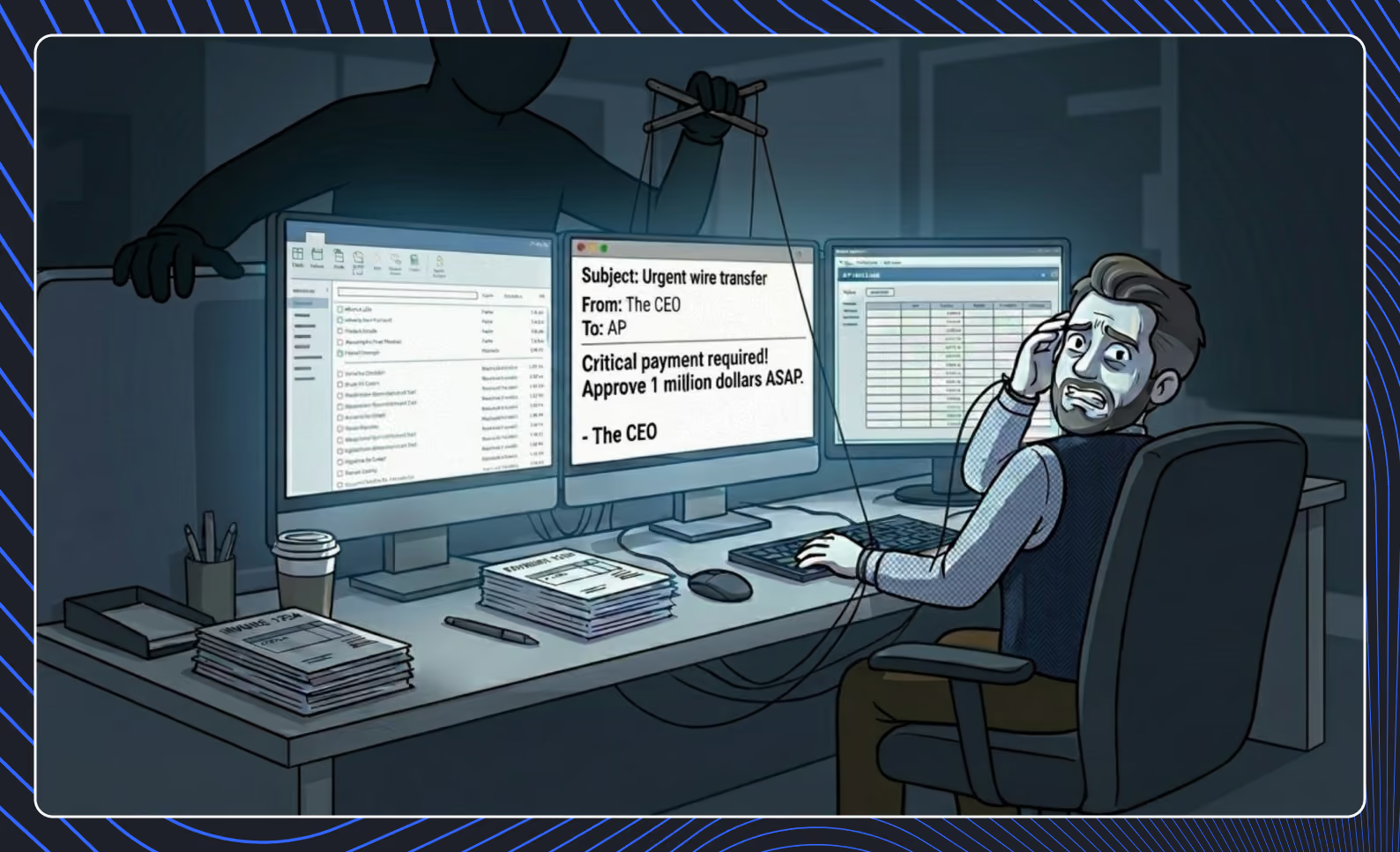
CEO fraud is a form of executive impersonation fraud in which a criminal impersonates a senior leader within an organization and instructs an employee to take a financial action. Most attacks involve requests to transfer funds, update vendor banking information, pay an urgent invoice, or disclose confidential business information.
The objective is simple: convince the recipient that the request is legitimate and important enough to bypass normal procedures. Fraudsters often study organizational structures, identify key personnel, and craft highly personalized messages designed to appear authentic.
CEO fraud is commonly classified as a type of Business Email Compromise (BEC), although modern attacks increasingly extend beyond email to include text messages, phone calls, and video communications.
Unlike broad phishing campaigns that target thousands of users, CEO fraud attacks focus on specific individuals with access to funds, supplier records, or financial systems. Several terms are used interchangeably with CEO fraud, including:
- Executive impersonation fraud
- Executive impersonation scam
- Business Email Compromise (BEC)
- Whaling attack
- Executive phishing attack
Although the terminology varies, the underlying tactic remains the same: exploiting executive authority to influence employee behavior. Understanding the definition is only the first step. To effectively defend against these attacks, procurement and AP teams need to understand exactly how a CEO fraud scheme unfolds.
How Does a CEO Fraud Attack Work?
A successful CEO fraud attack rarely happens by accident. Most schemes follow a deliberate process that allows fraudsters to gather information, establish credibility, and create urgency.
Modern attackers often spend weeks researching an organization before initiating contact. They review company websites, LinkedIn profiles, press releases, and social media activity to identify executives and employees involved in procurement and finance.
The Anatomy of a CEO Fraud Attack
A typical attack follows these steps:
- Research the company and key personnel.
- Identify employees who can authorize payments.
- Create a spoofed executive email address or compromised account.
- Send an urgent request requiring immediate action.
- Instruct the employee to send funds or change payment details.
- Move the money before the fraud is discovered.
Many attacks are timed strategically around holidays, executive travel schedules, mergers and acquisitions, or quarter-end reporting periods, when employees may be under greater pressure.
Why These Attacks Often Succeed
CEO fraud succeeds because it exploits predictable human behaviors. Employees may hesitate to challenge a request that appears to come from the CEO. Urgent language can create pressure to act quickly. Confidentiality requests can discourage verification. In some organizations, approval processes still rely heavily on email, making it easier for attackers to impersonate executives.
When authority and urgency combine, even experienced professionals can make mistakes. Many CEO fraud attacks begin with phishing techniques. Understanding the relationship between phishing and executive impersonation helps explain why these scams have become increasingly difficult to detect.
What Is CEO Fraud Phishing?
CEO fraud phishing refers to phishing attacks specifically designed to impersonate senior executives. Rather than casting a wide net, these attacks target specific employees who have access to payments, supplier data, or financial approvals. The goal is not necessarily to steal login credentials. Instead, attackers want recipients to take a specific action that benefits the fraudster.
CEO Fraud vs Traditional Phishing
Traditional phishing campaigns typically target large groups of users with generic messages. CEO fraud phishing takes a different approach. Messages are highly personalized and often reference real projects, vendors, executives, or business events. Instead of focusing on credential theft, the attacker attempts to influence payment decisions or approval workflows.
Modern CEO Fraud Phishing Tactics
Modern fraudsters use a variety of techniques to increase credibility, including:
- Email spoofing
- Lookalike domains
- Compromised executive accounts
- AI-generated messages
- Deepfake voice impersonation
- Deepfake video impersonation
Recent fraud trends show a shift from traditional Business Email Compromise toward deepfake-based executive impersonation, where attackers use artificial intelligence to replicate trusted leaders and manipulate employees. As attack methods evolve, fraudsters continue to focus on the employees most capable of moving money or modifying supplier information.
Who Do CEO Fraud Scams Generally Target?
CEO fraud scams generally target employees who can directly influence payments, supplier records, and financial approvals. Procurement and accounts payable departments frequently sit at the center of these processes, making them attractive targets for executive impersonation schemes.
Accounts Payable and Finance Teams
Accounts payable professionals process invoices, manage payment schedules, and maintain banking information. A fraudulent payment request sent to an AP team member can result in significant losses if proper verification controls are not followed. Controllers, treasury personnel, and finance managers also face elevated risk because they often have the authority to approve large transactions.
Procurement Teams and Vendor Managers
Procurement professionals manage supplier onboarding, vendor records, and banking updates. Fraudsters understand that procurement teams regularly communicate with vendors and handle sensitive supplier information. A fake executive request to update payment instructions may appear routine if verification procedures are weak.
Strong supplier verification processes and vendor risk assessments can help reduce exposure to these attacks. Since most attacks are delivered via email, it is important to recognize the specific messages and requests that warrant immediate concern.
Common Types of CEO Fraud Emails
CEO fraud emails are designed to appear legitimate while encouraging recipients to act without verifying the request. The content often varies, but certain patterns appear repeatedly across organizations and industries.
Urgent Payment Requests
Many attacks involve urgent requests for payment. A fraudster may claim that a confidential acquisition requires immediate funding. Another common tactic involves emergency vendor payments, legal settlements, or executive travel expenses. The message usually emphasizes speed and secrecy to discourage verification.
Vendor Banking Change Requests
Vendor banking changes represent another common attack method. A fraudster may request:
- Updated remittance instructions
- New bank account information
- Alternative payment destinations
- Immediate changes before a payment deadline
These requests often resemble legitimate supplier communications, making independent verification essential. Payment redirection schemes frequently rely on fraudulent banking updates and weak validation controls.
Why CEO Fraud Is a Growing Procurement Risk
Procurement teams manage supplier information that directly impacts payment workflows. That responsibility places them at the center of many fraud attempts. CEO fraud increasingly overlaps with vendor fraud, supplier impersonation, and payment redirection schemes.
The Link Between CEO Fraud and Vendor Fraud
Fraudsters frequently combine executive impersonation with vendor-related scams. An attacker may impersonate a CEO and request a vendor banking update. Another may compromise a supplier account and use executive authority as justification for changing payment instructions. Both tactics ultimately aim to achieve the same outcome: redirecting funds to fraudulent accounts.
Where Internal Controls Break Down
Several weaknesses commonly contribute to successful attacks:
- Single-person approval processes
- Manual banking verification
- Spreadsheet-based supplier management
- Poor change management controls
- Inconsistent escalation procedures
Organizations can significantly reduce risk by implementing stronger controls and verification practices.
CEO Fraud Prevention Best Practices
Preventing CEO fraud requires more than employee awareness. Organizations need a combination of strong processes, verification controls, and technology to reduce opportunities for fraudsters to manipulate payment workflows. Procurement and AP teams should assume that any request involving money, supplier data, or banking information could be fraudulent until verified. A layered approach helps ensure that a single mistake does not result in a costly financial loss.
- Verify Every High-Risk Request Independently: Confirm payment requests, banking changes, and sensitive approvals through a separate communication channel, such as a phone call or video meeting, before taking action.
- Strengthen Approval Workflows: Implement segregation of duties, dual approvals, and transaction thresholds to ensure no single employee can independently authorize high-risk financial changes.
- Improve Supplier Verification Controls: Validate vendor identities, review supporting documentation, and conduct supplier risk assessments before onboarding or modifying supplier records.
- Implement Bank Account Verification: Verify that supplier banking information matches the intended business entity before issuing payments to reduce the risk of payment redirection fraud.
- Train Employees to Spot CEO Fraud Emails: Educate procurement, AP, and finance teams on common red flags, suspicious requests, and reporting procedures to help them identify attacks before funds are transferred.
- Adopt Modern Fraud Prevention Technology: Use identity verification, bank account validation, real-time monitoring, and supplier verification tools to strengthen controls and automate fraud detection.
Many procurement leaders are moving away from trust-based processes and adopting a "Verify, then Trust" approach to supplier and payment security. This shift helps organizations establish stronger controls while maintaining operational efficiency.
Building a Fraud-Resistant Procurement Process
Long-term protection requires more than reacting to individual attacks. Organizations need repeatable processes that make fraud difficult to execute. A structured procurement framework helps reduce risk while improving data accuracy and operational efficiency.
Standardize Supplier Onboarding
Supplier onboarding should include:
- Documentation collection
- Vendor verification
- Risk assessments
- Banking validation
- Approval workflows
A consistent onboarding process reduces opportunities for fraudulent suppliers and payment redirection attempts. Also, incorporating bank account verification into supplier onboarding helps organizations identify fraudulent or inaccurate payment details before they enter the vendor master, strengthening controls from the start of the supplier relationship.
Continuously Monitor Supplier Risk
Supplier risk management should continue long after onboarding. Organizations should conduct:
- Periodic supplier reviews
- Ongoing risk assessments
- Banking change monitoring
- Performance evaluations
- Compliance reviews
Continuous oversight helps procurement teams identify suspicious activity before it develops into a costly fraud event. Effective supplier lifecycle management depends on ongoing monitoring, accountability, and risk visibility throughout the supplier relationship.
Reduce CEO Fraud Risk With Stronger Supplier Controls
Fraudsters target procurement and AP teams because supplier data and payment workflows often provide a direct path to financial loss. Graphite Connect helps organizations verify suppliers, validate banking information, and establish trusted supplier records before payments are processed.
Automated verification workflows reduce reliance on manual reviews while strengthening protection against executive impersonation, vendor fraud, and payment redirection schemes. If your team wants to improve supplier data accuracy, accelerate onboarding, and reduce fraud exposure, explore how Graphite Connect can help create a more secure supplier management process. Schedule a demo today.