

Get Started
Graphite's supplier management tool helps you onboard faster, cut time on risk reviews and streamline supplier validations. Save time and money.
What Is a Vendor Payment System? Everything Procurement Leaders Need to Know
Paying suppliers accurately and on time keeps operations moving and strengthens supplier relationships. Manual payment processes often introduce unnecessary delays, errors, and fraud risks that become more difficult to manage as a business grows. A vendor payment system gives procurement and finance teams a structured way to manage supplier payments, improve visibility, automate routine tasks, and reduce risk throughout the payment lifecycle.
What Is a Vendor Payment System?
Managing supplier payments involves much more than transferring money. A vendor payment system brings together supplier information, payment approvals, and reporting into a single workflow, helping procurement and finance teams maintain accuracy, efficiency, and control.
What does a Vendor Payment System do?
A vendor payment system is software that helps businesses manage the complete process of paying suppliers. Instead of relying on spreadsheets, emails, and disconnected tools, it centralizes supplier records, payment approvals, payment scheduling, and reporting in one platform. Unlike an ERP or traditional accounts payable software, a vendor payment system focuses specifically on streamlining and securing the payment workflow.
Why procurement teams are adopting vendor payment systems
As supplier networks grow, manual payment processes become increasingly difficult to manage. A vendor payment system gives procurement teams greater control by centralizing supplier payment data, standardizing approval workflows, and improving payment accuracy. Automation reduces repetitive administrative work, allowing teams to spend more time on supplier relationships and strategic initiatives. The system also creates a complete audit trail for every payment, making compliance and internal audits much easier.
Better visibility into payment activity helps procurement and finance teams monitor outstanding payments, identify bottlenecks, forecast cash flow more accurately, and make informed decisions based on reliable supplier payment data. A vendor payment system delivers the greatest value when every payment follows a consistent, secure workflow. Understanding each stage of that process makes it easier to see where automation has the biggest impact.
How the Vendor Payment Process Works
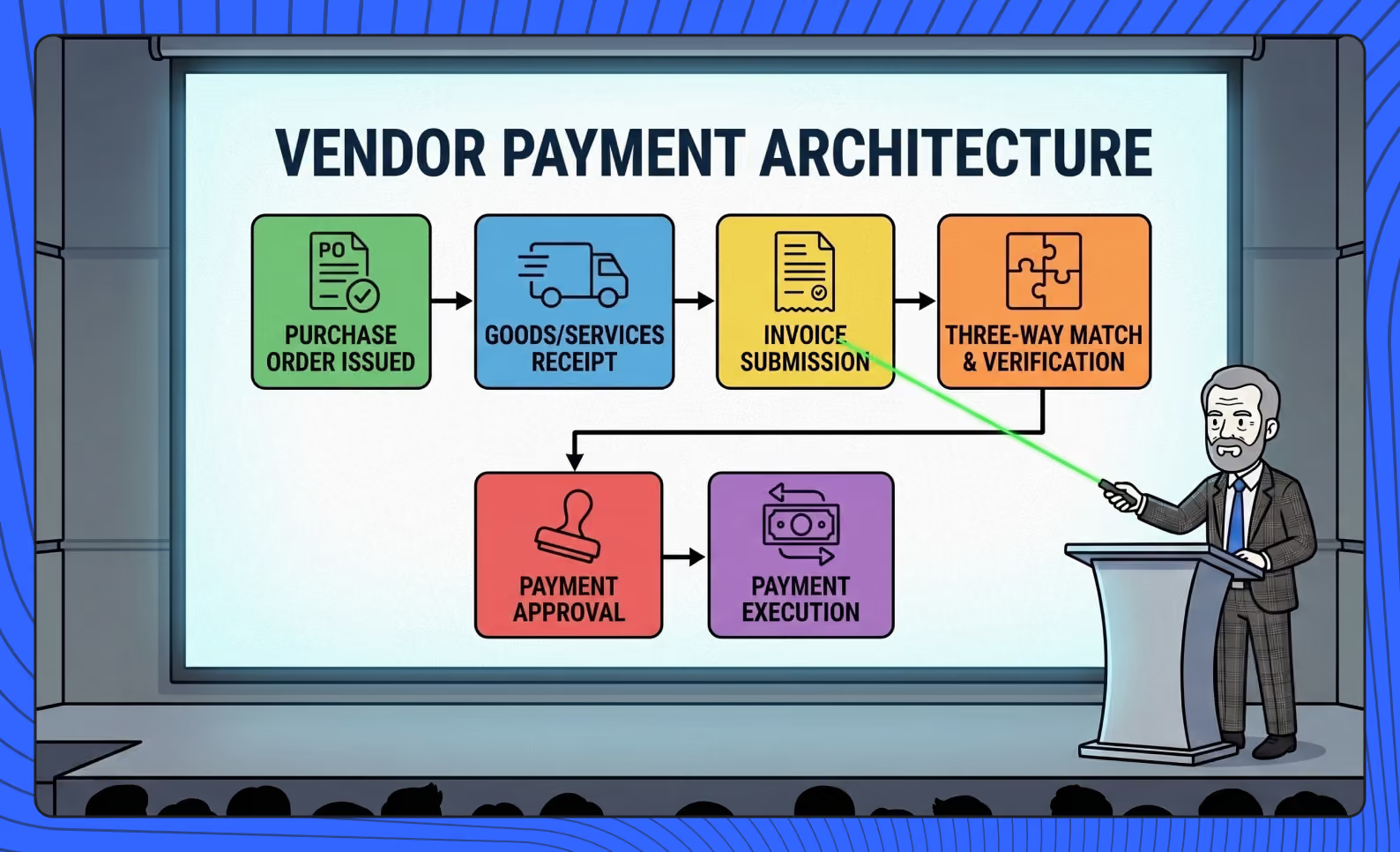
Every organization follows a slightly different workflow, but the core stages remain largely the same. Building consistency at each step reduces delays, minimizes errors, and strengthens internal controls that protect both the business and its suppliers.
Step 1: Collect and verify supplier information
Procurement teams collect banking details, tax forms, business registration information, compliance documents, and ACH forms for vendor payments. Before any payment is approved, supplier identities and banking information should be verified to prevent payment errors, fraud, and unnecessary delays.
Step 2: Approve invoices and payment requests
Invoices are matched against purchase orders and receiving records to confirm that the goods or services have been delivered as expected. Many organizations also use a vendor payment request form and automated approval workflows to route payments to the appropriate stakeholders while maintaining accountability.
Step 3: Process vendor payments
Once approved, payments are scheduled based on agreed payment terms and internal payment cycles. Automated vendor payment processing helps organizations execute vendor payments more efficiently, improve visibility into payment status, and reduce manual effort.
Step 4: Record payment and maintain payment history
After payment is completed, the system updates supplier records, synchronizes payment data with the ERP, and generates payment confirmations. Maintaining a complete vendor payment history supports reporting, simplifies audits, and helps resolve supplier payment inquiries more quickly.
While a vendor payment system manages the workflow and controls behind supplier payments, businesses also need to choose the right payment methods for different situations. Our guide to B2B Payments explores the most common payment options, their advantages, and the factors procurement teams should consider when developing an efficient payment strategy.
What Features Should a Vendor Payment System Include?
Not every vendor payment system offers the same capabilities. Some focus solely on processing payments, while others help procurement teams automate workflows, verify supplier information, and improve visibility across the entire supplier payment process. Choosing the right features can significantly improve efficiency, security, and long-term scalability.
Automated approval workflows
Approval delays are one of the biggest causes of late supplier payments. Automating the approval process helps invoices move through the organization faster while maintaining appropriate financial controls. A modern vendor payment system should include:
- Configurable approval workflows based on business rules.
- Multi-level approvals for higher-value transactions.
- Automatic routing to the appropriate stakeholders.
- Notifications and reminders for pending approvals.
- A complete audit trail for every approval decision.
Automated workflows also reduce administrative work and ensure that every payment follows a standardized process, regardless of who submits or approves the invoice.
Supplier onboarding and verification
Payment accuracy starts with accurate supplier information. If supplier data is incomplete or incorrect, even the most sophisticated payment system cannot prevent errors. A strong vendor payment system should support:
- Supplier identity verification.
- Bank account verification.
- Collection of tax documents and compliance information.
- Secure management of supplier records.
- Ongoing updates to supplier information.
Verifying supplier information before payments are processed helps reduce fraud, minimizes payment errors, and creates greater confidence that funds are reaching the intended recipient.
Supplier payment automation
Automation eliminates repetitive manual tasks that slow down payment processing and increase the likelihood of errors. Effective supplier payment automation allows organizations to:
- Schedule payments in advance.
- Process multiple payments in batches.
- Automate recurring supplier payments.
- Send payment confirmations automatically.
- Flag payment exceptions for review.
Automation also gives procurement and finance teams greater visibility into payment status without requiring constant manual follow-up. As payment volumes grow, automated workflows help maintain efficiency without increasing administrative overhead.
ERP integration
Supplier payment information should flow seamlessly between procurement, finance, and accounting systems. A vendor payment system that integrates with leading ERP platforms such as SAP, Oracle, NetSuite, and Microsoft Dynamics eliminates duplicate data entry and keeps supplier records synchronized across the business.
Integration also improves reporting accuracy, reduces reconciliation work, and gives every department access to consistent supplier and payment information. Instead of switching between multiple systems, procurement and finance teams can work from a single, reliable data source throughout the payment lifecycle.
Reporting and analytics
Better decisions depend on better data. A vendor payment system should provide reporting tools that help procurement and finance teams understand payment activity and identify opportunities for improvement. Useful reporting capabilities include:
- Payment status dashboards.
- Spend analysis by supplier.
- Outstanding payment reports.
- Cash flow forecasting.
- Payment cycle time analysis.
- Supplier payment history and trends.
Greater visibility makes it easier to identify process bottlenecks, monitor supplier performance, and continuously improve payment operations. The right technology does more than improve internal efficiency. Reliable, timely payments also strengthen relationships with suppliers and create opportunities for closer collaboration.
How Vendor Payment Systems Improve Supplier Relationships
Suppliers value consistency. When payments arrive on time and communication is clear, businesses build trust that can lead to stronger partnerships and better commercial outcomes.
Better communication and transparency
Suppliers want visibility into the status of their invoices and payments. Many vendor payment systems offer automated payment notifications and self-service supplier portals that enable vendors to track payment status without contacting procurement or finance teams. Greater transparency reduces payment inquiries and allows internal teams to spend less time responding to routine questions.
Faster issue resolution
Payment issues occasionally arise, even with automated processes. Having complete payment records and audit trails makes resolving those issues much faster. Procurement and finance teams can quickly identify where a payment is in the workflow, review approval history, and work with suppliers to resolve discrepancies before they affect the business relationship.
Stronger vendor payment terms
Consistently paying suppliers on time demonstrates reliability. Suppliers are often more willing to negotiate favorable vendor payment terms with organizations that have a strong payment history. Better payment performance can also improve collaboration, increase supplier responsiveness, and create opportunities for long-term strategic partnerships. Building stronger supplier relationships begins with choosing a payment solution that supports both current operations and future business growth.
Choosing the Right Vendor Payment System
Selecting a vendor payment system is a long-term investment. Procurement leaders should evaluate how well a solution supports current workflows while remaining flexible enough to accommodate future growth.
Questions to ask before selecting software
Every organization has unique requirements, but several questions apply to almost every software evaluation. Consider whether the solution:
- Automates payment approval workflows.
- Verifies supplier identities and banking information.
- Integrates with existing ERP and finance systems.
- Supports domestic and international supplier payments.
- Provides detailed reporting and audit trails.
- Helps reduce payment fraud.
- Delivers a positive supplier experience.
Evaluating these capabilities early helps organizations identify vendor payment solutions and vendor payment services that align with their procurement objectives.
Plan for long-term scalability
Business requirements rarely stay the same for long. A vendor payment system should support an expanding supplier base, additional business units, international operations, and changing regulatory requirements without requiring major process changes.
Some organizations may also benefit from a broader vendor payment program that combines supplier onboarding, payment automation, fraud prevention, and supplier data management into a single solution. If your organization also manages healthcare reimbursements or similar disbursements, you may encounter the term provider payment system, which serves a similar purpose across industries.
Choosing software that can grow alongside your business reduces future implementation costs and helps maintain consistent payment processes as procurement operations become more complex.
Build a More Secure Vendor Payment Process with Graphite Connect
Paying suppliers efficiently starts with having accurate supplier information. Graphite Connect helps procurement teams verify supplier identities, validate banking information, automate supplier onboarding, and maintain a trusted supplier master before any payment is processed.
By strengthening payment controls and reducing manual verification, your team can minimize fraud risk, improve operational efficiency, and process vendor payments with greater confidence. Schedule a demo to see how Graphite helps modernize your supplier payment process.