

Get Started
Graphite's supplier management tool helps you onboard faster, cut time on risk reviews and streamline supplier validations. Save time and money.
Supplier Portal vs. Reusable Supplier Profile: How to Reduce Repeated Requests Without Weakening Controls
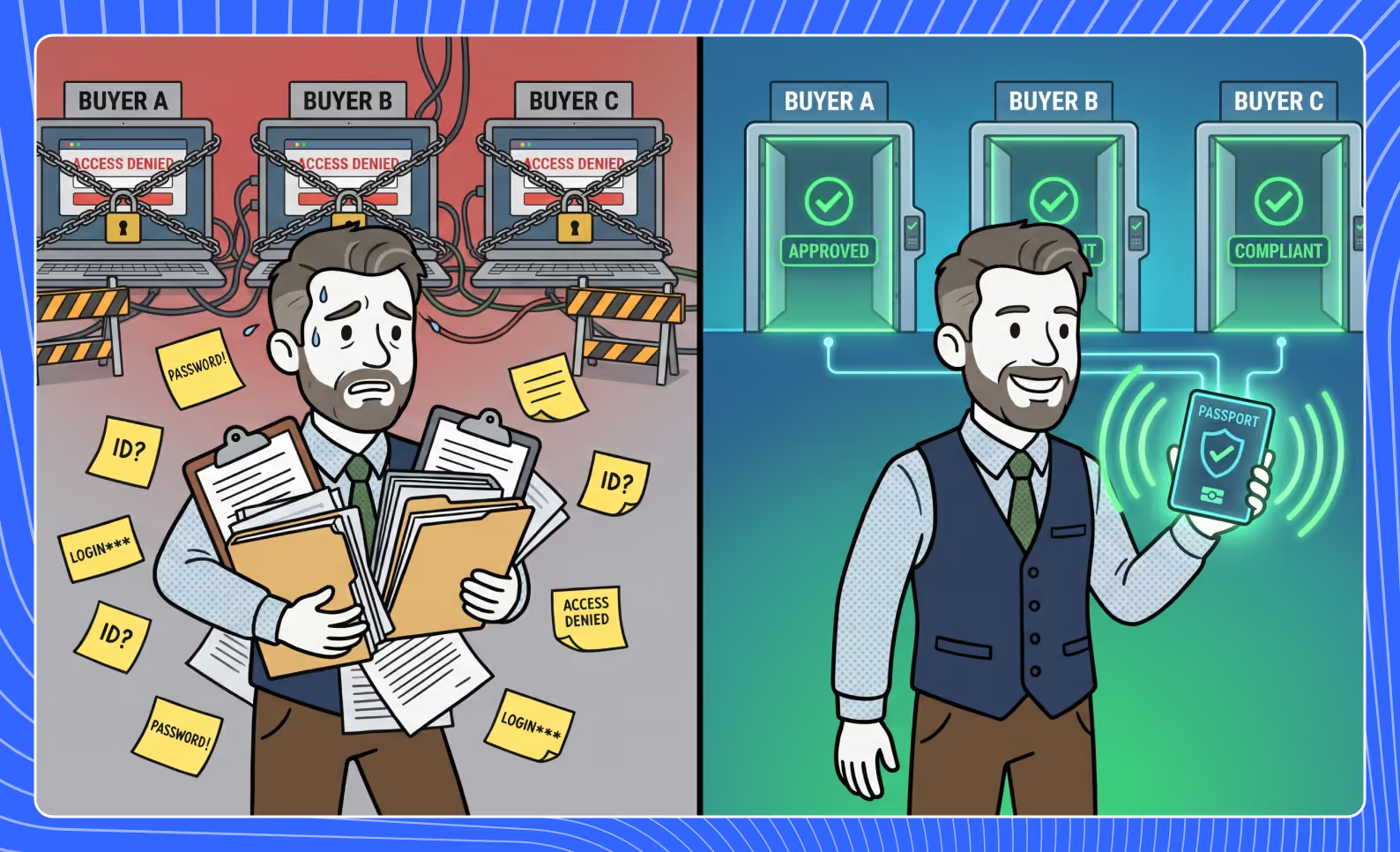
Procurement teams need complete, current supplier information to manage risk, enable payment, and keep business moving. Suppliers, meanwhile, are often asked to provide the same information again and again: tax forms, bank details, legal-entity information, insurance certificates, security documentation, and sustainability data.
A supplier portal can make those requests easier to manage. It gives suppliers one place to submit documents, respond to questionnaires, and track onboarding progress with a specific customer. But a portal alone does not necessarily eliminate repetitive work. If each buying organization asks suppliers to start from scratch, the administrative burden remains.
A reusable supplier profile takes a different approach. Instead of repeatedly rebuilding the same core record, suppliers can maintain information in a secure profile that is ready to share when a new customer request arrives. The buyer still decides what information it needs, validates the data, and applies its own approval policies.
The distinction matters because supplier experience and control are not competing goals. The strongest supplier-management model reduces unnecessary requests while preserving the reviews that protect procurement, finance, and compliance teams.
What Is a Supplier Portal?
A supplier portal is a digital workspace where a supplier interacts with one buying organization. It commonly supports supplier onboarding, document collection, questionnaire responses, profile updates, and status tracking.
For suppliers, a portal creates a clear place to go when a customer requests information. For procurement teams, it replaces scattered emails, spreadsheets, and shared drives with a more structured process.
A well-designed supplier onboarding portal can help teams:
- Request tax, banking, legal, and compliance information in one place
- Assign questionnaires or document sections to the appropriate supplier contacts
- Track outstanding tasks and send reminders
- Route submissions to procurement, AP, legal, risk, or information-security reviewers
- Maintain an audit trail of requests, documents, approvals, and updates
- Give suppliers visibility into their onboarding status
This is a meaningful improvement over manual supplier onboarding. It creates consistency, reduces follow-up, and helps buyers establish a reliable supplier record.
Still, traditional supplier portals are typically customer-specific. A supplier may have a smooth experience within one portal while still needing to repeat nearly identical work for every other customer.
What Is a Reusable Supplier Profile?
A reusable supplier profile is a supplier-managed record containing core business information that can be maintained over time and reused across relevant customer requests.
The profile may include legal-entity details, tax information, payment information, ownership data, certifications, insurance documents, security materials, and other common onboarding requirements. Instead of entering unchanged information from the beginning each time, suppliers can share existing data and focus on the requirements that are unique to the new buyer.
The practical benefit is simple: suppliers spend less time completing duplicative requests, while procurement teams receive more complete information sooner.
A reusable profile does not mean suppliers receive blanket approval everywhere. Each organization still has its own policies, risk thresholds, required documentation, and approval workflows. A supplier that has completed a profile may still need to answer category-specific questions, provide a customer-specific form, or undergo additional due diligence.
The reusable element is the underlying supplier data—not the buyer’s final approval decision.
The Core Difference: Collaboration Workspace vs. Portable Supplier Data
A supplier portal and a reusable supplier profile solve related but different problems.
A supplier portal is primarily a collaboration and workflow environment between a buyer and supplier. It helps a buying organization collect information, communicate requirements, and manage the steps of a supplier relationship.
A reusable supplier profile is primarily a way to reduce repeated data entry. It gives suppliers a maintained foundation of information they can share when appropriate, so they are not recreating the same record for every new relationship.
In practice, the two capabilities are strongest together:
- The supplier portal gives buyers a controlled place to request, review, approve, and manage information.
- The reusable supplier profile helps suppliers provide accurate information faster and with less duplicated effort.
This combined approach can improve supplier adoption without asking procurement teams to compromise on data quality or governance.
Why Repeated Supplier Requests Create Friction
Repeated requests are more than a supplier-experience issue. They can also slow purchasing, create incomplete records, and weaken confidence in supplier data.
When suppliers receive several overlapping requests, they may delay responses, submit outdated documents, or rely on manual workarounds. Procurement teams then spend time chasing information, resolving inconsistencies, and explaining why a document provided to another customer must be submitted again.
The burden is particularly high for suppliers that work with many enterprise customers. A finance or operations team may be responsible for responding to dozens of onboarding questionnaires, each using a different format and asking for similar information.
That friction can lead to real business consequences:
- Longer supplier onboarding cycles
- Delays in sourcing, contracting, and payment setup
- More manual follow-up for procurement and AP
- Greater likelihood of errors or inconsistent supplier records
- Lower supplier satisfaction and engagement
- Pressure to bypass required controls when a purchase is urgent
Reducing repetitive requests gives suppliers a better experience, but it also helps internal teams get the information they need earlier and in a more usable form.
Reusability Should Not Weaken Supplier Controls
The concern with reusable data is understandable: if a supplier profile can be shared more easily, how can each buyer be certain the information is current, valid, and appropriate for its own requirements?
The answer is to separate data reuse from data acceptance.
A supplier may reuse core information, but the buying organization should still control what it requests, how it validates submissions, and who approves the supplier. The buyer should be able to apply rules based on supplier category, location, spend level, services provided, regulatory exposure, and risk profile.
For example, a low-risk office-supplies supplier may need only basic company and tax information. A software provider handling sensitive data may also need an information-security assessment. A strategic manufacturer may require insurance documentation, quality certifications, ownership information, and ongoing risk monitoring.
A reusable profile can make the common data available quickly. The supplier portal and workflow should then identify what is missing, request buyer-specific information, and route the complete package to the right reviewers.
Controls That Should Remain Buyer-Specific
Even when suppliers maintain reusable profiles, organizations should retain control over:
- Required fields, documents, and questionnaires
- Risk-based onboarding and approval rules
- Bank and tax validation procedures
- Compliance, sanctions, and ownership screening
- Role-based access to sensitive supplier information
- Internal approval workflows and segregation of duties
- Audit trails showing what was submitted, reviewed, and approved
- Periodic reassessment and document-expiration requirements
This model gives suppliers a less repetitive process without treating prior information as a substitute for appropriate due diligence.
How a Network Model Improves Supplier Onboarding
A network-based approach makes reusable supplier profiles more valuable because the information can be validated, maintained, and shared in a controlled environment.
With Graphite, suppliers can establish secure, supplier-managed profiles while buyers apply their own onboarding flows and requirements. Suppliers can assign sections to the right internal stakeholders, reducing delays when tax, finance, legal, or compliance teams need to contribute. Buyers gain visibility into progress and can review, request additional documentation, or approve submissions without losing the audit trail.
Graphite’s supplier onboarding platform also supports risk-based onboarding workflows, bank and tax validation, identity verification, and ongoing profile updates. That allows procurement teams to reduce repeated requests while still maintaining the controls required to make informed supplier decisions.
The result is not simply a faster supplier portal. It is a more scalable supplier-data model that serves both the supplier and the buying organization.
When to Prioritize a Supplier Portal, a Reusable Profile, or Both
A supplier portal is the immediate priority when supplier information is still being collected through email, spreadsheets, or disconnected systems. Centralizing intake, document collection, and approvals creates the structure needed to manage supplier onboarding consistently.
A reusable supplier profile becomes especially valuable when suppliers report repetitive requests, onboarding takes too long, or procurement teams repeatedly collect the same core data from suppliers with existing network records.
Most mature organizations will benefit from both. The portal provides the buyer-specific workflow and governance. The reusable profile reduces supplier effort and helps teams begin with more complete, current information.
Make Supplier Data Easier to Share—and Easier to Trust
Suppliers should not have to start from scratch every time a new customer requests common business information. At the same time, procurement teams cannot sacrifice validation, risk review, or approval controls in the name of convenience.
A supplier portal creates a structured place for collaboration. A reusable supplier profile reduces redundant data collection. Together, they help organizations accelerate supplier onboarding, improve supplier experience, and maintain the trusted supplier information needed for secure purchasing and payment.