

Get Started
Graphite's supplier management tool helps you onboard faster, cut time on risk reviews and streamline supplier validations. Save time and money.
How Consumer Goods Companies Use Supplier Portals for Collaboration
In the consumer goods sector, reaching the retail shelf is the final step in a complex journey that requires perfect synchronization between brands and their partners. If a single communication link breaks, a product launch can stall, or an entire production run can fail.
Traditional methods of interaction, often buried in cluttered email threads and static spreadsheets, no longer meet the requirements of modern retail. Today, a sophisticated supplier portal for consumer goods serves as the digital bridge between a consumer’s shopping cart and a supplier’s factory floor, turning passive data into active strategic partnerships.
The journey toward this level of high-performance interaction has been shaped by decades of technological shifts in how procurement teams manage their networks.
The Evolution of the Supplier Portal in CPG
V1.0: The Digital Filing Cabinet
Early iterations of the supplier portal were designed primarily as static repositories for essential documents. In this initial stage, the portal served as a one-way street, allowing vendors to upload their tax forms, insurance certificates, and basic contact information.
There was very little interactive value in these systems; they existed simply to move paper processes into a digital format. For the procurement team, it meant fewer physical folders to manage, but the data remained largely isolated and dormant once it was uploaded to the server.
V2.0: The Transactional Gateway
As technology advanced, the portal's focus shifted to managing the lifecycle of a purchase. This version of the gateway allowed suppliers to acknowledge purchase orders, submit invoices, and track payment statuses within a single interface.
While this was a significant step forward for operational efficiency, it remained a purely transactional relationship. The portal was a tool for processing business rather than growing it. Communication remained limited to financial data, leaving little room for strategic discussion or joint problem-solving.
V3.0: The Collaboration Hub
In the current market, the portal has matured into a dynamic hub for multi-dimensional collaboration. This modern version enables brands and suppliers to collaborate on complex initiatives, such as joint business planning and real-time risk mitigation.
It serves as a shared workspace where both parties can view the same live data, enabling them to address challenges before they affect the supply chain. Today’s hub is the brand's nervous system, connecting various departments and external partners to ensure total alignment on every strategic objective.
Why the Change?
This rapid evolution was driven by a fundamental shift in consumer behavior and the rise of social commerce. Shoppers now demand radical transparency regarding the origin of their products and the ethical standards of the brands they support.
Also, product lifecycles have shortened significantly, requiring a level of agility that transactional portals cannot provide. To stay relevant, consumer goods companies had to find a way to lower communication barriers and invite their suppliers to participate in the value-creation process.
This shift in technology has paved the way for deeper, more strategic uses of these digital interfaces across the entire organization.
4 Strategic Ways Consumer Goods Companies Use Portals for Collaboration
Accelerating Product Innovation and R\&D
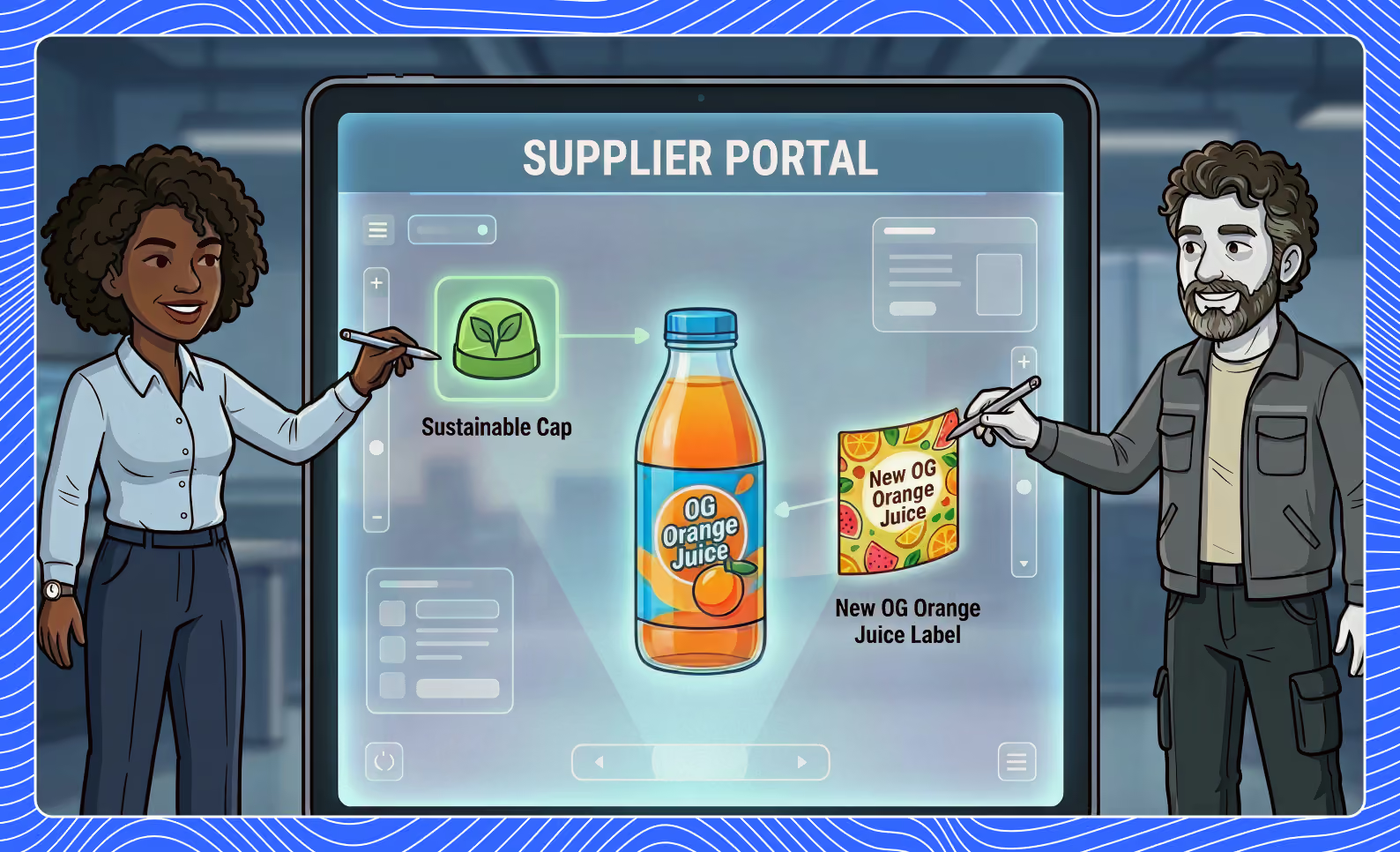
Innovation is the lifeblood of the consumer goods industry, and modern portals are now essential tools for research and development. Brands use these secure environments to share 3D packaging designs, ingredient specifications, and feedback on prototypes with their partners in real time.
Instead of waiting weeks for samples to be shipped and reviewed, teams can iterate on designs digitally. This collaborative approach significantly reduces the time it takes to move a product from the laboratory bench to the retail shelf, allowing brands to capture market trends while they are still fresh.
Orchestrating Sustainability and ESG Goals
Sustainability is no longer an optional corporate initiative; it is a core requirement for modern retail success. Consumer goods companies use their portals to track Scope 3 emissions and verify fair-trade certifications across their entire supplier base.
By centralizing this data, procurement teams can build comprehensive transparency reports that meet the needs of both regulators and consumers. The portal enables joint tracking of environmental goals, such as reducing plastic waste or improving water efficiency, ensuring that every partner in the chain contributes to the brand’s sustainability commitments.
Real-Time Inventory and Demand Synchronicity
One of the most powerful uses of a collaborative portal is synchronizing production schedules with actual market demand. When a portal is integrated with warehouse management data, suppliers can gain visibility into raw material levels and lead times.
This shared visibility allows suppliers to adjust their production cycles in anticipation of a brand's needs, reducing the requirement for excessive safety stock. By closing the information gap between the store shelf and the factory, consumer goods companies can minimize the risk of stockouts and keep their inventory levels optimized.
Continuous Compliance and Risk Shielding
A collaborative portal moves the organization away from point-in-time audits and toward a model of continuous compliance. Instead of checking a supplier's status once a year, the system continuously monitors financial health, safety certifications, and legal standing.
If a supplier’s insurance expires or a credit rating drops, the portal triggers an immediate alert for both the brand and the vendor. This proactive shielding prevents minor issues from becoming major disruptions, ensuring that the brand’s reputation and its supply chain remain protected from unforeseen threats.
While these strategic uses offer immense value, a portal's efficacy is often limited by its underlying software architecture.
The Pitfalls of Traditional Siloed Portals
The Supplier Friction Problem
The primary hurdle for many legacy systems is the high friction they create for vendors. If a supplier is forced to log in to dozens of different portals for dozens of customers, they inevitably suffer from portal fatigue.
This fatigue leads to incomplete profiles, missing documents, and a general lack of engagement. When the barrier to entry is too high, the portal becomes a bottleneck rather than an enabler, and the procurement team spends more time chasing data than they do analyzing it.
Data Decay and Stale Records
Traditional portals often suffer from rapid data decay because they rely on manual updates from either the buyer or the seller. In a fast-paced retail environment, banking details change, certificates expire, and contact information fluctuates.
If the system lacks an automated verification mechanism, records quickly become stale and unreliable. Relying on outdated information is a significant liability, especially when it involves sensitive financial transactions or critical safety compliance.
The Lack of a Network Effect
Most legacy portals are built as private, siloed instances that do not communicate with any other systems. This means that every time a consumer goods company wants to onboard a vendor, they have to build that vendor’s profile from scratch.
There is no shared intelligence or network effect to leverage. This 20th-century approach to data management is inherently inefficient, as it ignores the reality that many suppliers work with multiple brands within the same industry and are tired of repeatedly providing the same information.
The limitations of these siloed systems have paved the way for a more integrated and efficient approach to supplier information management.
Transitioning to a Network-Based Collaboration Model
The network-based model represents the most significant shift in procurement technology in recent years. Instead of every brand maintaining its own private portal, a network model operates like a professional social platform specifically for the supply chain.
In this environment, a supplier creates and maintains a single, secure profile that contains all their essential data, including banking and tax information, safety certifications, and ESG scores. Once the network verifies this profile, the supplier can simply link it to any of their customers.
For a consumer goods company, this means the data is pre-verified and always current, as any supplier update is instantly reflected across the entire network. Graphite Connect utilizes this model to eliminate the administrative burden of data chasing, allowing procurement teams to spend their time on high-value collaboration rather than clerical maintenance.
By leveraging this shared intelligence, brands can turn their procurement departments into strategic assets that drive real business growth.
Turning Your Portal into a Competitive Advantage
A supplier portal for consumer goods is no longer just an IT project or a digital filing cabinet. It is a critical business strategy that determines how quickly a brand can innovate, how accurately it can report on sustainability, and how effectively it can protect itself from risk.
The most successful organizations will be those that lower the barriers to collaboration, making it easy for their suppliers to be great partners. By moving toward a network-based model, you can replace friction with flow and turn your supply chain into a competitive advantage.
Stop managing a collection of siloed portals and start managing a high-performance network of relationships. When your data is clean and your communication is clear, your brand can focus on what matters most: delivering quality to your customers. Ready to see how Graphite Connect can drive your CPG collaboration? Schedule a Demo today.