

Get Started
Graphite's supplier management tool helps you onboard faster, cut time on risk reviews and streamline supplier validations. Save time and money.
How to Build a Supplier Data Quality Scorecard
Supplier data quality is often discussed in broad terms: records are complete, accurate, current, or inconsistent. But without a consistent way to measure those qualities, teams cannot tell whether their data is improving, where breakdowns occur, or which suppliers require attention.
A supplier data quality scorecard turns those expectations into visible metrics. It gives procurement, accounts payable (AP), risk, and operations teams a shared way to assess data completeness, validity, freshness, duplication, and compliance—then use those findings to prioritize action.
The goal is not to create another reporting exercise. A useful scorecard connects data quality to business outcomes. It helps teams reduce onboarding delays, prevent payment exceptions, limit fraud exposure, maintain supplier compliance, and give decision-makers a more reliable view of the supplier base.
Start With the Business Decisions Your Data Must Support
Before selecting metrics, define what supplier data needs to enable. A scorecard should reflect the decisions your organization makes, not simply count how many fields are populated.
For example, procurement may need supplier profiles to support sourcing, onboarding, and supplier relationship management. AP needs verified tax and banking information to process payments. Risk and compliance teams need certifications, due-diligence records, and screening results to remain current. Finance and leadership need consistent legal-entity and classification data to report spend accurately.
These requirements determine which data fields are critical and how much weight each should carry. A missing general contact may be inconvenient. A missing tax ID, expired insurance certificate, or unverified bank account may prevent the organization from paying, onboarding, or continuing to work with a supplier.
A practical scorecard begins by identifying:
- The supplier-data fields required for each business process
- Which fields are critical, important, or optional
- The system or process that owns each field
- The evidence or validation needed to consider a field trustworthy
- The operational impact if the field is incomplete, inaccurate, or outdated
This creates a shared definition of data quality before teams begin measuring it.
Use Five Core Dimensions of Supplier Data Quality
Most supplier data quality scorecards should measure several dimensions rather than relying on a single “cleanliness” percentage. A record can be complete but inaccurate, valid but out of date, or current but duplicated across systems.
Completeness
Completeness measures whether supplier records contain all required information. The exact requirements should vary by supplier type, risk level, category, geography, and business purpose.
For a supplier that will receive payment, required fields may include legal name, remit-to address, tax documentation, bank details, payment terms, and authorized contacts. A high-risk supplier may also require insurance documentation, security questionnaires, sustainability information, or additional certifications.
A basic completeness metric can be calculated as:
Required fields completed ÷ Required fields applicable × 100
The key word is applicable. A supplier should not receive a lower score because it lacks information that is not relevant to its category or relationship with the organization.
Accuracy and Validity
Accuracy measures whether supplier information is correct. Validity measures whether it conforms to established rules or can be verified against trusted sources.
Examples include confirming that a tax ID matches the supplier’s legal entity, a bank account belongs to the stated supplier, an address follows approved formatting, and a certification is issued by a recognized organization.
Accuracy is more difficult to measure than completeness because a filled field is not necessarily a correct field. Organizations can improve this measure by tracking validation failures, rejected submissions, mismatched documents, and records that required manual correction after onboarding.
High-risk fields should receive stronger validation. A typo in a marketing contact’s phone number does not carry the same consequence as an error in banking, tax, legal-entity, or sanctions information.
Freshness
Freshness measures whether supplier information has been reviewed or updated within an appropriate timeframe. Supplier data naturally changes: contacts leave, legal entities restructure, payment instructions change, certifications expire, and compliance requirements evolve.
A freshness score should account for the type of information being assessed. Banking and tax changes may require validation as soon as an update is requested. Certifications and insurance policies should be reviewed before expiration. Lower-risk profile information may be reviewed on an annual or periodic basis.
Useful freshness metrics include:
- Percentage of supplier records reviewed within the required period
- Percentage of time-sensitive documents that remain current
- Number of suppliers with expired or soon-to-expire records
- Average age of critical supplier-data fields
Freshness keeps the scorecard focused on the current state of the supplier base rather than a one-time cleanup.
Consistency and Uniqueness
Consistency measures whether the same supplier information is represented the same way across systems and business units. Uniqueness measures whether one supplier is represented by one appropriate record rather than duplicated profiles.
Duplicate and inconsistent records create operational problems quickly. Procurement may not see a supplier’s existing relationship. AP may process invoices against multiple vendor records. Risk teams may assess one entity while purchases are made from another. Finance may lose visibility into total spend with a supplier group.
Useful measurements include duplicate supplier rate, records with conflicting legal names or tax IDs, unmatched supplier records across connected systems, and the percentage of supplier updates successfully synchronized to downstream platforms.
A scorecard should distinguish between legitimate multiple entities and accidental duplicates. A global supplier may have several valid legal entities. The objective is not to force every record into one profile; it is to make sure the relationships are documented and understood.
Compliance and Documentation Coverage
Compliance coverage measures whether suppliers have the documentation, certifications, and screening results required to do business.
This dimension is especially important for regulated industries, high-risk suppliers, and vendors with access to sensitive information, facilities, or customer data. Depending on the organization, it may include sanctions screening, insurance certificates, diversity documentation, cybersecurity questionnaires, ESG information, quality certifications, and contractual requirements.
The score should reflect both presence and status. A document that was submitted but has expired should not receive the same credit as an active, verified document.
Build a Weighted Score That Reflects Risk
Not every data-quality dimension should carry the same weight. A scorecard should reflect the operational and financial risk associated with each field and supplier segment.
For example, an organization might assign:
- 30% to accuracy and validity
- 25% to completeness
- 20% to compliance and documentation coverage
- 15% to freshness
- 10% to consistency and uniqueness
Those weights are only a starting point. A supplier that handles sensitive data may require more weight on compliance and risk documentation. A supplier that receives frequent payments may require more weight on validated banking and tax information. A low-risk, one-time supplier may have a simpler scorecard and a lower required threshold.
The most important principle is transparency. Teams should understand what the score means, which data gaps lower it, and what action is required to improve it.
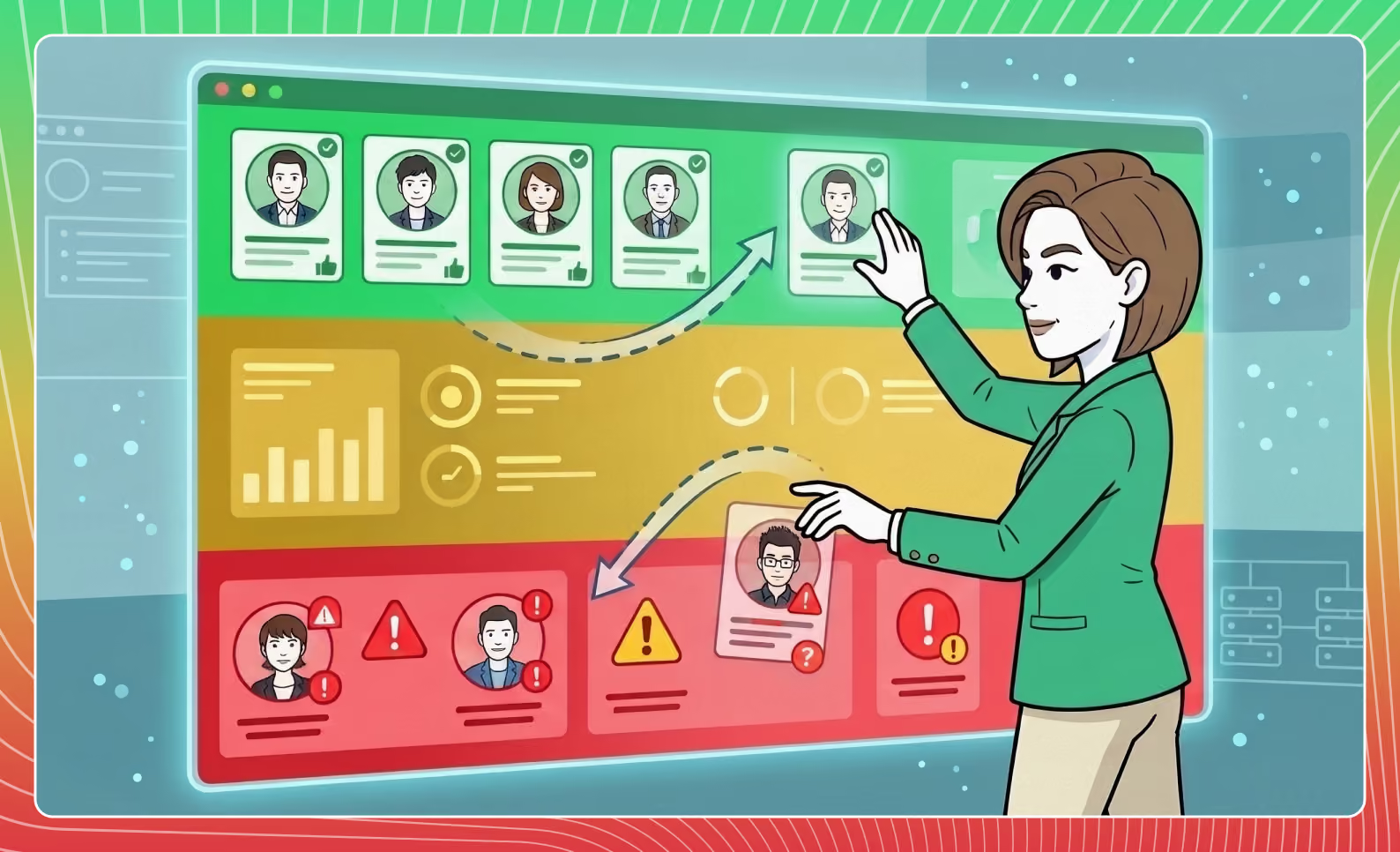
Many organizations use simple score bands:
- Green: Supplier record is complete, current, and ready for normal business activity.
- Yellow: Supplier record has manageable gaps or upcoming renewals that require follow-up.
- Red: Supplier record has critical missing, invalid, expired, or unverified information that requires intervention.
These bands help stakeholders act on the score without requiring them to interpret every underlying metric.
Assign Clear Ownership for Each Metric
A scorecard cannot improve supplier data if no one owns the remediation process. Each dimension should have an accountable team and a defined path for correcting exceptions.
Procurement may own supplier profile completeness and relationship coordination. AP may own payment-data validation and payment-related exceptions. Risk or compliance may own documentation coverage and due-diligence requirements. IT may own integration reliability, data synchronization, access controls, and technical data-quality issues.
The scorecard should show more than the score itself. It should identify the owner, issue type, affected supplier, required action, due date, and escalation path. This turns the scorecard into a management tool rather than a static dashboard.
For example, a supplier with a low freshness score because of an expired certificate should trigger an action for the appropriate supplier contact and internal owner. A record with a tax-ID mismatch should be routed for validation before it reaches the vendor master or payment workflow.
Connect Data Quality to Operational Outcomes
Data quality matters, but accuracy alone does not show whether supplier data is helping the organization operate better. The most effective scorecards connect data metrics to operational outcomes.
Track how data quality affects:
- Supplier onboarding cycle time
- Payment exceptions and invoice holds
- Manual corrections and rekeying effort
- Duplicate vendor records
- Expired compliance documents
- Supplier response time for information requests
- Risk-review delays
- ERP synchronization failures
These measures show whether data-quality improvements are reducing friction for suppliers and internal teams. They also help leaders prioritize the processes that need attention most.
Put the Scorecard Into a Continuous Improvement Cycle
A supplier data quality scorecard should be reviewed on a regular cadence. Monthly reviews may work for operational teams, while quarterly reviews can help leadership identify trends, resource gaps, and process improvements.
Start with a manageable scope. Focus on active suppliers, the fields with the greatest financial or compliance impact, and the systems that create the most downstream friction. Once the scorecard is producing useful action, expand it to additional categories, regions, legacy records, or supplier segments.
Automation can make the process more sustainable. A vendor data validation system can help teams validate critical supplier information, identify inconsistencies, monitor changes, and route exceptions for review. This reduces the manual effort required to keep scorecard metrics current while maintaining stronger controls around high-risk data.
Make Supplier Data Quality Measurable
Supplier data quality does not improve because teams agree that clean data is important. It improves when organizations define the information they need, measure it consistently, assign ownership, and act on the gaps that matter most.
A well-designed scorecard gives procurement, AP, risk, and IT a shared view of supplier-data health. It helps teams move from reactive cleanup to a repeatable process for maintaining accurate, current, and trusted supplier records.