

Get Started
Graphite's supplier management tool helps you onboard faster, cut time on risk reviews and streamline supplier validations. Save time and money.
Procurement Intake vs. Supplier Onboarding vs. Procurement Orchestration: What Is the Difference?
Modern procurement teams are expected to create a simple experience for employees while maintaining control over spend, suppliers, risk, and compliance. That requires more than a request form or an onboarding checklist. It requires a connected process that guides each request from an initial business need through supplier evaluation, approval, and execution.
Procurement intake, supplier onboarding, and procurement orchestration each contribute to that process in distinct ways. Yet they are often treated as interchangeable terms—or as competing solutions to the same problem.
They are not. Procurement intake captures and routes a business request. Supplier onboarding establishes and validates a supplier relationship. Procurement orchestration connects the people, systems, approvals, and actions needed to move work across the broader process.
Understanding the difference helps teams identify where their process is breaking down and invest in the right capability to fix it.
What Is Procurement Intake?
Procurement intake is the front door for purchasing requests. It is the process employees use to tell procurement what they need, why they need it, and when they need it.
A well-designed intake process gathers the information procurement needs to route a request correctly. That may include the requested product or service, estimated spend, business owner, budget, supplier preference, contract details, timeline, and potential risk considerations.
The goal is to replace unclear emails, chat messages, and disconnected forms with a consistent starting point.
Procurement Intake Solves the “Where Do I Start?” Problem
Without procurement intake, employees often do not know when to involve procurement or what information to provide. They may engage a supplier before approvals are complete, submit incomplete requests, or bypass the process entirely because it feels difficult to navigate.
Intake-to-procure workflows make the process more accessible. They can guide employees through the right questions, direct requests to the right team, and apply approvals based on spend, category, location, or risk.
For procurement teams, this creates earlier visibility into demand. Instead of reacting after a supplier has been selected or a contract has been signed, procurement can engage at the beginning of the buying process.
Still, intake is only the first step. It does not by itself validate a new supplier, collect required documents, or ensure the work moves smoothly across every downstream system.
What Is Supplier Onboarding?
Supplier onboarding is the process of establishing a new supplier as an approved and ready-to-transact vendor. It begins once an organization has decided to work with a supplier—or needs to evaluate whether that supplier meets its requirements.
The process typically involves collecting and validating supplier information, such as legal-entity details, tax forms, bank information, insurance certificates, compliance documentation, and risk assessments. It may also include internal approvals from procurement, accounts payable, legal, information security, tax, compliance, or business stakeholders.
Supplier Onboarding Solves the “Can We Work With This Supplier?” Problem
A supplier cannot become operational simply because a stakeholder wants to buy from them. The organization needs confidence that the supplier is legitimate, compliant, properly configured for payment, and able to meet applicable business requirements.
That makes supplier onboarding a governance and data-quality process as much as an administrative one.
A strong onboarding program helps teams:
● Reduce manual supplier setup and follow-up
● Validate banking and tax information before payment
● Identify missing compliance or risk documents
● Apply different requirements based on supplier risk
● Create a clear audit trail of approvals and evidence
● Give suppliers a more transparent, self-service experience
Graphite’s supplier onboarding platform supports this work by helping teams collect, validate, and manage supplier information in a more structured process.
Supplier onboarding is essential, but it is not the same as procurement intake. Intake captures a purchasing need; onboarding determines whether a new supplier can safely and successfully support that need.
What Is Procurement Orchestration?
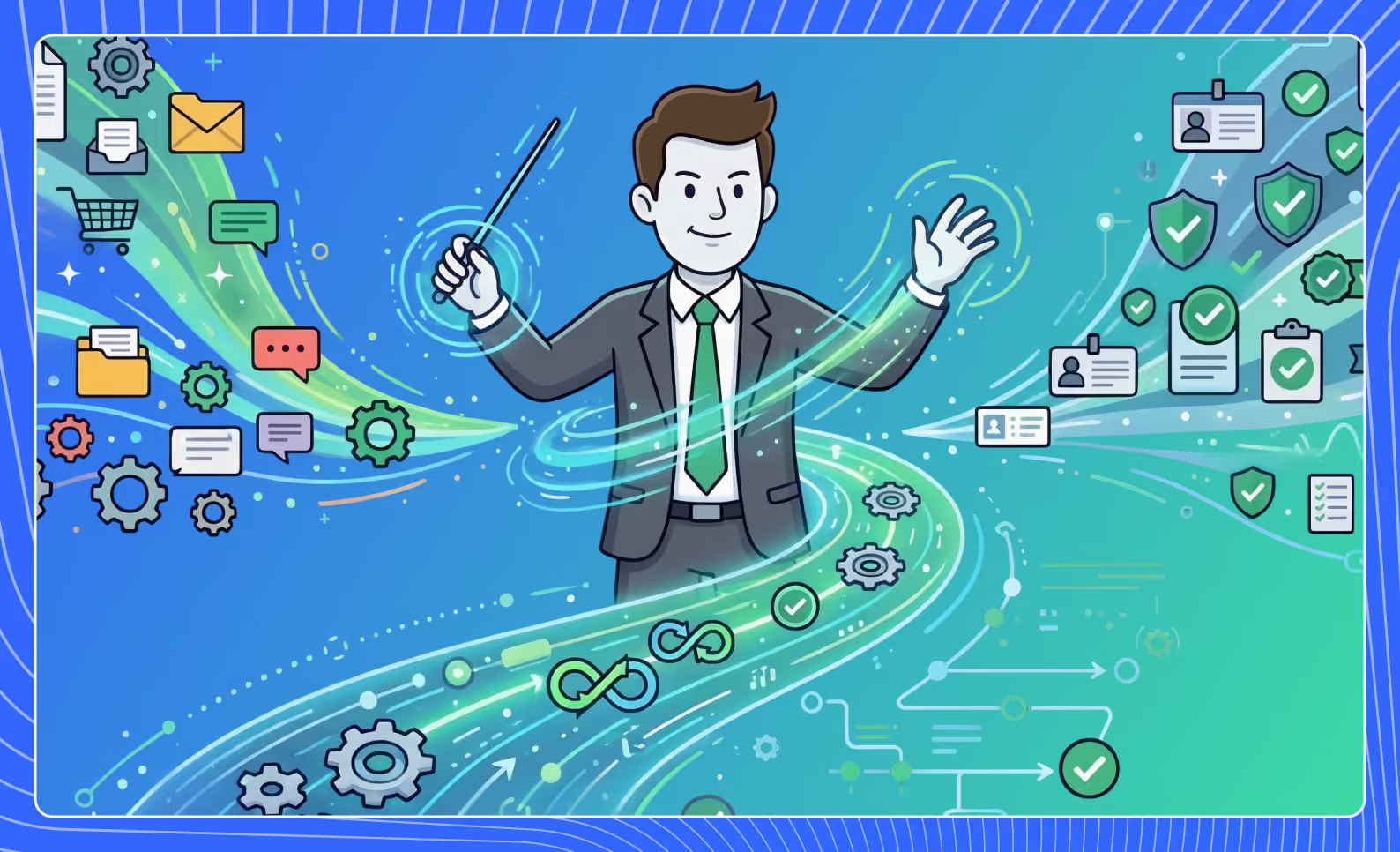
Procurement orchestration is the coordination layer that connects procurement intake, supplier onboarding, sourcing, approvals, contracting, purchasing, and related systems into one guided workflow.
It is less about a single transaction and more about how work moves across the procurement operating model.
For example, a stakeholder may submit a request for new software through procurement intake. The request may require budget approval, information-security review, legal review, and sourcing support. If the selected vendor is new, the process may trigger supplier onboarding. Once the supplier is approved, the request can move to contract execution, purchase-order creation, and payment setup.
Procurement orchestration ensures these steps happen in the right sequence, with the right owners, without requiring the employee to understand every internal process.
Procurement Orchestration Solves the “How Does Work Move End to End?” Problem
Procurement processes often break down at the handoffs. A request may be approved but not routed to sourcing. A supplier may complete onboarding but wait for an ERP setup. Legal may review a contract without visibility into the business timeline. Procurement may have data in one system while AP, risk, and the business use others.
Procurement orchestration addresses these gaps by coordinating actions across teams and systems. It can define routing rules, trigger tasks, send reminders, surface bottlenecks, and provide visibility into request status from start to finish.
The result is not necessarily a replacement for intake or onboarding tools. It is the connective process that helps those capabilities work together.
How Procurement Intake, Supplier Onboarding, and Orchestration Work Together
The easiest way to distinguish these concepts is to follow a common purchasing scenario.
A business stakeholder needs a new service provider. They begin with procurement intake, where they submit the request and provide the initial business case. Procurement reviews the need, determines the appropriate approval path, and may involve sourcing or legal.
If the business selects a new supplier, supplier onboarding begins. The supplier provides required tax, banking, legal, and compliance information. Internal teams validate the information and approve the supplier based on the organization’s risk requirements.
Procurement orchestration connects these activities. It ensures the approved request triggers the right onboarding workflow, gives stakeholders visibility into status, and coordinates the next steps once the supplier is ready.
In short:
● Procurement intake captures demand.
● Supplier onboarding establishes a supplier.
● Procurement orchestration coordinates the end-to-end process.
Where Teams Commonly Go Wrong
A common mistake is assuming that one capability will solve every procurement-process challenge.
Adding a better intake form will not resolve delays caused by supplier document collection, fragmented risk reviews, or slow vendor-master setup. Likewise, improving supplier onboarding will not help if employees continue engaging suppliers before procurement is involved.
Another mistake is treating procurement orchestration as purely a technology issue. Technology can make workflows more visible and repeatable, but effective orchestration also requires clear process ownership, defined approval policies, and agreement on which systems hold the source of truth.
Teams should start by identifying the most persistent point of friction:
● If stakeholders submit incomplete or late requests, improve procurement intake.
● If supplier setup is slow, risky, or difficult to audit, strengthen supplier onboarding.
● If work stalls between teams or systems, focus on procurement orchestration.
Many organizations will need all three. The priority depends on where the process is currently breaking down.
Build a Connected Procurement Experience
The best procurement experience does not force employees to navigate a maze of forms, systems, and approval owners. It gives them a clear way to begin, guides work through the right reviews, and creates reliable handoffs from request to supplier activation and purchase.
Procurement intake, supplier onboarding, and procurement orchestration are distinct capabilities, but they are most effective when designed as parts of one connected process. By understanding the role each one plays, procurement teams can reduce friction for employees while maintaining stronger control over spend, supplier data, risk, and compliance.