

Get Started
Graphite's supplier management tool helps you onboard faster, cut time on risk reviews and streamline supplier validations. Save time and money.
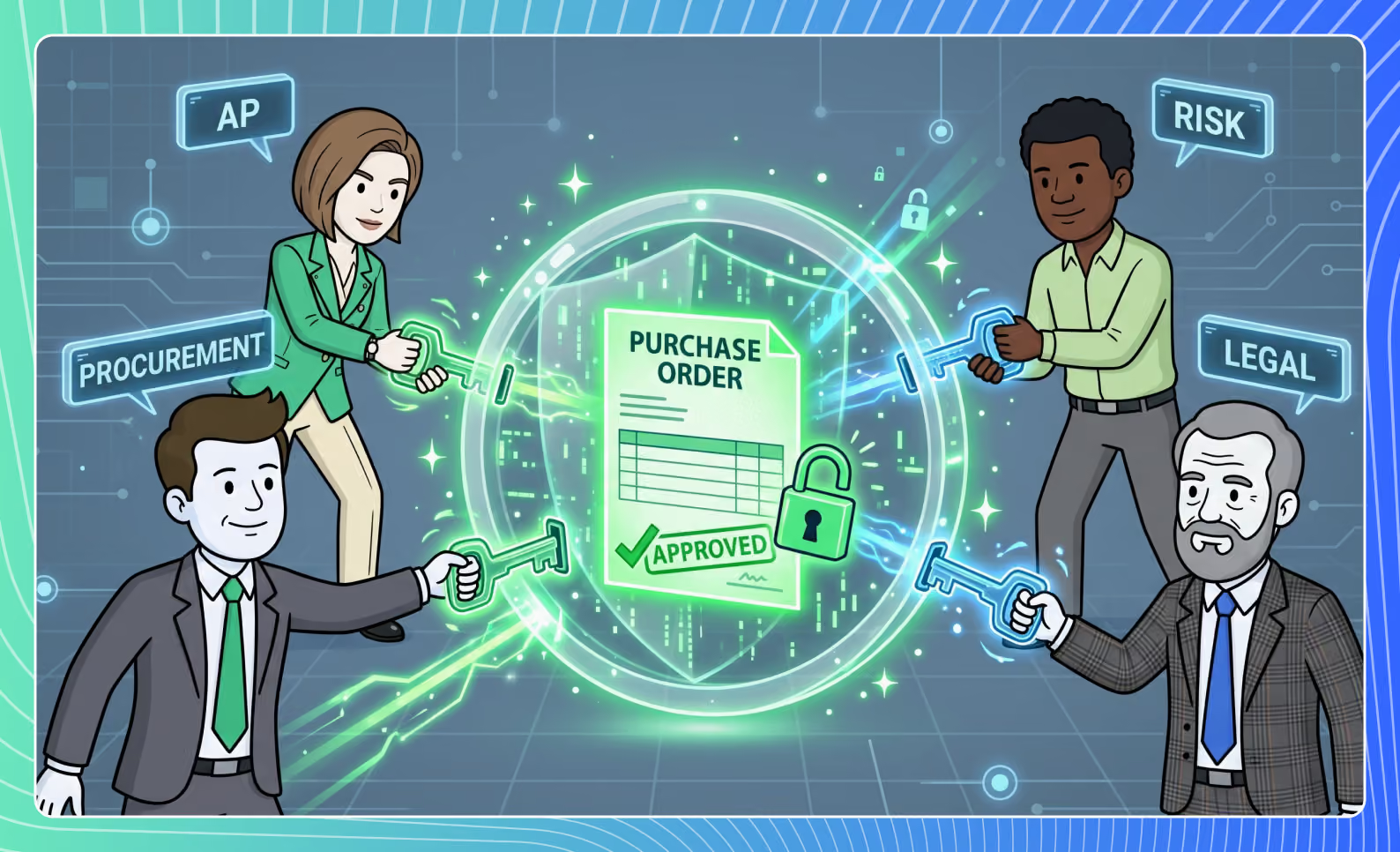
What Does “PO-Ready” Mean? Defining Approved Supplier Status Across Procurement, AP, Legal, and Risk
A supplier is not PO-ready simply because it exists in the ERP or has completed an onboarding form. PO-ready means the organization has finished the applicable reviews, validations, and approvals needed to issue a purchase order with confidence.
That distinction matters because supplier onboarding involves more than procurement. Accounts payable needs the information required to pay the supplier. Legal may need contracts or approved terms in place. Risk, compliance, and information security may need to evaluate the supplier before work begins. The business owner may need to confirm the scope, budget, and commercial need.
When these requirements are not connected to one clear status, teams rely on assumptions. A requester may believe a supplier is ready because sourcing selected it. AP may still be waiting for tax documents. Legal may still be negotiating terms. Risk may have identified an open issue. The supplier may look active in one system while still being incomplete in another.
A defined PO-ready standard gives procurement, AP, legal, and risk teams one shared decision point. It makes the supplier’s status visible, clarifies what remains open, and prevents the urgency of a new purchase from bypassing the controls designed to protect the business.
What PO-Ready Should Mean
PO-ready is the status assigned to a supplier that has completed the requirements necessary to receive a purchase order under the organization’s normal procurement policy.
At a minimum, a PO-ready supplier should have:
- An approved business need and supplier-selection decision
- A verified legal entity and complete supplier profile
- Required tax, banking, and payment information
- An active vendor-master record in the appropriate ERP or procure-to-pay system
- Required contract terms, statements of work, or other legal documentation
- Completed risk, compliance, and security reviews appropriate to the supplier
- Required internal approvals and an auditable record of those decisions
The exact requirements should reflect the supplier’s category, spend, location, access to company data or facilities, and level of business criticality. A low-risk office-supply vendor may follow a streamlined path. A software provider with access to customer data may require information-security, privacy, and legal reviews before any purchase order is issued.
The goal is not to force every supplier through the most complex workflow. It is to make sure each supplier meets the right requirements before the organization commits funds or begins work.
Why a Shared Definition Matters
Without a shared PO-ready definition, every function can use a different version of supplier approval.
Procurement may view a supplier as ready after confirming the business case and supplier selection. AP may view the supplier as ready after tax and bank details are validated. Legal may consider it ready only after the contract is signed. Risk may need a completed due-diligence review before it approves the relationship.
Each of these milestones is important. None is sufficient on its own.
A shared standard reduces the uncertainty that creates delays and workarounds. It gives stakeholders a reliable answer to three basic questions:
- Can this supplier receive a purchase order now?
- If not, what requirement is still incomplete?
- Who owns the next action?
This visibility is particularly valuable when a supplier is urgent. Rather than asking teams to skip steps, the organization can identify which review is blocking progress and determine whether an exception is justified.
The Core Requirements for PO-Ready Status
Procurement Approval
Procurement should confirm that the supplier has a valid business purpose and has been selected through the appropriate sourcing, intake, or competitive-bid process.
This typically includes:
- A documented business justification
- Supplier category and estimated spend
- Budget-owner or requester approval
- Supplier-selection rationale
- Required sourcing or bidding documentation
- Supplier classification and risk tier
Procurement also coordinates the overall onboarding process. It does not need to perform every review, but it should provide a clear view of supplier progress and ensure that each required team has completed its part of the process.
AP and Finance Approval
AP owns the information and controls required to pay the supplier accurately and securely. A supplier cannot be fully PO-ready if the organization does not have the data needed to create the vendor record, process invoices, and make payment according to policy.
AP requirements commonly include:
- Legal business name and remit-to address
- Tax identification number and required tax forms
- Verified bank-account or payment instructions
- Payment terms and payment method
- Vendor-master record creation
- Controls for duplicate vendors and payment exceptions
These requirements protect both the supplier and the organization. Missing or inaccurate tax and bank information can delay payments, create reporting problems, or increase the risk of fraud. AP should have the authority to hold PO-ready status until the information required for secure payment is complete.
Legal Approval
Legal should define the contractual conditions that must be in place before a supplier can begin work or receive a purchase order.
Depending on the relationship, this may include:
- A master services agreement
- A statement of work
- Standard terms and conditions
- A non-disclosure agreement
- A data-processing agreement
- Insurance requirements
- Intellectual-property or confidentiality provisions
- Required signatures and approval authority
Not every supplier needs the same agreement structure. However, when a contract is required, the supplier should not be treated as fully approved while material terms remain unresolved.
A purchase order can establish commercial terms, but it does not replace the legal protections required for every supplier relationship. Procurement and legal should agree in advance on when standard terms are sufficient and when a more detailed review is required.
Risk, Compliance, and Security Approval
Risk and compliance requirements should be based on the supplier’s potential impact on the organization. A supplier with access to sensitive data, internal systems, regulated operations, or critical supply-chain activities may require more extensive review than a low-risk indirect supplier.
Applicable requirements may include:
- Sanctions and watchlist screening
- Insurance verification
- Cybersecurity assessment
- Privacy review
- Financial-stability review
- Quality or safety certifications
- ESG, diversity, or sustainability documentation
- Information-security or third-party-risk approval
Risk approval does not always mean the supplier has no risk. It means the organization has assessed the relevant exposure, confirmed required controls, and formally accepted or mitigated any remaining concerns.
If a supplier has open remediation items, its PO-ready status should clearly show whether work is restricted, conditional, or prohibited until those actions are complete.
Use Clear Supplier Statuses Before PO-Ready
PO-ready is easier to manage when it sits within a defined supplier-status model. Rather than treating suppliers as simply active or inactive, organizations can use statuses that show where the supplier is in the process.
Requested
The business has identified a potential supplier, but formal onboarding has not started. Procurement should confirm the business need and determine the supplier’s category, risk level, and onboarding path.
In Onboarding
The supplier is providing information and documents, while internal teams begin their reviews. The supplier should not receive a purchase order at this stage unless an approved exception allows limited activity.
In Review
The supplier has submitted the required information, but one or more reviews remain open. For example, AP may be validating tax documents, legal may be reviewing terms, or risk may be assessing a security questionnaire.
Conditionally Approved
A supplier may be conditionally approved when the organization needs to permit limited activity before all long-term requirements are complete. This status should have a defined scope, an expiration date, a documented approver, and clear restrictions.
Conditional approval should not become a routine shortcut. It is an exception path for specific business circumstances.
PO-Ready
The supplier has completed all applicable procurement, AP, legal, and risk requirements. It is active in the required systems and can receive a purchase order under normal policy.
Restricted or Inactive
A supplier should be restricted or made inactive when it can no longer receive new purchase orders, has unresolved risk or compliance concerns, is undergoing offboarding, or no longer has a valid business relationship with the organization.
Make PO-Ready Status Visible
A PO-ready definition only works when every stakeholder can see the same status and understand what it means. Requesters should not have to ask procurement, AP, legal, and risk separately whether a supplier is ready. Those teams should not have to reconcile status through email, spreadsheets, or disconnected systems.
A supplier onboarding platform can centralize supplier information, route reviews to the right stakeholders, validate critical data, and show the status of each requirement in one workflow. It also helps approved supplier data move into ERP and procure-to-pay systems without manual re-entry or conflicting records.
The process should track where suppliers spend time. If legal review, tax validation, security assessments, or vendor-master setup consistently delay PO-ready status, teams have the information needed to improve the workflow rather than relying on exceptions.
Turn PO-Ready Into a Trusted Decision Point
PO-ready should mean more than “the supplier is in the system.” It should signal that the organization has completed the commercial, financial, legal, and risk requirements necessary to make a purchase commitment responsibly.
With one shared definition, procurement can move suppliers through onboarding more predictably. AP can protect payment controls. Legal can ensure required terms are in place. Risk teams can apply the right diligence without becoming an afterthought.
The result is a faster, clearer path from supplier request to approved business relationship—without sacrificing the controls that keep procurement, payments, and supplier data trustworthy.
The result is a faster, clearer path from supplier request to approved business relationship—without sacrificing the controls that keep procurement, payments, and supplier data trustworthy.