

Get Started
Graphite's supplier management tool helps you onboard faster, cut time on risk reviews and streamline supplier validations. Save time and money.
21 CFR Part 11 for Procurement Teams: What to Require From Vendors
In the pharmaceutical industry, procurement is no longer just about cost savings and supply chain resilience; it is about regulatory gatekeeping. For organizations operating under the jurisdiction of the FDA, the transition to digital infrastructure brings a heavy burden of proof. Historically, teams relied on fragmented spreadsheet methods and manual folders to track compliance—a process fraught with risk and human error. Today, centralized Supplier Master Data Management (MDM) systems are replacing these manual silos, ensuring every system that touches a regulated record meets the rigorous standards of 21 CFR Part 11 compliance. For procurement professionals, this means moving beyond general IT security questionnaires and into the nuanced world of GxP system validation via integrated digital platforms.
The risks of inadequate vendor vetting are catastrophic. Failure to ensure that a vendor can support Part 11 requirements often results in the discovery of "data integrity gaps" during FDA inspections. Historically, these gaps have led to the issuance of Form 483 observations and, in more severe cases, Warning Letters that can halt production or delay new drug approvals (NDAs). When an inspector finds that a LIMS or QMS lacks a reliable audit trail or allows unauthorized record modification, the entire dataset produced by that system becomes "unreliable" in the eyes of the agency. For a procurement team, this isn't just a compliance failure—it is a financial and reputational disaster that can cost millions in remediation and lost market opportunity.
The Role of Procurement in Digital Compliance
Procurement teams serve as the primary intake point for new technologies. Whether sourcing a Laboratory Information Management System (LIMS), a Quality Management System (QMS), or a cloud-based clinical trial platform, the procurement process must account for how that system creates, modifies, maintains, archives, retrieves, or transmits regulated records. Modern Supplier Management Platforms facilitate this necessary oversight by centralizing all vendor documentation in a unified workspace. If a vendor cannot provide documented evidence of Part 11 readiness within these centralized platforms, the software—no matter how innovative—is a liability.
Defining Regulated Records
To effectively manage pharma vendor management, procurement must first understand what constitutes a "regulated record." Under 21 CFR Part 11, electronic records are considered equivalent to paper records and handwritten signatures. This applies to any digital data required to be maintained by FDA predicate rules. Robust Supplier MDM systems act as the "single source of truth," providing a unified architecture for maintaining valid, tamper-proof records. If a system is used to sign off on a batch release, track clinical subject data, or store stability testing results, its record-keeping integrity must be verified through the MDM lens.
Modern pharma operations rely on a complex ecosystem of software categories, each presenting unique Part 11 challenges. For example, an electronic Trial Master File (eTMF) is critical for clinical trial compliance; if a vendor cannot guarantee the permanence and traceability of every investigator brochure or consent form, the clinical data may be rejected. Similarly, a Clinical Trial Management System (CTMS) must ensure that subject enrollment data is immutable. In the manufacturing space, a Quality Management System (QMS) manages Deviations and Corrective and Preventive Actions (CAPAs). If the QMS does not strictly enforce signature-linked approvals for these processes, the manufacturer cannot prove that quality issues were appropriately addressed. Procurement must recognize that any system interacting with these "moments of truth" in the product lifecycle requires the highest level of scrutiny.
Core Vendor Requirements: The Compliance Checklist
When evaluating a new GxP system, procurement should require specific technical and procedural controls from the vendor. These requirements ensure that the digital supply chain remains robust and audit-ready.
1. Validation Documentation and Support
A common pitfall is assuming that a "Part 11 compliant" software package is ready for use out of the box. Validation is the responsibility of the regulated entity (the pharma company), but the vendor must provide the necessary building blocks. Procurement should require:
- A Validation Summary Report (VSR) from the vendor's own internal testing.
- Traceability matrices linking functional requirements to test scripts.
- Access to the vendor's Quality Management System (QMS) for auditing purposes.
2. Audit Trail Integrity
The audit trail is the backbone of data integrity. Procurement must verify that the system generates secure, computer-generated, time-stamped audit trails that independently record the date and time of operator entries and actions. Modern platforms, such as Graphite Connect, automate these technical requirements by providing built-in immutable logs that satisfy the strictest regulatory inquiries. Crucially, these trails must not be editable or deletable by users, including system administrators. Requirement: Ask the vendor to demonstrate how their platform automatedly captures the "who, what, when, and why" of every record change.
3. Electronic Signature Protocols
For electronic signatures to be legally binding, they must be unique to one individual and not reused or reassigned. Vendors must show that their systems require at least two distinct identification components (e.g., a username and a password) for signings. Procurement should ensure the vendor supports multi-factor authentication (MFA) and provides a clear "meaning" for the signature (e.g., review, approval, or authorship).
4. Data Retention and Archiving
Regulatory compliance does not end when a project is completed or a contract expires. Predicate rules often require records to be retained for decades. Procurement must evaluate a vendor's ability to maintain data readability and accessibility over long periods. Can the vendor guarantee that data will be exportable in a human-readable format (e.g., PDF/A or XML) if the system is decommissioned? Procurement should seek contractual assurances regarding data migration support and the longevity of the archive infrastructure to prevent "data silos" that cannot be audited five years down the road.
5. Security Infrastructure & User Access Management
Part 11 explicitly requires "limiting system access to authorized individuals." In a SaaS environment, this responsibility is shared. Procurement must verify that the vendor implements robust logical security controls. Advanced Supplier Management Platforms like Graphite Connect streamline this through secure access management, often integrating directly with the organization's Single Sign-On (SSO) or Active Directory. The platform must provide granular role-based access control (RBAC), ensuring that only qualified personnel can perform specific GxP actions. Furthermore, internal access to data must be tightly controlled and logged within the same automated security framework.
Implementing an Operational Framework
To avoid inconsistent vetting, procurement departments should adopt a structured, risk-based approach to GxP system validation during the RFI/RFP stage.
The Standardized RFI Process
Instead of generic questions, use targeted inquiries: "Does the system maintain audit trails for the life of the record?" or "Can you provide a SOC 2 Type II report along with your GxP assessment?" This standardization creates a level playing field and allows procurement to identify high-risk vendors early in the lifecycle.
Cross-Functional Collaboration: The Procurement Triad
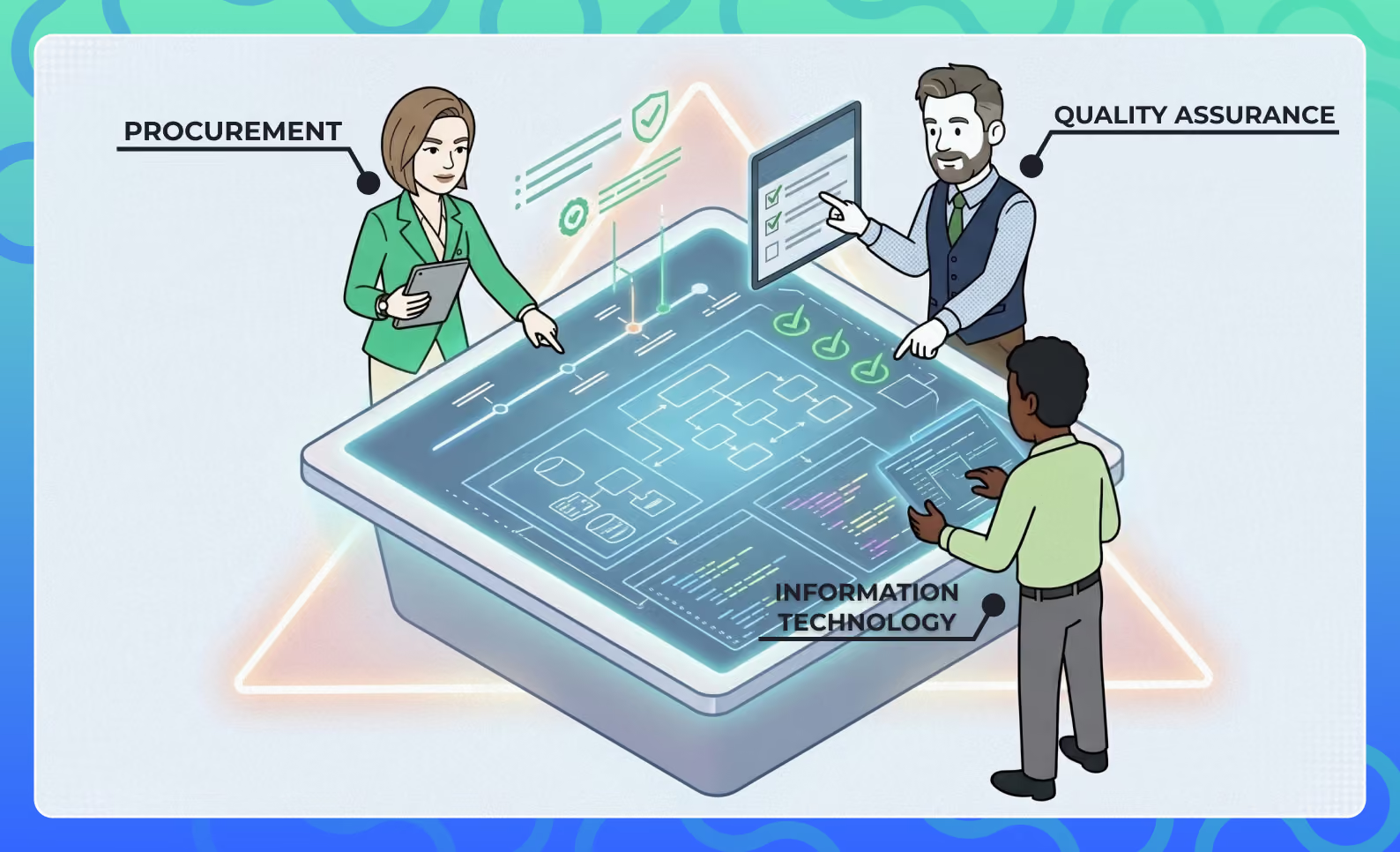
The most successful digital procurement strategies in pharma are not siloed; they are built on a "triad" of expertise involving Procurement, Quality Assurance (QA), and Information Technology (IT). Procurement acts as the project manager and lead negotiator, but QA must define the specific GxP requirements and conduct the vendor audit. Simultaneously, IT evaluates the technical architecture and security posture. This cross-functional alignment ensures that a system isn't just cost-effective and technically sound, but also fully compliant with the quality management system of the enterprise. Without this collaboration, Procurement risks signing a contract for a system that QA will later refuse to validate, leading to wasted capital and project delays.
Continuous Compliance Monitoring
Compliance is not a point-in-time event. Procurement contracts should include "Right to Audit" clauses and requirements for the vendor to notify the organization of any system updates that could impact the validated state. Real-time oversight is the modern solution to the "visibility gap" inherent in traditional annual audits.
Conclusion
By aligning procurement workflows with 21 CFR Part 11 compliance mandates, pharma teams can transform a regulatory hurdle into a strategic advantage. Adopting a centralized Supplier Management Platform is the strategic path toward continuous, automated compliance. Solutions like Graphite Connect provide the modern framework required to turn these compliance goals into operational reality, helping procurement teams drive both efficiency and regulatory rigor. Requiring transparency, validation support, and technical excellence from vendors through a unified supplier MDM system ensures that regulated records remain accurate, reliable, and trustworthy. A rigorous, platform-based procurement process does more than just mitigate risk; it builds a foundation of data integrity that supports long-term clinical and commercial success.
Ultimately, the role of the procurement professional in life sciences is that of a steward of patient safety. By ensuring that every digital tool used in the drug development and manufacturing process is audit-ready and Part 11 compliant, procurement teams protect the company from regulatory action and ensure that the digital evidence supporting a drug's safety and efficacy is beyond reproach. In the digital age, a compliant supply chain is not just a necessity—it is the only path to sustained innovation and global health impact.