BREAKING!

Graphite Named to ProcureTech 100

Read the Announcement

Manage Your Tail Spend to Control Costs & Boost Efficiency
Get Started

Graphite's supplier management tool helps you onboard faster, cut time on risk reviews and streamline supplier validations. Save time and money.

April 19 2023

Managing Tail Spend Categories in Procurement to Control Costs & Boost Efficiency

By Trinceton Brown

Tail spend is an umbrella term for the countless low-value, infrequent purchases that often go unmanaged in an organization. While these transactions may seem insignificant individually, they can collectively account for a substantial portion of total spend. 

Because these expenses often fly under the radar, they can lead to inefficiencies, supplier fragmentation, and missed opportunities for savings. Without proper oversight, tail spend can negatively impact financial performance and operational efficiency.

Managing your tail spend is critical to control costs and improving proficiency. The tail spend management strategies below can help you reduce unnecessary expenses, streamline your procurement process, and improve your bottom line.

What is tail spend in procurement?

Tail spend in procurement describes infrequent, low-value purchases that can add up significantly over time. These small purchases may include office supplies, maintenance and repair services, travel, and small equipment purchases. 

The term “tail” refers to the end of a distribution curve with many small transactions.

Tail Spend Graph - Graphite Connect

Tail spend often lacks visibility, making it prone to inefficiencies and unmanaged costs. Developing a strong tail spend management framework helps organizations categorize these expenses effectively, ensuring better financial control. 

Further, despite usually representing only a small percentage of an organization’s total spending, tail spend can be complex and challenging to manage since it often involves many suppliers and thousands of transactions. 

The exact tail-end spend definition varies from company to company and depends on your spend threshold.

Key Challenges in Managing Tail Spend

Effective tail spend management is essential to mitigating risk (such as limited visibility, compliance issues, increased costs, and reduced quality) and ensuring your organization gets the best value for the money spent. Plus, reducing the complexity of handling numerous low-value transactions can help you save time in your procurement process, which offers significant savings. Despite its multiple benefits, many procurement teams shy away from taking on managing their tail spend. This is due to various factors, such as:

  • Lack of Visibility: Since tail spend consists of numerous small transactions across multiple suppliers, tracking and analyzing these purchases can be difficult.
  • Maverick Spending: Employees may bypass procurement policies, making enforcing compliance and controlling costs harder.
  • Supplier Fragmentation: Working with too many suppliers increases administrative burdens, making negotiations and relationship management inefficient.
  • Data Inconsistencies: Poorly categorized or inaccurate data makes identifying spending patterns and optimization opportunities challenging.
  • High Processing Costs: The time and resources spent processing numerous low-value invoices can outweigh the savings from those purchases.
  • Lack of Strategic Focus: Procurement teams often prioritize high-value purchases, leaving tail spend unmanaged, leading to inefficiencies.

Addressing these challenges with a structured framework can enhance efficiency and cost control. 

Tail spend management framework: How to manage tail spend in procurement?

Use the following steps as your basic tail spend management framework to help you:

Step 1: Start with a tail-end spend analysis 

To conduct tail-end spend analysis, you first need to define what it means in your organization:

  1. Define your threshold: Your threshold is the spend amount that draws a line between strategic and tail spend. Anything under the threshold is tail spend. 

  2. Define your frequency: Anything outside your usual spend frequency is your tail spend.

  3. Define your priority: If it’s a low-priority item based on your production needs, it’s also tail spend. 

These tail spend analysis metrics, i.e., threshold, frequency, and priority, vary significantly between organizations based on industry, company size, and procurement strategy. A multinational corporation may have a higher tail spend threshold than a small business, while a manufacturing company’s priority items will differ from those in the tech sector.

Organizations must analyze historical spending patterns, categorize purchases, and align thresholds with business goals to set realistic benchmarks. One way of doing this is to have procurement teams collaborate with finance and operations to ensure that benchmarks reflect actual needs rather than arbitrary figures.

Failing to set accurate benchmarks can lead to misclassified expenses and missed savings opportunities. If thresholds are too low, procurement teams may waste time managing minor purchases manually. If too high, critical but infrequent expenses may be overlooked, ultimately reducing the efficacy of tail spend management efforts.

Step 2: Create tail spend categories

Creating tail spend categories is the second step to effectively managing it. Of course, this all depends on your business. Generally, tail items are products and services that aren’t necessary for your company’s core production process but are required for other, typically internal, business activities.

Common tail spend categories include: 

  • Administrative – Stationary supplies, including paper, pens, post-its, furniture, and other items your organization needs to perform that are secondary to your core business purpose.
  • Hardware – Computers, cars, printers, clothes, and other materials.
  • IT and Software – One-time software purchases, minor hardware upgrades, and SaaS subscriptions.
  • Travel – Depending on your organization, this can be a major or a minor expense and involves managing air travel tickets, rental vehicles, hotels, ride shares, and more.
  • Maintenance Repair and Operations (MRO) – This includes cleaning supplies, services, spare parts, tools, and repairs.
  • Professional Services – Temporary staffing, consulting fees, and legal or accounting services.
  • Freight and Logistics – Small-scale shipping, last-mile delivery, and courier services
  • HR and Recruitment – Job postings, background checks, and candidate assessment tools

You’ll want to adjust these tail spend categories of indirect spend items according to your needs. 

Step 3: Allocate tail spend suppliers

Once you’ve categorized your items, you can allocate your tail spend suppliers directly. This step ensures better oversight, helping you track spending patterns and supplier performance more effectively. Next, create a list of suppliers delivering only products and services in that category. Segmenting suppliers based on spend volume, reliability, and contract terms can help identify opportunities for consolidation and cost savings. Categorizing tail spend suppliers will streamline your workflow and make finding suppliers much faster.

Additionally, it reduces dependency on one-time vendors, minimizes administrative burden, and enhances negotiation power by leveraging preferred supplier agreements.

Build your tail spend management strategy

Procurement optimization starts with being well-organized  and this means following a tail spend management framework to create a tail spend management strategy. Improperly managed tail spend opens your organization up to additional risk and unnecessary spending. 

Here are four tips to help you save on tail spend:

  1. Track your spending – Gain insight into your spending patterns and pinpoint areas where you can save the most money.

  2. Manage supplier data – Always have the most up-to-date supplier information to save time.

  3. Track performance – Identify low-performing, high-risk suppliers and prioritize those with proven and positive track records.

  4. Leverage your spend data – Know how much and how often you spend with a supplier to negotiate and secure better procurement deals.

A report by the Boston Consulting Group estimates that using digital tools to manage tail spending can cut annual expenditures by 5% – 10% on average.

Take Control of Tail Spend with Graphite Connect

Procurement optimization starts with being well-organized, which means following a tail spend management framework to create a tail spend management strategy. However, sometimes, navigating procurement and tail spend management requires more than just a tool. It demands a comprehensive solution. That’s where Graphite Connect excels.

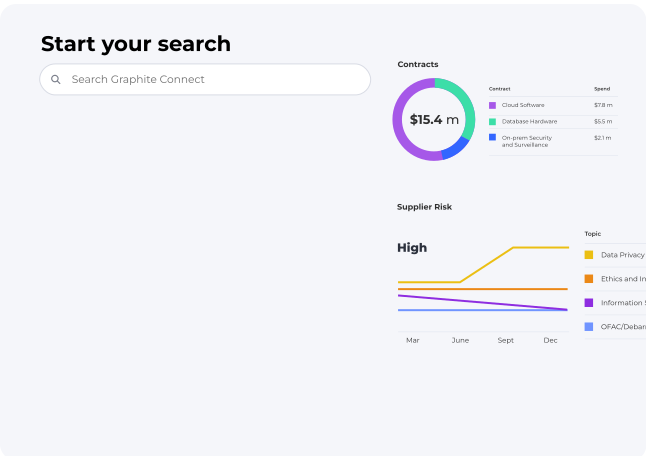
As a centralized hub, Graphite provides a unified view of suppliers and total spend, eliminating fragmented data and manual tracking. This means you can quickly identify rogue spending, consolidate suppliers, and make data-driven decisions.

With Graphite’s Guided Intake tool, teams can build custom workflows, streamline purchase requests, and recommend preferred suppliers, reducing inefficiencies and maverick spending. Automated procurement workflows enhance efficiency, freeing teams to focus on strategic initiatives.

With Graphite Connect, you can gain control, reduce costs, and optimize procurement to turn tail spend into a strategic advantage. 

Ready to learn more?

Graphite Connect is a one-of-a-kind supplier lifecycle and risk management solution that can help you better manage tail spend, mitigate risk, and get the most out of your supplier partnerships.

Request a Demo